“Beauty begins the moment you decide to be yourself,” Coco Chanel once said. That quote became my mantra when I realized my skincare routine wasn’t working. No matter how much I cleansed, my complexion stayed lifeless. Dead skin cells and impurities clung stubbornly, leaving me frustrated.
This Website contains affiliate links. That means I may earn a small commission if you purchase through my links, at no extra cost to you.
Everything changed when I discovered homemade exfoliation. Store-bought scrubs often felt harsh or overpriced, but mixing natural ingredients at home transformed my approach. The results? Brighter, smoother skin in weeks—without breaking the bank.
This journey taught me that glowing skin doesn’t require luxury products. Simple, cost-effective solutions can deliver real change. Below, I’ll share how this scrub revived my tired-looking texture and why exfoliation matters for tackling dullness.
Key Takeaways
Homemade scrubs can outperform pricey products for improving skin texture
Natural ingredients reduce irritation risks compared to chemical-heavy alternatives
Regular exfoliation helps remove dead cells and unclog pores
DIY skincare allows full control over what touches your face
Visible results often appear within 3-4 weeks of consistent use
Understanding Exfoliation and Its Benefits
Let’s break down why this process matters for reviving tired complexions. Our skin naturally sheds cells every 30 days, but stress or aging can slow this cycle. When old cells linger, they create a dull barrier that traps oil and dirt.
How Exfoliation Works
Physical scrubs use gentle abrasives to manually sweep away dead skin cells. Unlike chemical methods that dissolve bonds between cells, this approach feels more controlled—like giving your face a fresh start. I found it perfect for addressing stubborn flakes without harsh reactions.
Key Benefits of Exfoliating
Regular sessions boost circulation, bringing nutrients to the surface for that lit-from-within look. They also prevent pore blockages by clearing debris before it mixes with sebum. Bonus? Smoother skin absorbs serums and moisturizers 40% better, according to dermatology studies.
Collagen production gets a nudge too. After three weeks, my cheeks felt firmer, like someone hit a reset button on my texture. Just remember: moderation is key. Over-scrubbing strips natural oils, so stick to 2-3 times weekly for balanced results.
Gathering the Right Ingredients for My DIY Face Scrub
Creating an effective scrub starts with selecting quality components. Through trial and error, I’ve narrowed down five key elements that balance exfoliation with nourishment. You likely have some in your pantry already!
Must-Have Ingredients
Brown sugar became my go-to exfoliant after harsh salt crystals irritated my cheeks. Its fine granules remove dead cells without microtears, while natural glycolic acid brightens skin. Combined with raw honey—a humectant that locks in moisture—it creates a base that fights bacteria and flakes.
Oatmeal adds soothing power for reactive complexions. When ground into powder, it releases antioxidants that calm redness. My secret weapon? A carrier oil tailored to your needs:
Oil
Best For
Key Benefit
Jojoba
Oily/Acne-Prone
Mimics skin’s natural oils
Coconut
Dry Skin
Deep hydration
Sweet Almond
Sensitive
Reduces irritation
Store your mixture in airtight glass jars to preserve freshness. A coffee grinder ensures oatmeal reaches its silky texture—crucial for avoiding scratchiness. Pro tip: Add 2 drops of lavender oil for stressed skin days!
Step-by-Step Guide to Making the DIY Exfoliating Face Scrub
Crafting your own scrub requires precision but rewards with radiant results. Let’s walk through each phase—from melting coconut oil to storing leftovers—to ensure maximum effectiveness without irritation.
Preparation and Setup
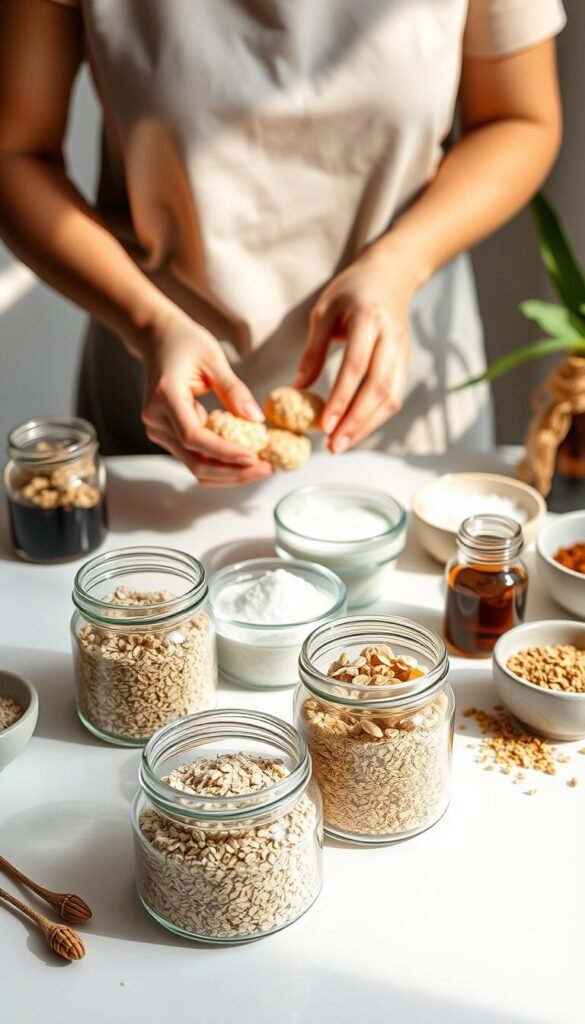
Clear your counter and gather tools: a mixing bowl, measuring cups, and airtight jars. For solid coconut oil, fill a large bowl with warm water (not boiling). Submerge the closed oil jar for 15-30 minutes until partially melted. Grind ¼ cup oats into fine powder using a coffee grinder—this prevents scratchiness.
Mixing and Application
Combine ½ cup brown sugar, oat powder, and 3 tbsp honey in your bowl. Slowly drizzle melted oil while stirring. Aim for a texture like wet sand. Apply to damp skin using light circles for 30 seconds—set a timer! Rinse with lukewarm water to maintain natural oils.
Storage and Maintenance
Transfer unused scrub into glass containers. Refrigeration extends freshness up to 3 weeks. Follow this storage guide:
Container Type
Location
Shelf Life
Notes
Glass Jar
Fridge
21 Days
Prevents oil separation
Silicone Tub
Cool Pantry
7 Days
Ideal for frequent use
Always use clean hands or a spoon to scoop product. If the mixture darkens or smells odd, discard immediately—safety first!
My Face Was Dull Until I Tried This DIY Exfoliating Face Scrub—Now I Glow
Let me paint the full picture of my complexion’s journey. When I began using this facial scrub, my forehead felt like sandpaper, and my chin had stubborn patches of dead skin cells that no cream could soften. Existing products left my cheeks tight and irritated rather than refreshed.
Immediate vs Gradual Changes
The first application surprised me. My skin felt baby-soft immediately after rinsing—like I’d wiped away a layer of grime. Redness around my nose diminished within hours. But true transformation came through consistent use:
Week
Change Observed
Key Benefit
1
Smoother texture
Reduced surface dryness
2
Fewer blackheads
Cleared pores
4
Even tone
Faded sun spots
By week three, friends asked if I’d changed my makeup. The scrub helped my moisturizer absorb better, creating a dewy effect. My jawline’s rough patches vanished completely after six uses.
Long-term benefits emerged around month two. Fine lines looked softer under morning light. My cheeks developed a glow I’d only seen in skincare ads. The secret? Regular removal of dead skin let fresh layers shine through naturally.
Patience proves crucial. While instant smoothness hooks you, true radiance needs 8-10 applications. Now I use this face scrub twice weekly for maintenance—it’s become my non-negotiable glow ritual.
Tips and Tricks for Preventing Skin Irritation
Your skin deserves care, not irritation. While natural scrubs work wonders, they require smart testing and customization—especially if you’re prone to redness or inflammation. Here’s how I learned to balance effectiveness with safety.
Patch Testing Your Scrub
Always test new ingredients separately. I apply a pea-sized amount to my inner elbow—this area mimics facial sensitivity better than wrists. Wait 48 hours, checking for itching or swelling. No reaction? Mix a small batch and try it behind your ear.
During testing, watch for three signs:
Persistent redness after 2 hours
Tightness resembling sunburn
Small bumps around hair follicles
Adjusting the Formula for Sensitivity
If your face feels tingly, swap brown sugar for ground oats. They exfoliate gently while calming inflammation. For dry skin, double the honey and add 1 tsp aloe gel. My emergency fix? Rinse with cold milk—its fats soothe irritation instantly.
Key reminder: Never scrub over active breakouts. Focus on clear areas first. Start with 10-second circular motions, gradually increasing as your skin adapts. Store-bought products might promise faster results, but patience prevents damage.
Customizing Your Scrub for Different Skin Types
Personalizing your exfoliation routine unlocks better results than one-size-fits-all solutions. Through testing, I discovered how small tweaks to the base scrub recipe address specific concerns—whether battling shine or soothing dryness.
For Oily Skin
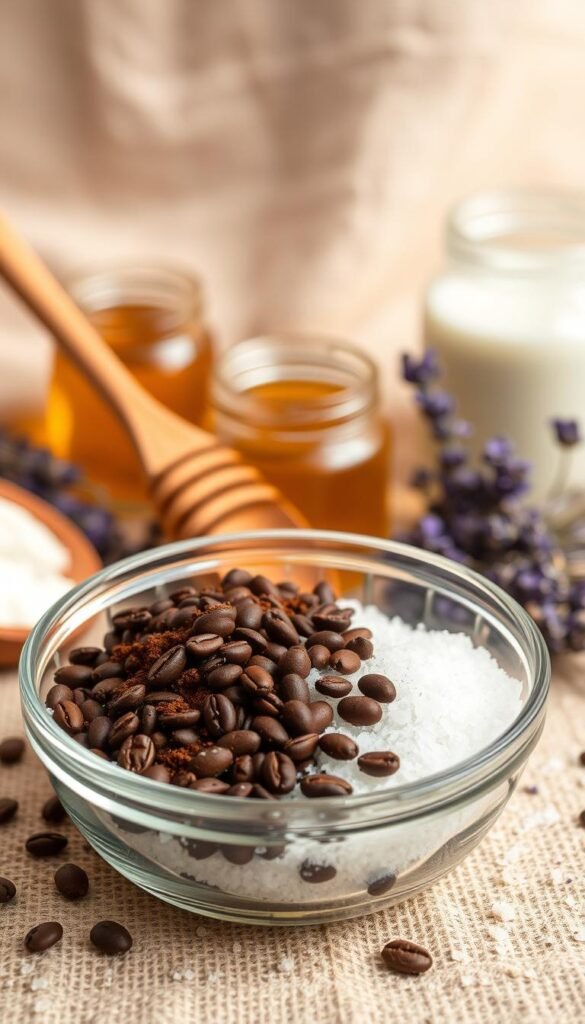
My oily-skin variation combines oatmeal and coffee grounds for dual action. Oatmeal absorbs excess oil while calming inflammation, and coffee’s antioxidants fight free radicals. I mix ¼ cup fine coffee grounds with ½ cup brown sugar, adding 2 tbsp honey for antibacterial properties.
Use this blend 3x weekly, focusing on the T-zone. The texture clears pores without stripping moisture—a game-changer for midday shine control.
For Dry & Sensitive Skin
Swap brown sugar for ground oats and coconut oil for olive oil in this gentle version. Olive oil’s fatty acids combat aging while nourishing parched skin. Combine ⅓ cup oats with 3 tbsp olive oil and 1 tbsp honey for a creamy paste.
Apply once weekly using feather-light circles. My friend with rosacea swears by this mix—it exfoliates without triggering redness.
Skin Type
Base Ingredient
Active Additions
Frequency
Oily
Brown Sugar
Coffee + Honey
3x/week
Dry/Sensitive
Ground Oats
Olive Oil + Honey
1x/week
Enhancing Results with Additional Skincare Steps
Want to boost your scrub’s effects? Pairing it with smart follow-up care creates lasting radiance. After exfoliation, your skin becomes a sponge—ready to absorb nourishing products more effectively.
Using Toner and Face Masks
I swear by rice water as a toner. Packed with vitamins and antioxidants, it balances pH while minimizing pores. Apply it with cotton pads after rinsing your scrub. For deeper treatment, clay masks pull impurities from cleared pores, while honey masks lock in moisture.
Moisturizing Your Skin
Hydration is non-negotiable post-exfoliation. I layer lightweight serums first—hyaluronic acid works wonders. Then comes a cream matching your skin type: gel for oily faces, rich butter for dryness. This combo keeps my complexion plump for days.
My weekly routine? Scrub twice, alternate masks, moisturize daily. This rhythm maintains benefits without overworking delicate facial layers. Remember: glowing skin thrives on consistency, not complexity.
FAQ
How often should I exfoliate with this DIY scrub?
I recommend using the scrub 1–2 times a week. Over-exfoliation can strip natural oils, especially if you have sensitive skin. Adjust based on how your skin feels—some prefer weekly for a gentle glow.
Can I substitute brown sugar with another ingredient?
Absolutely! Try finely ground oatmeal or coffee grounds for a gentler texture. Oatmeal soothes irritation, while coffee grounds boost circulation and tackle oily skin. Just avoid harsh alternatives like sea salt for the face.
Will this scrub clog pores or cause breakouts?
Not if you rinse thoroughly with warm water! Honey has antibacterial properties to fight acne, and brown sugar dissolves easily. If you’re prone to clogged pores, avoid heavy oils and opt for jojoba or rosehip oil instead.
Can I add essential oils for extra benefits?
Yes, but be cautious. Lavender or tea tree oil (2–3 drops) can calm inflammation or target bacteria. Always dilute them in a carrier oil first, and skip citrus oils if you have sensitive skin.
How do I store leftover scrub, and how long does it last?
Keep it in an airtight container in the fridge for up to a week. Fresh ingredients like honey can spoil, so skip preservatives. If it smells off, toss it and whip up a new batch!
Is this scrub safe for dry or sensitive skin?
Customize it! Swap brown sugar for colloidal oatmeal, use almond oil instead of coconut, and add a teaspoon of aloe vera gel. Always patch-test behind your ear first to avoid redness or irritation.
Can I use this scrub on my body too?
Definitely! It works great on elbows, knees, or feet. For tougher areas, mix in extra coffee grounds or coarse sugar. Just avoid broken skin and follow with a rich body butter to lock in moisture.