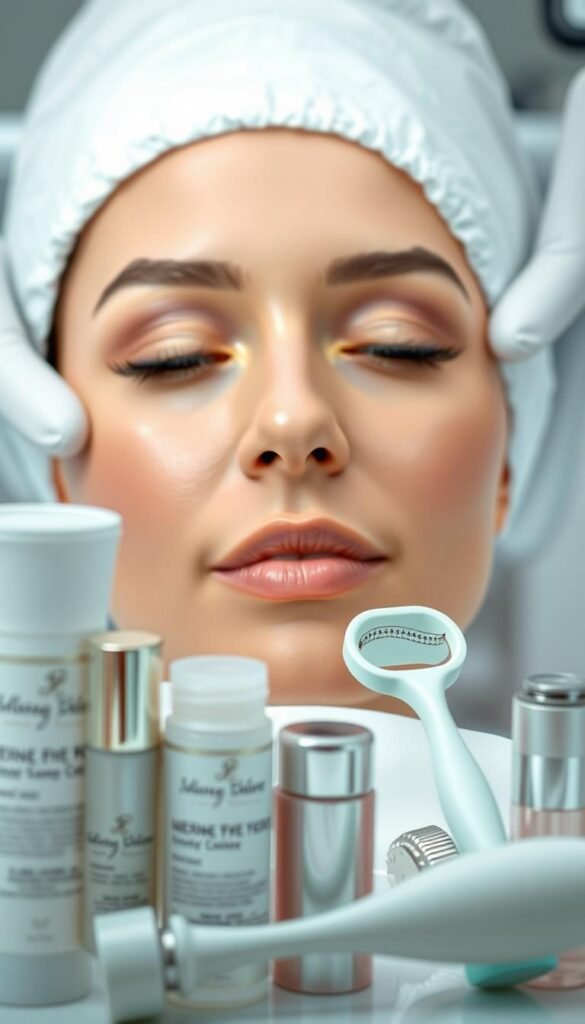
“The beauty of a woman must be seen from in her eyes, because that is the doorway to her heart.” – Audrey Hepburn’s words remind us how much our eyes reveal. Yet, this delicate area often betrays age before we’re ready. Let’s explore why.
This Website contains affiliate links. That means I may earn a small commission if you purchase through my links, at no extra cost to you.
The skin framing our gaze is fragile—thinner than paper and rich with blood vessels. Years of squinting, sun exposure, and natural collagen loss leave their mark. What starts as faint creases can deepen into visible lines, altering our reflection.
But here’s the truth: aging isn’t a flaw. It’s biology. My journey taught me that proactive care blends science with self-compassion. Through trial and error, I discovered strategies to soften these signs without chasing perfection.
This guide isn’t about erasing time. It’s about nurturing resilience. We’ll discuss hydration tricks, protective habits, and treatments that work with your skin’s rhythm. Whether you’re 25 or 55, it’s never too early—or too late—to show this area kindness.
Key Takeaways
Thin, vascular skin around the eyes ages faster than other facial zones
Fine lines evolve due to collagen loss, sun damage, and repeated facial motions
Consistent hydration and UV protection form the foundation of prevention
Professional treatments can enhance at-home care for noticeable results
Realistic expectations paired with patience yield the best outcomes
Understanding Under Eye Wrinkles
When I first noticed those faint marks below my lashes, I didn’t realize they had different origin stories. Let’s unpack the science behind temporary expression lines and permanent creases.
Expression Lines vs. Permanent Creases
Dynamic creases appear when your facial muscles contract—think crow’s feet when smiling. These vanish once muscles relax. Static creases linger like etched shadows, visible even when your face rests. Over decades, dynamic lines often become static as skin loses bounce.
Feature
Dynamic
Static
Visibility
During expressions
Always present
Main Cause
Muscle movements
Aging process
Prevention
Facial relaxation
Collagen care
Why They Form
Three main thieves steal skin’s smoothness:
Time: After 25, collagen drops 1% yearly
Sun damage: UV rays shred collagen like confetti
Habits: Late nights and smoking starve skin’s repair system
Genetics play referee—some develop creases earlier. But daily choices can slow the clock. My dermatologist friend puts it bluntly: “Sunblock is cheaper than laser treatments.”
Effective At-Home Strategies for Under Eye Wrinkles
My bathroom shelf used to overflow with products until I discovered this truth: consistent routines beat quick fixes. Let’s break down the essentials that made my morning mirror less intimidating.
Skincare Routine Essentials
Three ingredients became my frontline warriors. Retinoids (vitamin A derivatives) work like cellular personal trainers—they boost collagen and accelerate cell renewal. I apply them nightly, starting with low concentrations to avoid irritation.
Hyaluronic acid acts as a moisture magnet. A single drop plumps the skin around my gaze, temporarily blurring fine lines. Layering it under vitamin C cream creates a brightening shield against environmental stressors.
Ingredient
Key Benefit
Best Time
Retinoids
Collagen boost
Night
Hyaluronic Acid
Hydration surge
Morning/Night
Vitamin C
UV protection
Morning
Peptides
Elasticity support
Night
DIY Remedies and Facial Exercises
Gentle finger taps along orbital bones stimulate circulation. I combine this with forehead-smoothing exercises—holding tension here surprisingly affects the eyes. Weekly oatmeal masks (ground oats + honey) provide safe exfoliation without abrasive scrubs.
Consistency matters more than complexity. My current routine takes seven minutes daily but delivers cumulative results. As my dermatologist joked: “Better to do three steps daily than ten steps never.”
Professional Treatments for Under Eye Wrinkles
I once believed expensive creams held all the answers until a dermatologist friend showed me the power of clinical interventions. Modern cosmetic solutions work like precision tools—targeting specific concerns while respecting your skin’s biology.
Injectable Options and Fillers
Botox acts like a pause button for muscle movements. It relaxes expression-related muscles within days, softening dynamic lines for 3-4 months. My aesthetician compares it to “training wheels for facial expressions”—preventing repeated creasing that leads to permanent marks.
Dermal fillers address volume loss beneath static lines. Hyaluronic acid-based formulas lift sunken areas, creating smoother contours. Results last 6-24 months depending on product thickness and metabolism rates.
Laser, Microneedling, and Chemical Peels
Fractional laser treatments trick skin into repair mode. Microscopic beams trigger collagen surges, gradually improving texture. Microneedling uses similar principles—tiny punctures stimulate natural healing over 6-8 weeks.
Medium-depth peels dissolve damaged surface layers, revealing fresher skin. My go-to combines glycolic and lactic acids for gentle yet effective renewal.
Treatment
Target
Downtime
Botox
Muscle movements
None
Fillers
Volume loss
2-3 days
Laser
Texture
1 week
Microneedling
Elasticity
3 days
Choosing wisely matters: Dynamic lines respond better to neuromodulators, while static creases need fillers or collagen-boosting methods. Always consult board-certified providers—they’ll match technologies to your unique needs.
Lifestyle Changes and Preventive Measures
I used to think expensive serums did all the heavy lifting until my dermatologist asked: “What’s your breakfast routine?” That conversation shifted my focus to daily habits that truly move the needle. Small, consistent choices build skin resilience from the inside out.
Shielding Your Skin Daily
Sun protection isn’t optional—it’s armor. I apply broad-spectrum SPF 30 every morning, even when working from home. UV rays penetrate windows and clouds, accelerating collagen breakdown. Wide-brimmed hats and polarized sunglasses became my outdoor essentials—they block rays while preventing squinting-induced creases.
My nutritionist friend transformed my grocery list:
Vitamin C-rich oranges for collagen synthesis
Almonds packed with vitamin E to combat oxidative stress
Fatty fish loaded with omega-3s to maintain skin’s moisture barrier
Hydration habits made surprising differences. I carry a 24-ounce water bottle marked with hourly goals. Plump skin cells naturally soften lines, while dehydration exaggerates them. Eight hours of sleep became non-negotiable—that’s when skin repairs UV damage and generates new cells.
Three lifestyle shifts delivered visible changes:
Quitting vaping improved circulation within weeks
Allergy medication reduced under-eye rubbing
Silk pillowcases minimized sleep-related friction
These changes didn’t erase time’s marks but made my skin better equipped to handle life’s stresses. As my yoga instructor says: “You can’t control aging, but you can choose how you meet it.”
Conclusion
Looking back at my journey, I’ve learned that the skin around our eyes tells stories—some we shape, others we simply embrace. While creams and treatments help reduce visible lines, they’re partners in care, not magic erasers. The $19.3 billion anti-aging market reveals our shared desire to soften time’s marks, but true radiance comes from balance.
Protecting delicate areas starts with daily choices. Broad-spectrum sunscreen shields collagen production, while hydration keeps cells plump. I’ve found that combining targeted products with lifestyle shifts—like stress management and nutrient-rich meals—yields the most natural glow.
Remember: “Smoothness isn’t the goal—resilience is.” Fine creases may appear, but their depth reflects how we meet life’s joys and challenges. Focus on nurturing elasticity through consistent care, not chasing perfection. Your face mirrors a life well-lived—let that truth guide your routine.
FAQ
What’s the difference between dynamic and static lines around the eyes?
Dynamic lines form from repeated facial movements like squinting or smiling. Over time, these can become static, visible even when muscles are relaxed. Treatments like Botox target dynamic ones, while fillers address static creases.
Can facial exercises really smooth the skin near my eyes?
Some find gentle exercises helpful for boosting circulation and muscle tone. However, overworking the area might worsen creases. Pairing them with products like peptides or hyaluronic acid serums often yields better results.
Are retinoids safe to use on delicate areas like this?
Low-concentration retinoids (like Roc Retinol Correxion Eye Cream) can improve texture but may cause irritation. Start slowly—apply every other night and always follow with sunscreen during the day to protect thinning skin.
How does sun exposure accelerate aging in this zone?
UV rays break down collagen and elastin, leading to sagging and creases. I rely on mineral sunscreens (think La Roche-Posay Toleriane Ultra Eye Cream SPF 15) for daily protection. Wide-brimmed hats add extra defense outdoors.
Which professional treatments offer the fastest results?
Hyaluronic acid fillers (Juvéderm, Restylane) plump folds immediately. Laser resurfacing (Fraxel) or microneedling stimulates collagen but requires downtime. Consult a dermatologist to match options like PRP therapy with your skin’s needs.
Can diet changes reduce puffiness and creases?
Yes! Hydration and antioxidants matter. I eat omega-rich foods (walnuts, salmon) to support skin elasticity. Cutting excess salt reduces fluid retention, while vitamin C-rich citrus brightens dullness linked to aging.