Did you know 85% of adolescents struggle with visible skin concerns by age 17? As someone who once battled stubborn breakouts and confusion in the beauty aisle, I’ve cracked the code to turning frustration into glowing results. This journey taught me that radiant, healthy skin isn’t about magic potions—it’s about smart habits anyone can master.
This Website contains affiliate links. That means I may earn a small commission if you purchase through my links, at no extra cost to you.
I remember staring at my reflection, overwhelmed by conflicting advice and endless product claims. But here’s the truth: your complexion thrives on consistency, not complexity. Through trial, error, and expert guidance, I discovered how simple daily rituals could transform both my mirror reflections and self-confidence.
In this guide, I’ll share the exact strategies that helped me—and countless others—tame oiliness, soothe irritation, and wake up excited to face the day. We’ll cut through the noise together, focusing on what truly works for young skin without draining your time or budget.
Key Takeaways
- Clear skin begins with understanding your unique complexion needs
- Simple routines outperform complicated product stacks
- Consistency matters more than expensive treatments
- Self-care rituals build confidence beyond physical appearance
- Healthy habits developed now benefit skin long-term
Overview of Teen Skin and Its Unique Needs
Your skin isn’t betraying you—it’s evolving. During adolescence, hormonal shifts kickstart physical transformations that affect every inch of your body. I’ve discovered these changes activate oil glands beneath the surface, creating that familiar midday shine many of us recognize.

What makes this phase unique? Your skin type becomes more defined now than in childhood. Some days might feel like battling an oil slick, while others leave you reaching for moisturizer. I’ve learned through experience that combination skin is actually the most common scenario—dry patches here, oily zones there.
Here’s what matters most: Your concerns aren’t flaws. Those occasional breakouts? They’re simply your body adjusting to new hormone levels. The key lies in recognizing whether you’re dealing with excess oils, persistent dryness, or both—this awareness shapes everything from cleanser choices to hydration strategies.
I want you to remember this—your mirror reflects temporary adjustments, not permanent realities. With simple adjustments tailored to your skin’s current needs, you can navigate this transformative phase while laying groundwork for lifelong confidence.
Understanding Teenage Acne and Hormonal Changes
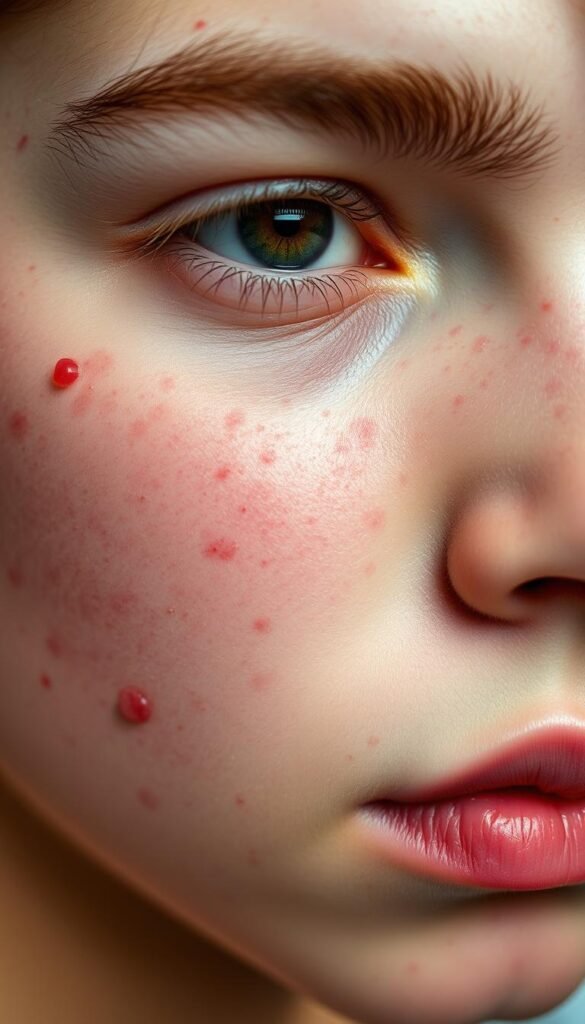
Breaking out during puberty isn’t a personal failure—it’s biology in action. Your body’s chemical messengers work overtime, creating visible changes that feel personal but are completely normal. Let’s decode what’s happening beneath the surface.
Why Pores Rebel During Puberty
Androgen hormones flip the switch on oil glands around age 12-14. I’ve seen how this surge makes glands pump out 40% more sebum than childhood levels. When this sticky oil mixes with dead cells, it creates pore blockages that become blackheads or whiteheads.
Bacteria thrive in these clogged tunnels. Cutibacterium acnes, a microbe that lives on everyone’s skin, multiplies rapidly in oily environments. This triggers inflammation—those angry red bumps we call pimples.
Your Body’s Changing Landscape
Hormonal shifts affect more than just your face. Areas with dense oil glands—like your chest and upper back—often breakout simultaneously. I’ve learned these flare-ups follow predictable patterns:
| Type | Cause | Solution |
|---|---|---|
| Blackheads | Open clogged pores | Salicylic acid |
| Whiteheads | Closed clogged pores | Benzoyl peroxide |
| Inflamed pimples | Bacteria + oil | Oil-free moisturizers |
While chocolate doesn’t cause breakouts, stress can worsen them. Your best defense? Consistent cleansing and products with 2% salicylic acid to dissolve pore blockages. Remember—these changes are temporary, but the confidence from caring for yourself lasts forever.
The Importance of a Simple Skincare Routine
Less truly becomes more when caring for changing complexions. Through my own struggles, I discovered that four-minute routines often outperform forty-step regimens. Your skin craves predictability—not product overload—to maintain its natural balance.
Start with three non-negotiable steps: cleanse morning/night, treat target areas, and moisturize. Add sunscreen for daytime—that’s it. I’ve watched countless teens transform their results by sticking to this blueprint from basic care plans rather than chasing viral fads.
Complex systems fail because life happens. Between school, sports, and socializing, you need a routine that travels in your backpack. That $50 serum promising miracles? It can’t help if you forget to use it.
Here’s what works: gentle products used daily build control over time. I choose fragrance-free gel cleansers and oil-free moisturizers—they prevent stripping your protective barrier. Consistency turns these small acts into lifelong habits that outlast any breakout.
Remember: your face isn’t a chemistry experiment. When you simplify, you gain clarity. Each swipe of moisturizer becomes an act of self-respect, not just skincare. That’s how lasting confidence begins.
Skincare for Teenagers: Essential Cleansing Techniques
The secret to clear skin starts at the sink—but not how you might think. I learned the hard way that scrubbing your face like a dirty pan does more harm than good. True cleansing is about balance: removing dirt and excess oil while protecting your natural moisture shield.
Your technique matters more than you realize. Use fingertips—never nails—in soft circles across damp skin. Lukewarm water keeps pores calm, while hot temperatures strip protective oils. I’ve seen teens transform their routines by following this simple rule: cleanse twice daily, but never more.
Choosing the right cleanser makes all the difference. Gel formulas work wonders for oily zones, dissolving sticky sebum without overdrying. For those battling breakouts, gentle cleansers with salicylic acid help clear pores without irritation. Remember—foam should whisper across your skin, not scream.
Overwashing tricks your oil glands into overdrive. I once scrubbed three times daily, only to wake up with greasier skin. Now I know: one morning rinse and one evening deep-clean keeps bacteria in check while maintaining harmony.
Consistency breeds results. Stick with your cleanser for six weeks before judging it. Your mirror will thank you with fewer flares and smoother texture. This isn’t just skincare—it’s self-care that honors your body’s wisdom.
Selecting the Right Cleanser for Different Skin Types
Choosing the right face wash feels like discovering your favorite playlist – it just clicks when you find your rhythm. Your skin type holds the blueprint for what works, and matching it with the perfect cleanser creates harmony where frustration once lived.
For Those Shine-Prone Complexions
If midday oil slicks sound familiar, reach for gel-based formulas. I swear by cleansers with salicylic acid or benzoyl peroxide – they dissolve pore blockages like magic erasers. A light foaming wash cuts through grease without leaving that tight, stripped feeling.
When Sensitivity Takes Center Stage
Dry patches and redness demand gentle care. Hydrating options with ceramides – like CeraVe’s cult-favorite cleanser – cleanse while reinforcing your skin’s moisture barrier. Hyaluronic acid adds a drink of water without irritation.
Remember: Your morning rinse sets the tone for the day. Whether battling shine or soothing sensitivity, the right option becomes second nature. Trust the process – your brightest face forward starts here.