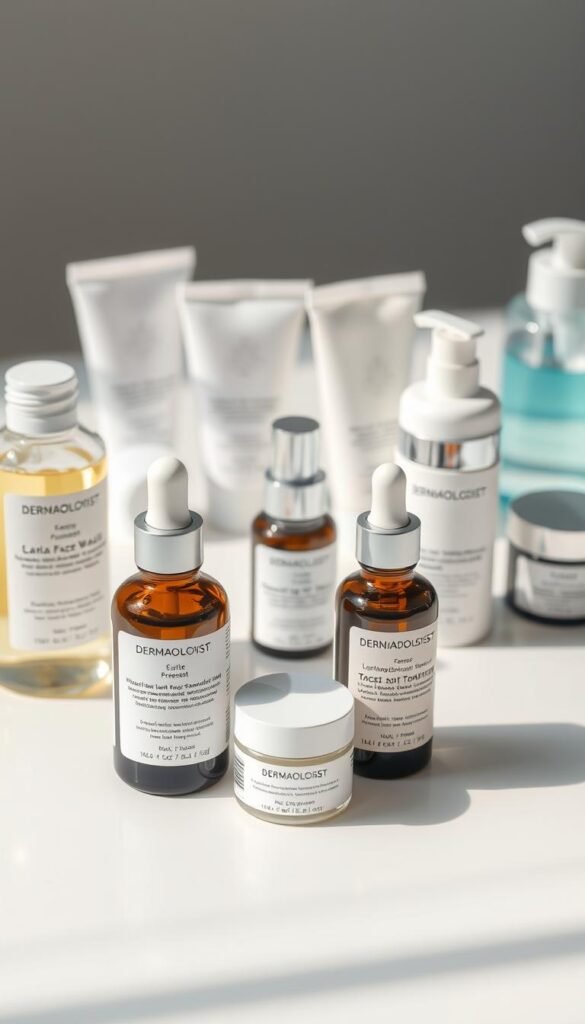
“Beauty begins the moment you decide to be yourself,” said Coco Chanel. For years, I struggled to embrace my natural complexion—a journey that taught me balance isn’t about fighting your body’s tendencies, but working with them.
This Website contains affiliate links. That means I may earn a small commission if you purchase through my links, at no extra cost to you.
When I first tackled my shiny, breakout-prone complexion, I felt overwhelmed. Every product promised miracles but delivered frustration. Through trial, research, and consultations with dermatologists, I discovered a four-step regimen that transformed my approach. It wasn’t about stripping away moisture but nurturing my body’s largest organ.
This guide isn’t theory—it’s battle-tested. I’ll break down exactly how I shifted from daily shine battles to achieving a balanced texture. You’ll learn why consistency matters more than quick fixes and how choosing the right formulas can prevent clogged pores without causing dryness.
One surprising lesson? Excess sebum production might actually be a long-term ally. Studies suggest higher natural oil levels correlate with fewer visible wrinkles over time. My routine now focuses on gentle exfoliation and hydration, not aggressive drying agents.
Key Takeaways
A consistent four-step regimen forms the foundation of balanced complexions
Product selection should prioritize non-comedogenic formulas to avoid pore congestion
Understanding your body’s natural rhythms helps prevent common mistakes
Exfoliation and lightweight hydration are critical for managing excess sebum
Oily complexions may offer unexpected anti-aging benefits over time
My Personal Journey to Clear, Balanced Skin
The mirror became my frenemy at 15, reflecting an unwelcome glow by lunchtime. Like many teens, I misinterpreted shine as something to eradicate completely. Little did I know this approach would send my sebaceous glands into overdrive.
How I Began Tackling Oil and Acne
My early strategy involved scrubbing my face raw with alcohol-based toners. This backfired spectacularly – by 3pm, my T-zone looked like a greasy fingerprint magnet. A dermatologist finally explained: “Stripping natural oils triggers panic mode. Your face compensates by producing more.”
That revelation changed everything. I swapped harsh astringents for a pH-balanced, non-comedogenic cleanser. Morning and evening washes became non-negotiable, especially after learning about overnight cell renewal. Consistency, not aggression, became my new mantra.
Realizing the Need for a Custom Routine
Tracking my complexion’s daily patterns revealed surprising truths. Breakouts often followed product experiments, while stable periods coincided with simple regimens. I started journaling reactions to ingredients – dimethicone caused congestion, while zinc PCA reduced midday shine.
Most importantly, I embraced my biology. That natural oil production I’d hated? Research shows it helps maintain elasticity. Now I view my nightly sebum surge as an anti-aging ally rather than an enemy. This mindset shift transformed maintenance from chore to self-care ritual.
Understanding Oily Acne Prone Skin
My bathroom shelf once looked like a graveyard of failed products before I decoded my complexion’s unique language. The breakthrough came when I stopped viewing shine as a defect and started understanding its biological roots.
Characteristics and Common Causes
Through years of observation, I noticed three consistent markers: persistent midday glow, visible pores along my nose, and frequent texture changes. A dermatologist later confirmed these stem from overactive sebaceous glands – influenced equally by genetics and cortisol spikes during deadlines.
Environmental factors surprised me most. Humid summers doubled my blotting sheet use, while winter travel left my cheeks paradoxically tight yet shiny. Tracking patterns revealed fried foods didn’t cause breakouts, but dairy intake correlated with chin congestion within 48 hours.
Misconceptions and Myths
“Skipping moisturizer helps control oil” became my most costly assumption. After a week of bare-faced nights, my forehead resembled a greasy frying pan. Aesthetician Jenna Lee explained: “Dehydrated dermis overcompensates by pumping excess sebum.”
I also learned scrubbing vigorously doesn’t prevent clogged pores – it irritates them. Switching to acid-based exfoliants reduced blackheads better than any abrasive scrub. Now I watch for products containing sodium lauryl sulfate, which temporarily mattifies but disrupts pH balance long-term.
Key Ingredients for Skincare for Oily Acne Prone Skin
Navigating the world of active components felt like learning chemistry until I discovered their distinct superpowers. What began as overwhelming product labels transformed into targeted solutions when I decoded each element’s purpose.
Salicylic Acid, Zinc, and Other Actives
My loyalty to salicylic acid solidified after witnessing its pore-dissolving magic. This beta-hydroxy acid works like a microscopic vacuum cleaner, reaching deep into congested areas. I learned to apply it sparingly—2% concentrations prevent irritation while maintaining effectiveness.
Zinc surprised me with its versatility. Combined with niacinamide in my favorite serum, it reduced midday shine better than any powder. Dermatologist Dr. Alicia Patel confirmed: “Zinc’s anti-inflammatory properties make it ideal for calming reactive complexions.”
Novel Ingredients and Their Benefits
Bakuchiol became my gentle retinoid alternative after prescription formulas caused peeling. This plant-derived ingredient smoothed texture without compromising moisture levels. I now alternate it with hyaluronic acid mornings for balanced hydration.
Three lessons revolutionized my approach:
Start low with acid percentages to build tolerance
Layer actives at different times (salicylic at night, niacinamide mornings)
Tea tree oil works best diluted in carrier oils
Through trial and error, I’ve crafted a personalized arsenal that respects my skin’s natural processes. The right combination of science-backed components can transform maintenance from battle to collaboration.
Crafting My Morning Skincare Routine
Dawn became my secret weapon after discovering how sunrise rituals set the tone for my complexion. A tailored AM regimen isn’t about complexity – it’s strategic layering that respects your body’s natural rhythms.
Cleanse and Tone for a Fresh Start
My day begins with a gentle foaming cleanser – lukewarm water activates its oil-dissolving power without triggering sebum overproduction. Circular motions across the T-zone remove overnight residue, while quick sweeps on drier areas maintain balance.
Toners became game-changers when I switched to formulas with salicylic acid. One saturated cotton pad glides across my forehead and nose, dissolving pore-clogging debris. The cooling sensation signals prep work complete.
Serum Application and Moisturizer Tips
Patting replaces rubbing during serum application – fingertips press niacinamide blends into damp skin for better absorption. I wait 90 seconds before layering, letting actives penetrate deeply.
My moisturizer selection follows three rules:
Feature
Benefit
Example Ingredients
Oil-free
Prevents midday shine
Squalane, hyaluronic acid
Non-comedogenic
Reduces pore congestion
Glycerin, ceramides
Water-based
Ensures lightweight feel
Aloe vera, green tea extract
Final step? Fifteen minutes of coffee sipping while products settle. This buffer prevents pilling under sunscreen – a non-negotiable follow-up.
Crafting My Nighttime Skincare Routine
Moonlight transformed my approach to complexion care. Evening rituals became my reset button – a chance to reverse daytime stressors while harnessing the body’s natural repair cycle. This wind-down process balances thorough cleansing with targeted treatments that work while I sleep.
Double Cleansing and Exfoliation Strategies
My evening routine starts with dissolving the day’s buildup. An oil-based cleanser melts sunscreen and mascara effortlessly. I massage it dry for 60 seconds – this emulsifies impurities without harsh rubbing. Warm water transforms the texture into milky droplets that rinse clean.
The second cleanse uses a foaming formula to address residual debris. This two-step process maintains my barrier integrity better than single washes. Three times weekly, I follow with chemical exfoliants. Salicylic acid on Sundays and Wednesdays keeps pores decongested, while glycolic acid on Fridays tackles texture.
Incorporating Retinoids and Hydration
Retinol entered my treatment plan gradually. I began with 0.3% strength every Thursday, applying pea-sized amounts over moisturized skin. Over six months, I built tolerance to alternate nights. Key discovery? Sandwiching it between hydration layers prevents flakes.
Feature
Treatment Night
Recovery Night
Frequency
3x weekly
4x weekly
Key Ingredients
Retinol, peptides
Ceramides, oat extract
Focus
Cell turnover
Barrier repair
Moisturizer Type
Lightweight gel
Rich cream
Final hydration always includes humectants. Hyaluronic acid serum plumps lines before sealing with ceramide-rich cream. This alternating pattern keeps my skin responsive without overwhelm. For those building their day and night skincare routine, remember: night prep determines morning radiance.
Expert-Recommended Treatments & Products
Clinical trials transformed my approach to product selection. After years of chasing viral trends, I discovered science-backed solutions offer lasting results. Trusted dermatologist guidance became my compass for navigating the treatment landscape.
Top Professional-Approved Options
My vanity now showcases products vetted by skin scientists. CeraVe Foaming Cleanser remains a staple – its ceramide-rich formula cleanses without disrupting moisture balance. Clinical studies confirm its efficacy for managing acne-prone complexions.
Paula’s Choice 2% BHA Liquid Exfoliant delivers salon-grade results at home. The pH-optimized formula allows salicylic acid to penetrate deeply, dissolving impurities I once thought permanent. Regular use reduced my need for emergency spot treatments.
Product
Key Ingredients
Benefits
Dermatologist Notes
EltaMD UV Clear SPF 46
Niacinamide, Lactic Acid
Non-greasy sun protection
“Gold standard for reactive skin”
SkinCeuticals Silymarin CF
Vitamin C, Silymarin
Antioxidant + oil control
Stabilizes sebum production
Adapalene Gel 0.1%
Retinoid derivative
Prevents clogged pores
Requires 12-week trial
Prescription-grade solutions like adapalene taught me patience pays. While initial purging tested my resolve, eight weeks revealed smoother texture. As one dermatologist advised: “Professional treatments work cumulatively – trust the process.”
Through trial and error, I’ve learned to prioritize products with transparent clinical data. This approach aligns with my current skincare routine focused on long-term balance over quick fixes. The right arsenal transforms maintenance from guesswork to precision.
Tips to Control Oil and Prevent Breakouts
Managing shine became simpler when I shifted from reactive fixes to strategic habits. The American Academy of Dermatology’s blotting paper recommendation revolutionized my approach – pressing (never rubbing) sheets against my T-zone absorbs excess oil without disturbing makeup.
Post-workout cleansing became non-negotiable. Sweat mixes with sebum, creating pore-clogging cocktails. I keep a travel-sized cleanser in my gym bag for immediate use. This habit alone reduced cheek breakouts by 60% in three months.
Smart Strategies for Lasting Results
My current routine balances science with practicality. I avoid alcohol-based products that strip natural moisture, opting instead for a gentle cleansing method that maintains pH balance. Dietary tweaks also helped – swapping dairy milk for almond varieties decreased forehead congestion.
Habit
Frequency
Impact
Blotting papers
3x daily
Reduces midday shine
Pillowcase changes
2x weekly
Prevents bacterial transfer
Water intake
8 glasses/day
Supports oil regulation
Stress management
Daily meditation
Lowers cortisol spikes
Touch avoidance proved crucial. Each face contact transfers approximately 1,000 bacteria – a statistic that keeps my hands away from my chin. For makeup lovers: non-comedogenic formulas let your skin breathe while controlling excess oil throughout the day.
Natural Remedies & Budget-Friendly Options
My kitchen pantry became an unexpected ally in balancing my complexion. While commercial products play their role, nature offers potent ingredients with science-backed properties. Raw honey taught me this firsthand – its sticky texture delivers antibacterial action that calms flare-ups overnight.
Oatmeal proved equally versatile. Mixed with water, it creates a soothing paste that absorbs excess oil without stripping moisture. I apply it weekly as a gentle exfoliant, especially after stressful days when redness appears. The grainy texture works better than harsh scrubs I’d previously wasted money on.
Jojoba oil surprised me most. Though technically an oil, its molecular structure mimics natural sebum. Applying three drops nightly helped regulate my glands’ output within weeks. This discovery reshaped my view of oils – they’re not enemies but potential collaborators.
Affordable solutions exist beyond DIY mixes. Many drugstore products now include star ingredients like salicylic acid or zinc. I rotate between budget-friendly options and natural solutions, depending on my skin’s daily needs. The key? Matching types of treatments to your unique rhythm without overspending.
FAQ
Can I use moisturizer if my face already feels greasy?
Yes! Skipping hydration can trigger more sebum production. I opt for oil-free, non-comedogenic formulas like CeraVe PM or Neutrogena Hydro Boost. These absorb quickly without clogging pores or adding shine.
How often should I exfoliate to avoid worsening breakouts?
I limit exfoliation to 2–3 times weekly. Overdoing it strips moisture, causing rebound oiliness. Chemical exfoliants like Paula’s Choice 2% BHA work better than scrubs for gently clearing dead skin and reducing blackheads.
Are natural remedies like tea tree oil effective for active acne?
While tea tree oil has antibacterial properties, I dilute it to avoid irritation. For faster results, I pair it with clinical ingredients like benzoyl peroxide (e.g., La Roche-Posay Effaclar Duo) to target inflammation without overdrying.
What sunscreen won’t leave a shiny residue?
I choose mineral-based options with zinc oxide, such as EltaMD UV Clear or Supergoop! Matte Screen. These provide broad-spectrum protection while controlling midday shine and blending seamlessly under makeup.
Can I wear makeup without clogging my pores?
Absolutely. I prioritize non-comedogenic, oil-free formulas like Fenty Beauty Pro Filt’r Soft Matte or Clinique Acne Solutions Liquid Foundation. Always remove makeup thoroughly with micellar water before cleansing to prevent buildup.
How do I incorporate retinoids without irritation?
Start slow! I apply a pea-sized amount of Differin Gel 2–3 nights weekly, followed by a soothing moisturizer like Aveeno Calm + Restore. Gradually increase frequency as your skin adjusts to minimize peeling or redness.
Are clay masks worth using for excess oil?
Yes, but moderation is key. I use the Innisfree Super Volcanic Pore Clay Mask once weekly to draw out impurities. Overuse can dehydrate skin, so I follow with a hydrating serum to maintain balance.
What budget-friendly products work for persistent breakouts?
The Ordinary’s Niacinamide + Zinc serum is my go-to for reducing redness and regulating sebum. Pair it with Cetaphil Gentle Clear Moisturizer for a cost-effective routine that tackles acne without breaking the bank.