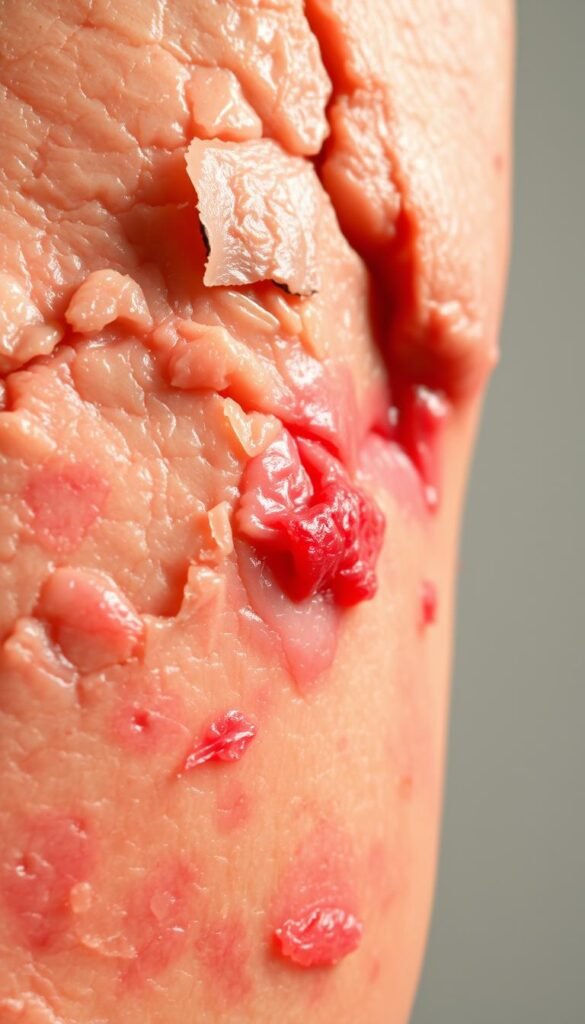
“You may encounter many defeats, but you must not be defeated.” Maya Angelou’s words echoed in my mind as I stared at my reflection, desperate to heal my inflamed complexion. What began as a quest for glowing results turned into a battle against burning sensations and stubborn irritation. Little did I know, my protective shield—the intricate layer guarding against environmental threats—was silently crumbling.
This Website contains affiliate links. That means I may earn a small commission if you purchase through my links, at no extra cost to you.
For years, I trusted high-end products packed with potent actives. But instead of radiance, my face felt like parchment paper—tight, flaky, and reactive to everything. It wasn’t until I stumbled upon KraveBeauty’s analogy of an invisible defense system that I understood the truth: I’d stripped away my body’s natural armor.
The turning point came when I swapped harsh routines for gentle nourishment. By focusing on moisture retention and lipid replenishment, my once-angry texture softened. This journey taught me that true resilience starts beneath the surface, where patience and science work hand-in-hand.
Key Takeaways
Overusing exfoliants or strong ingredients can weaken your body’s protective layer over time
Persistent dryness and sensitivity often signal deeper issues needing attention
Simpler routines emphasizing hydration yield faster recovery than aggressive treatments
Understanding your complexion’s biology is crucial for lasting improvements
Even severely compromised conditions can improve with consistent, mindful care
Understanding the Skin Barrier: What It Is and Why It Matters
My aha moment arrived when I visualized my body’s outermost defense like ancient city walls. Hidden beneath the surface lies an intricate structure of corneocytes—flattened cells stacked like bricks—bound by fatty chains acting as biological cement. This fortress determines whether invaders breach our defenses or get stopped at the gates.
The Role of Skin Cells and Lipids
Corneocytes form the base layer, constantly shedding and renewing. Between them, ceramides and cholesterol create waterproof seals. These lipids aren’t just glue—they’re active shields against moisture loss. Without them, hydration evaporates faster than morning dew.
Component
Function
Impact When Damaged
Corneocytes
Structural support
Flakiness, roughness
Lipids
Moisture retention
Tightness, dehydration
Acid Mantle
pH balance
Increased sensitivity
Your Barrier as a Protective Shield
The slightly acidic surface (pH 5-6) acts like bouncers at a club, rejecting harmful microbes. I discovered alkaline cleansers were stripping this protective film. Once compromised, even mild products felt like sandpaper.
Rebuilding requires understanding this delicate ecosystem. Like nurturing a garden, it thrives on balance—not brute force. When functioning well, this system works invisibly. But damage shouts through every irritated pore.
Identifying Signs of a Damaged Skin Barrier
My wake-up call came when applying my favorite cream felt like pouring acid on sandpaper. The body speaks through discomfort—if you listen closely. Recognizing these signals early became my lifeline to recovery.
Redness, Irritation, and Oversensitivity
What began as occasional flushing evolved into constant heat radiating from my cheeks. Even water splashes triggered stinging—a far cry from my former resilient complexion. Products I’d used for decades suddenly became enemies, leaving clusters of angry bumps resembling mosquito bites.
The cruelest irony? Moisturizers meant to soothe amplified the fire. Healthy surfaces don’t burn when nourished—this realization changed everything. Persistent itchiness and blotchy patterns confirmed my protective layer was crumbling.
Dry Patches, Breakouts, and Loss of Elasticity
Flakes appeared like snowdrifts around my nose, yet oily zones erupted simultaneously. My reflection showed a deflated balloon—dull, crepe-like texture replacing youthful bounce. Breakouts lingered for weeks, refusing to heal without their natural shield.
Rough patches that no scrub could smooth
Foundation clinging to uneven texture like cracked mud
Delayed healing from minor blemishes
These weren’t isolated issues but interconnected symptoms. Each sign pointed to one truth: my body’s defense system needed urgent reinforcements. By connecting these dots, I stopped chasing symptoms and started rebuilding foundations.
Skin Barrier Repair 101: How I Fixed My Red, Irritated Skin Fast
Waking up to a face that felt like sunburned paper taught me more about resilience than any luxury cream ever could. The real transformation began when I stopped fighting my body and started listening to its whispers of distress.
My Initial Struggles and Breakthrough Moments
For months, I treated my complexion like a science experiment—layering serums, acids, and retinoids in pursuit of perfection. The morning I couldn’t tolerate tap water without wincing became my intervention. “Less is more,” my dermatologist insisted, as I clutched my beloved exfoliators like security blankets.
Letting go felt like failure. I’d built my identity around elaborate regimens, mistaking complexity for effectiveness. When persistent redness outlasted every trendy treatment, I finally surrendered to three truths: water-based cleansers heal better than foaming ones, occlusive moisturizers aren’t pore-clogging enemies, and healing requires stillness—not constant action.
Simplifying My Skincare Routine for Quick Recovery
My new regimen fit in a travel pouch: milky cleanser, ceramide-rich cream, hydrating essence, and mineral sunscreen. Within weeks, the angry heat subsided. Mornings became quicker, nights less stressful. I discovered that consistency with four humble products outperformed my former 10-step circus.
Recovery timelines surprised me. Flare-ups calmed in 48 hours, but true renewal took 11 weeks. Through this process, I learned that damaged defenses rebuild strongest when we stop poking the walls and let the mortar cure.
Healing Ingredients and a Gentle Skincare Routine
Rebuilding my complexion’s defenses became a lesson in ingredient intelligence. Like discovering secret allies in an uphill battle, certain components transformed my recovery journey from frustrating to transformative.
Barrier-Replenishing Ingredients: Ceramides, Hyaluronic Acid, and More
Ceramides became my mortar—the biological glue patching cracks in my fragile surface. I paired them with cholesterol-rich creams, creating a lipid sandwich that mimicked natural protective layers. “Hydration without moisture is like rain without soil,” my esthetician noted, teaching me to layer humectants before sealing them in.
Ingredient
Key Benefit
Best Sources
Ceramides
Rebuild lipid matrix
Serums, night creams
Hyaluronic Acid
Deep hydration
Essences, sheet masks
Niacinamide
Reduces inflammation
Toner, moisturizers
The Importance of Hydration, Moisture, and SPF
I learned hydration means water retention, while moisture involves oil-based protection. Applying seven layers of pH-balanced toner created a reservoir that plumped fine lines. Sunscreen became my daily armor—mineral formulas with zinc oxide protected without stinging.
Steering Clear of Over-Exfoliation and Irritating Actives
Retiring my acid toners felt like breaking up with a toxic friend. Instead, I embraced panthenol-rich creams that healed microtears. When tempted to reintroduce retinol, I remembered: true care means knowing when to hold back.
Reflecting on My Journey and Ongoing Improvements
Healing became a continuous process rather than a destination. What began as emergency care evolved into understanding my body’s ever-changing language. The real victory wasn’t just calming redness—it was building habits that sustained results through life’s unpredictable seasons.
Adapting My Routine Over Time for Lasting Results
Three months post-recovery, I faced a crossroads. My protective layer felt fortified, but old habits whispered temptations. “Your defenses rebuild stronger when given time to cement,” my dermatologist reminded me. I maintained my simplified regimen for 30 extra days—a decision that prevented relapse when pollen season hit.
Surprises emerged as I reintroduced products. Glycolic acid serums that once gave me glass-like clarity now sparked immediate tightness. Physical exfoliators left sandpaper-like texture instead of smoothness. This taught me tolerance isn’t static—our complexion’s needs shift like seasons.
Weekly “skin talks” became ritual. I’d assess hydration levels by pressing a finger to my cheek—plump rebound meant balance. Flaky patches signaled it was time to layer ceramide creams like armor. This mindful approach helped me spot early warning signs before full-blown flare-ups.
Today, my regimen remains fluid. Summer calls for lighter hydrators, while winter demands rich butters. Through it all, three truths guide me: simplicity outshines complexity, consistency beats intensity, and listening yields better results than forcing. My journey transformed me from product collector to informed curator—proof that lasting care grows from patience and self-awareness.
Conclusion
Standing before the mirror now, I barely recognize the fragile surface I once battled. Our body’s outermost layer thrives on quiet consistency—not grand gestures. Healing accelerated when I stopped chasing quick fixes and embraced gentle rhythms: morning hydration, evening nourishment, daily protection.
Recent research confirms what my journey taught me—emollients restore balance by sealing cracks in our biological armor. Like mending a favorite sweater, repairing delicate structures demands patience. Each application of ceramide cream became a stitch weaving resilience back into place.
True progress revealed itself in small victories. Cool mornings without tightness. Windblown walks sans irritation. These moments proved that lasting recovery grows from respecting our natural rhythms. Our protective matrix remembers how to thrive—we simply create the conditions.
To anyone navigating similar struggles: your capacity for renewal runs deeper than flare-ups suggest. Trust the science of simplicity. Celebrate incremental gains. What feels slow now will later feel like transformation.
FAQ
Can a compromised protective layer cause breakouts?
Absolutely. When my outer defense was weakened, my face became a battleground—redness, bumps, and uneven texture appeared. Strengthening it with ceramide-rich creams and avoiding harsh acids helped calm the chaos.
How long does it take to rebuild weakened defenses?
For me, consistency was key. Within two weeks of using lipid-replenishing serums and ditching abrasive scrubs, tightness faded. Full recovery took about six weeks, but patience paid off with smoother, calmer cheeks.
Are exfoliating acids ever safe for sensitive complexions?
I learned the hard way. While lactic acid (gentler than glycolic) once a week now works, overdoing it stripped my natural moisture. Listen to your body—if stinging occurs, pause and prioritize hydration.
Which ingredients gave you the fastest relief?
Centella asiatica became my hero. Combined with squalane and panthenol, it soothed burning sensations overnight. La Roche-Posay’s Cicaplast Balm B5 remains my go-to rescue cream for flare-ups.
Does sunscreen hinder the healing process?
Quite the opposite! Mineral formulas with zinc oxide protected my vulnerable surface without clogging pores. I switched to EltaMD UV Clear Broad-Spectrum SPF 46—it shields while letting my face breathe.
Can diet impact your outer defense system?
Surprisingly, yes. Adding omega-3s (think salmon, chia seeds) and cutting sugar reduced inflammation. My dermatologist confirmed: what fuels your gut often reflects in your glow.
How do you maintain results without overspending?
Less is more. I stick to three core steps: gentle cleansing (Vanicream), moisture sandwiching (hyaluronic acid + CeraVe Moisturizing Cream), and SPF. Fancy gadgets? Skipped. Healthy habits? Priceless.