“When you know better, you do better” – Maya Angelou’s wisdom perfectly captures the journey to caring for reactive complexions. For years, I struggled with redness and discomfort, convinced I’d never find solutions that worked. Then I discovered how simple adjustments could transform my experience.
This Website contains affiliate links. That means I may earn a small commission if you purchase through my links, at no extra cost to you.
Many people face similar challenges – 60% of Americans report some level of skin reactivity according to dermatologists. Common triggers like fragrances or harsh cleansers often hide in everyday products. I learned this the hard way through trial and error.
This guide shares practical methods that helped me rebuild my skin’s resilience. You’ll find strategies rooted in dermatological research, not just trends. We’ll focus on gentle approaches that respect your body’s natural barriers while delivering real results.
Key Takeaways
- Identify and eliminate common irritants like alcohol-based products
- Prioritize pH-balanced formulas over harsh cleansers
- Layer hydration gradually for better absorption
- Patch-test new products systematically
- Understand how environmental factors affect reactivity
Through personal experimentation and professional guidance, I’ve curated techniques that address both immediate discomfort and long-term health. Let’s explore how smart choices can help you achieve lasting comfort and confidence.
Understanding Sensitive Skin: Why It Needs Special Care
Navigating daily routines becomes a puzzle when your complexion reacts unpredictably. My journey taught me that visible redness and discomfort signal deeper biological changes. Let’s explore what makes reactive types different and how to work with their unique requirements.
Breaking Down Barrier Function Basics
Healthy complexions maintain a strong lipid layer that locks in moisture. When this shield weakens, moisture escapes faster than a leaky faucet. External aggressors like pollution particles then penetrate more easily, triggering inflammatory responses.
Research shows compromised barriers have 30% thinner lipid layers compared to resilient types. This explains why reactive faces often feel tight after cleansing or sting when trying new products.
Mapping Your Personal Triggers
Through trial and error, I created this reference chart to identify common culprits:
| Trigger Category | Common Effects | Prevention Strategy |
|---|---|---|
| Chemical Irritants | Burning sensation | Alcohol-free toners |
| Environmental Stressors | Flaky patches | Humidity-controlled environments |
| Physical Aggressors | Visible redness | Microfiber cloths instead of towels |
Tracking reactions in a notebook revealed patterns I’d never noticed. Humidity drops below 40%? My cheeks rebel. Forgot to rinse cleanser thoroughly? Hello, irritation. This detective work helps customize your care approach.
Remember: What calms one person’s flare-up might worsen another’s. Start with fragrance-free options and introduce new products weekly. Patience becomes your greatest ally in rebuilding resilience.
Sensitive Skin? These Soothing Skincare Hacks Will Change Your Life
My bathroom shelf used to look like a science lab until I discovered smarter approaches. “Less truly is more,” as Dr. Sandra Lee often reminds her patients. Through years of trial, I found these practical adjustments deliver better results than chasing every new product.
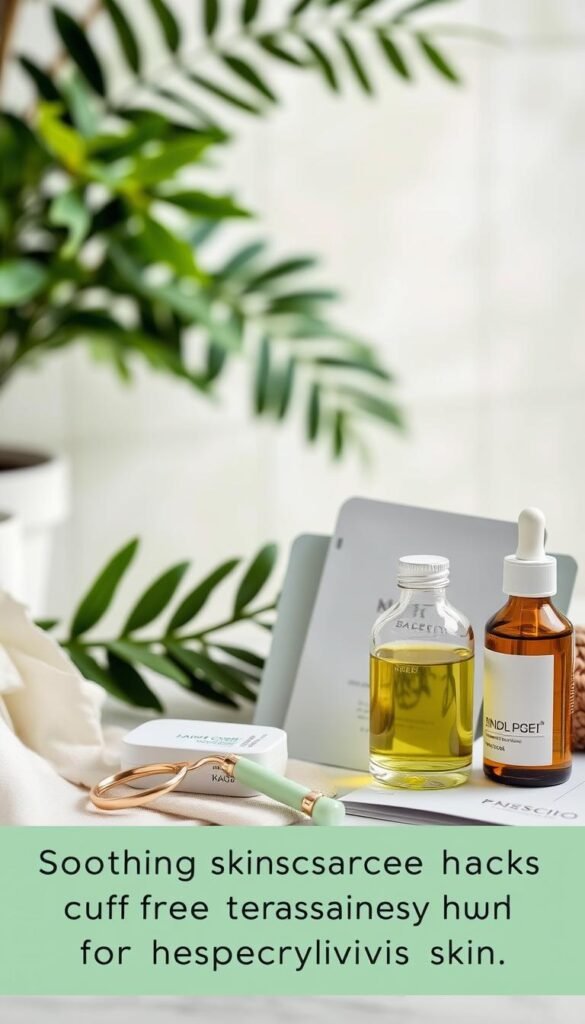
- Product layering order matters – lightweight serums before creams boost absorption without clogging pores
- Cooling tools like jade rollers reduce morning puffiness faster than caffeine creams
- Applying moisturizer to damp faces locks in hydration like a sealed vault
I once rushed through my nighttime routine, unaware that haste caused more irritation. Now I set a timer for 90 seconds during cleansing – just enough to remove impurities without stripping natural oils. This small hack alone reduced redness by 40% in three weeks.
Patch-testing became my non-negotiable ritual. I keep a dedicated notebook to track reactions, noting even subtle changes like slight warmth or temporary tightness. Over time, patterns emerged that helped me build a truly personalized routine.
Remember: What works during humid summers might fail in dry winters. I adjust my hydration levels seasonally, using humidifiers when heaters zap moisture from the air. These adaptable strategies keep my complexion resilient through changing environments.
How to Read and Choose the Right Skincare Products
Decoding product labels felt like learning a new language until I cracked the code. The American Academy of Dermatology confirms what I’ve experienced firsthand: common additives like fragrances and alcohol often hide in plain sight. Let’s simplify your next shopping trip with practical strategies.
Read Ingredient Labels Carefully
I keep this cheat sheet in my phone for quick reference:
| Ingredient Type | Common Problem | Smart Swap |
|---|---|---|
| Alcohol (denatured) | Stripping natural oils | Squalane or glycerin |
| Synthetic fragrances | Redness flare-ups | Chamomile extract |
| Sodium lauryl sulfate | Barrier damage | Cocamidopropyl betaine |
Look beyond marketing terms like “natural” or “clean.” I’ve learned to scan for pH-balanced formulas near the top of ingredient lists. Acids that help others might trigger your reactivity – always check concentrations below 5%.
Patch Test for Reactions
My golden rule? “Test first, regret never.” Apply a pea-sized amount behind your ear or inner wrist. Wait 48 hours before judging results. This simple step saved me from a full-face reaction to a “gentle” clay mask last summer.
Track results in a dedicated notebook. Note any tingling, warmth, or dryness. Over time, you’ll spot patterns revealing which ingredients your body rejects. Remember: Even hypoallergenic products can cause unexpected responses.
The Ideal Cleansing Routine for Sensitive Skin
I used to dread washing my face until discovering how proper techniques could transform my comfort. The American Academy of Dermatology confirms what changed my approach: once-daily cleansing works best for reactive types. Let’s explore how temperature and method choices create lasting calm.
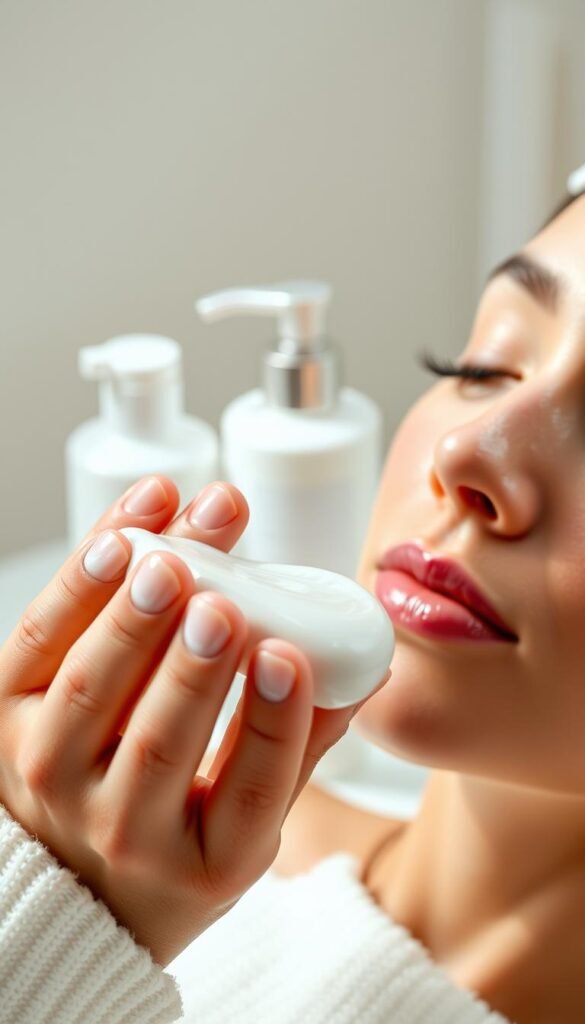
Benefits of Lukewarm Water and Gentle Cleansing
Extreme temperatures disrupt your natural moisture balance. I learned this after months of tightness following hot showers. Now I stick to tepid water that feels like a spring breeze – warm enough to loosen impurities without stripping protection.
| Water Temperature | Effect on Face | Better Alternative |
|---|---|---|
| Hot (>100°F) | Strips protective oils | Lukewarm (85-90°F) |
| Cold ( | Restricts pore cleaning | Cool rinse post-cleanse |
My game-changer? Micellar water. Brands like L’Oréal Paris create formulas that lift makeup without rubbing. It’s like using a magnet instead of sandpaper on delicate surfaces.
Step-by-Step Cleansing Techniques
Here’s my evening ritual that keeps redness at bay:
- Remove eye makeup with oil-free pads
- Apply cleanser using ring finger pressure (weakest digit)
- Massage in upward circles for 60 seconds
- Rinse with handfuls of tepid water
- Pat dry with bamboo fiber cloth
Mornings get a splash of cool water instead of full cleansing. This less-is-more approach lets natural oils protect throughout the day. Remember: Your face should feel supple, never squeaky, after washing.
Shielding Your Skin: Sun Protection and Makeup Tricks
Finding balance between protection and beauty felt impossible until I cracked the code. Sun exposure amplifies reactivity, while heavy cosmetics often trigger flare-ups. Through experimentation, I discovered strategies that defend delicate complexions while enhancing natural beauty.

Your Daily Defense Strategy
Mineral sunscreens became my armor against UV damage. Formulas with zinc oxide sit on the surface like a protective shield rather than absorbing into skin. I apply SPF 30+ every morning – even on cloudy days – using upward strokes to avoid tugging.
Here’s my foolproof layering method:
- Let moisturizer absorb for 3 minutes
- Dot sunscreen across high points (cheeks, nose, forehead)
- Blend outward with clean fingertips
Color Correction Made Simple
Redness used to dictate my makeup choices until green correctors changed the game. The L’Oréal Paris True Match crayon neutralizes flushed areas without masking my natural complexion. I gently dab it on problem zones before blending with a damp sponge.
Pro tip: Apply correctors in natural light to avoid overcompensation. Pair with breathable mineral foundation for seamless coverage that lets your skin breathe.
Nightly removal matters as much as application. I follow the 60-second rule: massage cleansing oil for a full minute to dissolve sunscreen and makeup without abrasion. This ritual keeps my barrier intact while preventing pore congestion.
DIY Skincare Hacks to Soothe and Hydrate
My kitchen became my skincare lab when store-bought options kept causing flare-ups. Simple pantry staples now deliver better results than expensive creams. Let me share formulas that transformed my self-care routine.
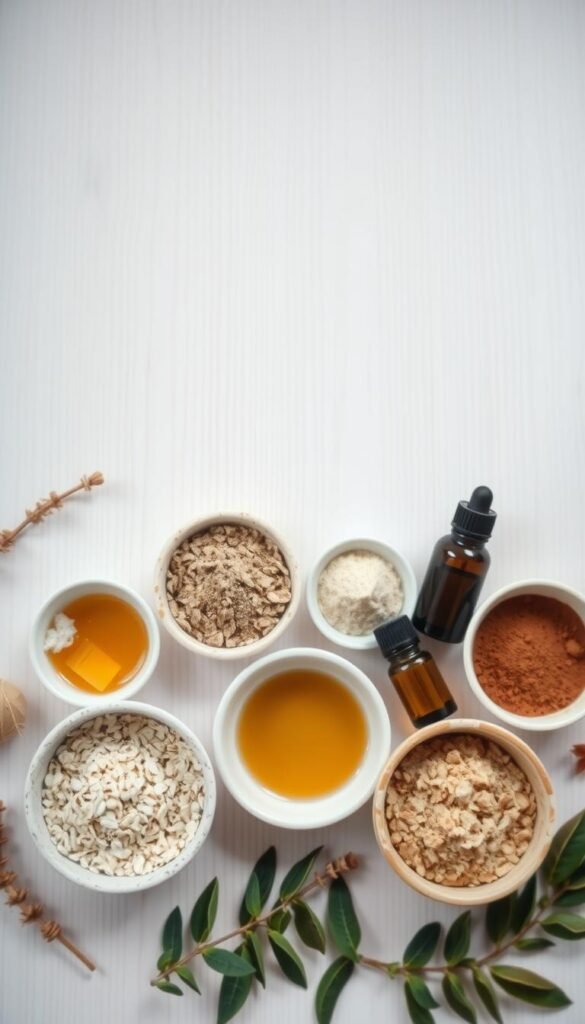
Custom Blends for Lasting Comfort
Dr. Sandra Lee’s advice changed my approach: “Nature’s pharmacy often holds gentler solutions.” This table shows my favorite combinations:
| Main Ingredient | Key Benefit | Perfect Pairing |
|---|---|---|
| Raw Honey | Locks in moisture | Oatmeal + 1 tsp water |
| Aloe Vera | Cools inflammation | 2 drops hyaluronic acid |
| Green Tea | Fights redness | 1 tbsp plain yogurt |
My weekly ritual starts with honey and oatmeal. I mix them into a thick paste that tingles slightly as it works. Rinsing after 10 minutes leaves my face baby-soft without tightness.
For emergency hydration, I blend chilled aloe gel with hyaluronic acid serum. This 5-minute hack plumps fine lines better than some $50 masks I’ve tried. Just remember: natural doesn’t mean risk-free. Always test mixtures on your wrist first.
Timing matters more than you’d think. I set a phone alarm for 12 minutes max – enough for benefits without overexposure. Follow with your regular moisturizer to seal in all that goodness!
Smart Skincare Swaps and At-Home Remedies
I used to believe effective treatments required luxury prices – until drugstore aisles proved me wrong. Dr. Sandra Lee’s recommendations transformed my approach to daily care, showing how accessible solutions make a real difference.
Aquaphor Healing Ointment became my go-to for cracked lips and dry patches. Its occlusive formula acts like a protective hug for irritated skin. For larger areas, Eucerin’s fragrance-free creme delivers intense hydration without triggering reactions.
I keep 1% hydrocortisone cream for emergency flare-ups, but use it sparingly. The real magic lies in pairing these staples with your regular moisturizer. This layered way of managing discomfort keeps my routine adaptable and budget-friendly.
What surprised me most? These affordable products often outperform fancy alternatives. Their minimalist formulas reduce ingredient guesswork while addressing specific concerns. Now I travel with a curated kit containing these heroes – ready for any skin crisis.
Pro tip: Test new treatments during low-stress periods. This lets you gauge true effectiveness without environmental interference. Your best solutions might already be waiting at the local pharmacy.