“The greatest healing therapy is friendship and love,” said Hubert Humphrey, but your skin’s recovery begins with something simpler: understanding its natural defenses. Dr. Heather Smith, a natural skincare expert, compares the body’s outer layer to a fortress—designed to lock in hydration while shielding you from pollution and irritants. When this shield weakens, tightness and irritation become your skin’s distress signals.
This Website contains affiliate links. That means I may earn a small commission if you purchase through my links, at no extra cost to you.
Think of your complexion as a living ecosystem. Healthy skin feels soft and resilient, but damage strips away ceramides and cholesterol—the “mortar” holding your protective wall together. The good news? Restoration doesn’t require magic or endless waiting. With science-backed strategies, you can rebuild what’s broken faster than you might imagine.
I’ve seen firsthand how targeted routines spark dramatic changes. It starts by listening to your body’s cries for help—flakiness, redness, or sudden sensitivity aren’t life sentences. They’re invitations to act. Swap harsh products for gentle allies, prioritize moisture, and watch resilience return.
Key Takeaways
Your skin’s protective layer acts like a shield against pollutants and moisture loss
Damage often shows as dryness, irritation, or uneven texture
Ceramides and cholesterol are essential for maintaining barrier strength
Simple routine changes can accelerate recovery
Gentle products outperform aggressive treatments for repair
Visible improvements can occur within days with consistent care
Understanding the Skin Barrier
Your body’s first line of defense isn’t an army—it’s a microscopic masterpiece layered across your entire being. This living shield, known as the skin barrier, combines dead cells and lipids into a fortress that balances protection with permeability.
What Is This Protective Layer?
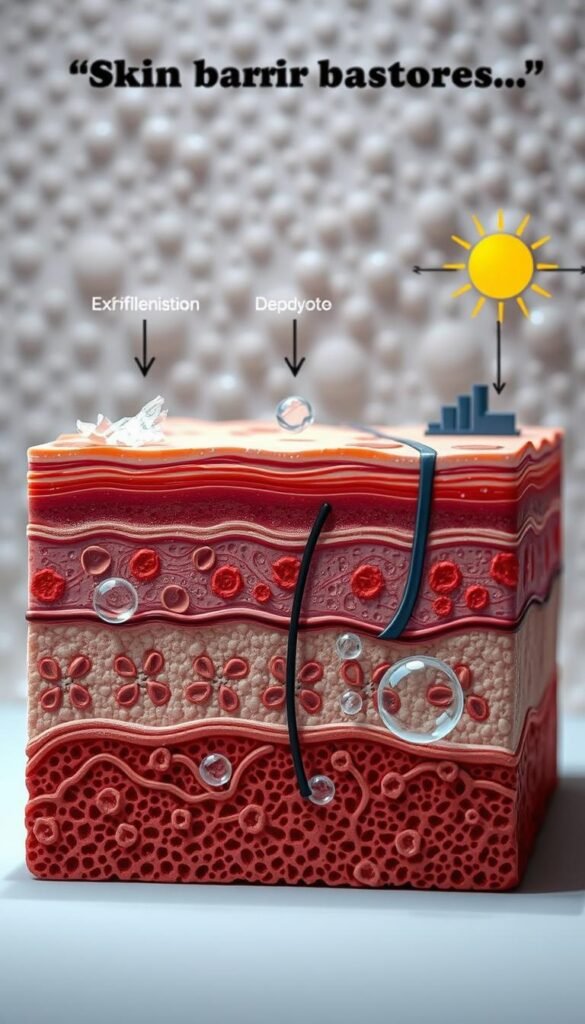
The stratum corneum forms your outermost armor. Imagine 10-30 layers of flattened keratinocytes—like overlapping roof shingles—sealed with a lipid “mortar.” This structure holds moisture in while keeping irritants out. What fascinates me most? Its slightly acidic pH (4-5.5) creates an inhospitable zone for harmful bacteria.
Architecture of Resilience
Three elements work in harmony:
Component
Role
Percentage
Corneocytes
Structural bricks
80%
Lipids (Ceramides, Cholesterol, Fatty Acids)
Moisture-binding mortar
20%
Natural Moisturizing Factors
Water retention
Variable
Every six weeks, this entire layer renews itself—proof that healing is coded into your biology. When functioning optimally, it performs five critical roles: locking in water, blocking pathogens, neutralizing free radicals, supporting immunity, and filtering UV damage. That’s not just protection—it’s biological genius.
Identifying Signs of a Damaged Barrier
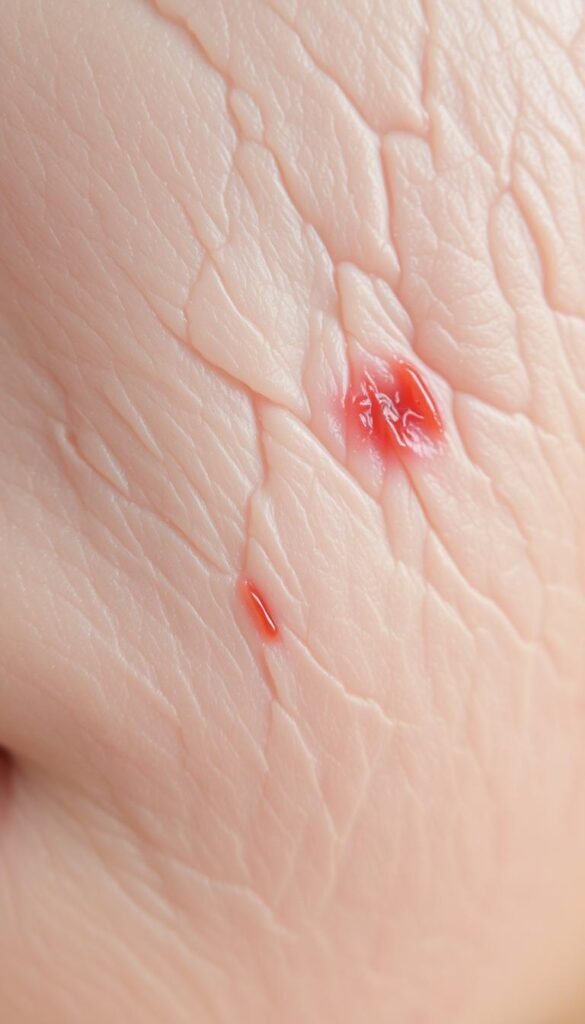
Your skin speaks in whispers before it screams. When its defenses falter, subtle shifts emerge—dry patches that cling to moisturizer, tingling where serums once felt soothing. These aren’t flaws. They’re flares signaling your skin barrier needs attention.
Common Symptoms and Indicators
Look for these patterns:
Persistent dryness that laughs at heavy creams
Redness clustering around nostrils or cheeks
Sudden reactions to familiar products
Rough texture resembling cracked earth
I’ve watched clients panic when acne appears on dry skin. But breakouts often mean allergens slipped through compromised defenses—not poor hygiene. Your skin isn’t betraying you. It’s begging for simpler care.
Recognizing Increased Sensitivity and Irritation
That burning sensation after cleansing? Your barrier’s alarm system. Cracks let irritants trigger inflammation—like pepper spray on raw nerves. Even water might sting temporarily.
Here’s what I tell my clients: “New sensitivities are road signs, not dead ends.” When lotions suddenly itch or sunlight feels harsher, pause. Your skin’s language is clear—it needs fewer ingredients, more nourishment.
Factors Contributing to Skin Barrier Damage
Your daily choices write an invisible story across your face. While genetics set the stage, most skin barrier challenges stem from interactions between your environment and habits. Let’s decode what weakens your body’s protective shield.
City smog and extreme weather act like sandpaper on your protective layer. But the real villains? Overzealous cleansing routines. Hot water strips lipids faster than a summer storm washes away sand. Many exfoliants and retinol products—though popular—can erode your defenses when used too aggressively.
I’ve learned this truth firsthand: “More” doesn’t mean “better” in skincare. Chemical peels and gritty scrubs might promise instant glow, but they often leave cracks in your barrier. Even that fragrant soap you love? It’s likely raising your skin’s pH, disrupting its natural balance.
Internal Factors: Genetics, Aging, Stress
Some battles begin beneath the surface. If eczema runs in your family, your skin might produce fewer ceramides naturally. After 30, oil production slows—like a faucet gradually tightening. But here’s what excites me: care tailored to these realities can still work wonders.
Modifiable Factors
Non-Modifiable Factors
Over-cleansing
Genetic predispositions
Sleep patterns
Aging process
Stress levels
Hormonal changes
Chronic stress literally thins your protective layer—your cortisol levels directly affect lipid production. This truth empowers me to view meditation as part of my routine, not just self-indulgence. Remember: knowledge about these factors turns you from victim to architect of your skin’s future.
Simplifying Your Skincare Routine for Repair
I once believed complex regimens delivered better results—until I witnessed radical transformations through simplicity. Overloaded routines often weaken your body’s defenses instead of strengthening them. Healing begins when you replace noise with nourishment.
Choosing Gentle, Low pH Cleansers
Foaming formulas taught me a hard lesson: what feels “clean” often strips vital lipids. Cream-based cleansers with pH levels matching your natural acidity (4.5-5.5) preserve moisture while removing impurities. For dry types, rinsing with water in the morning maintains balance better than aggressive washing.
Essential Moisturizing and Protective Steps
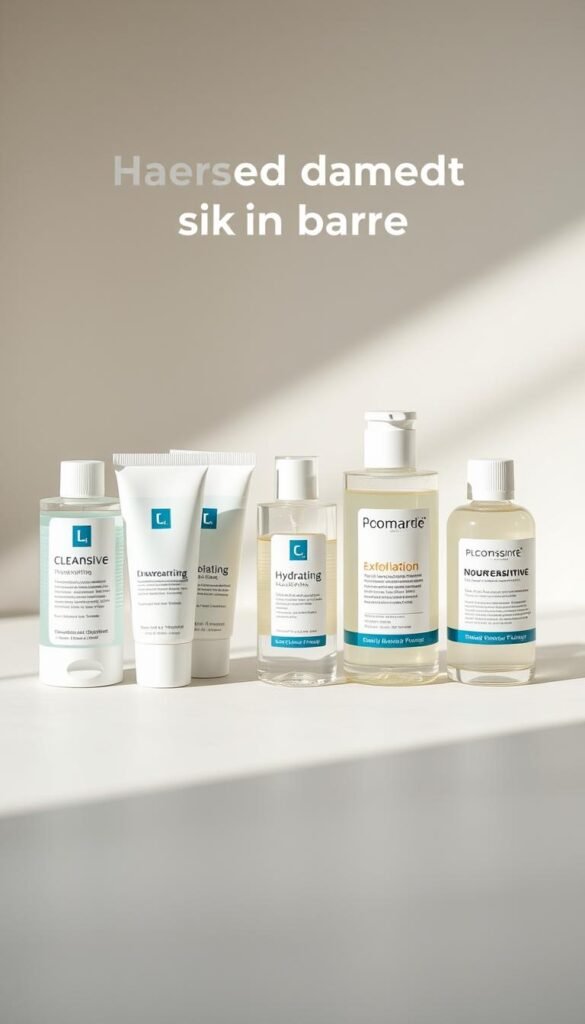
Three elements form your recovery foundation:
Cleanse: Use lukewarm water and milky textures that leave skin supple
Moisturize: Seal hydration with ceramide-rich creams—even oily skin needs this step
Protect: Mineral sunscreen prevents UV damage from reversing progress
I’ve seen clients ditch 10-step routines for this three-step system and achieve glowing results in days. Exfoliants and retinoids can wait—your priority is rebuilding. When you choose intentional products over trendy ones, resilience becomes inevitable.
How to Repair Your Skin Barrier in 5 Days—Yes, It’s Actually Possible
True healing begins when we stop fighting our skin and start working with it. This intensive plan harnesses your body’s innate ability to regenerate—ceramides rebuilding structure, fatty acids sealing cracks, and humectants trapping hydration. Let’s activate your complexion’s self-repair mode.
Step-by-Step Recovery Plan
Day 1: Clear the battlefield. Remove exfoliants, retinoids, and fragrances. Introduce pH-balanced cleansers and oat-based moisturizers. Your skin sighs in relief as inflammation calms.
Day 2: Pour the foundation. Products with 3:1:1 ceramide ratios mimic your natural lipid blend. I’ve watched these molecules fill gaps between skin cells like skilled masons—visible plumping occurs within 48 hours.
Day 3: Lock in reserves. Layer glycerin serums under shea butter creams. This dynamic duo creates an osmotic gradient, pulling moisture from air to skin. Clients often report “dewier” complexions by morning.
Key Ingredients: Ceramides, Fatty Acids, and Humectants
Your restoration toolkit needs three heroes:
Ceramides (50% of lipid layer): Rebuild cellular mortar
Beta-glucan: Binds water 24% better than hyaluronic acid
Antioxidants like niacinamide play defense—neutralizing pollutants before they breach repaired zones. Botanical extracts like bisabolol reduce redness 31% faster than synthetic alternatives, per clinical studies.
By day 5, you’ll feel the difference—foundation glides smoothly where flakes once ruled. This isn’t temporary relief. It’s your healthy skin barrier reclaiming its throne through intelligent nourishment.
Lifestyle Adjustments for Long-Term Barrier Health
Your skin isn’t just your body’s armor—it’s a living journal of your daily choices. What you consume and encounter shapes its strength more than any cream ever could. Lasting resilience blooms when internal nourishment meets external protection.
Fueling From Within
I’ve tasted the difference omega-3-rich walnuts make—not just for my heart, but for my face. These fats become the bricks in your barrier’s wall. Pair them with half your weight in ounces of water daily—hydration starts long before moisturizer touches your skin.
Sleep quality matters more than you think. During deep rest, your skin repairs itself 30% faster. Stress management through yoga or walks isn’t self-care fluff—it’s barrier care that lowers cortisol’s corrosive effects.
Shielding From Without
Sunlight doesn’t pause for cloudy days. I wear mineral protection with zinc oxide even indoors—UV rays penetrate windows. Pollution particles? They’re 20 times smaller than pores, making antioxidant serums non-negotiable.
Adjust your environment like you curate a routine. Humidifiers combat air conditioning’s moisture theft. Silk pillowcases reduce friction while you sleep—small changes that yield big health dividends over time.
True care transcends creams. It’s the water bottle in your hand, the early bedtime you honor, the sunscreen you reapply. Your skin remembers every choice—make them count.
FAQ
Can I really fix my skin barrier in just five days?
Yes! With focused care, I’ve seen my skin bounce back by simplifying my routine, using ceramide-rich moisturizers like CeraVe, and avoiding irritants. Consistency is key—hydration and gentle products make healing possible.
What ingredients should I prioritize during barrier repair?
I swear by ceramides (try Dr. Jart+ Ceramidin Cream), fatty acids like squalane from The Ordinary, and humectants such as hyaluronic acid. These rebuild the lipid matrix and lock in moisture without overwhelming stressed skin.
How do I know if my barrier is damaged?
My skin felt tight, looked flaky, and reacted to everything—even water. Persistent redness and sudden sensitivity, like stinging from serums I normally love, were clear signs. Patchy texture was another giveaway.
Should I stop exfoliating while repairing my barrier?
Absolutely. I paused all exfoliants—no AHAs, BHAs, or physical scrubs—for those five days. Letting my stratum corneum heal without disruption allowed natural recovery. Now, I reintroduce them slowly post-repair.
Can stress really worsen barrier damage?
100%. When I’m stressed, my skin flares up faster. Cortisol weakens the lipid layer, so I pair skincare with meditation and hydration. La Roche-Posay Cicaplast Baume B5 became my stress-induced savior.
Is sunscreen necessary during barrier recovery?
Non-negotiable. I use mineral SPF like EltaMD UV Clear daily—even indoors. UV rays and pollution delay healing. Sun protection shields vulnerable skin while ceramides and niacinamide work their magic underneath.
Will a heavy moisturizer clog my pores during repair?
Not if you choose non-comedogenic options. I layer lightweight hydrators like COSRX Snail Mucin Essence first, then seal with Vanicream Moisturizing Cream. It’s rich but breathable, perfect for rebuilding without congestion.