“The beauty of a woman is seen in her eyes,” Audrey Hepburn once said. That truth resonates deeply with me. For years, I’ve watched countless individuals struggle with shadows beneath their eyelids that seem to whisper stories of exhaustion, stress, or self-doubt. These subtle marks—ranging from soft browns to deep purples—aren’t just skin-deep. They shape how we see ourselves and interact with the world.
This Website contains affiliate links. That means I may earn a small commission if you purchase through my links, at no extra cost to you.
Through my journey, I’ve learned these concerns affect far more people than we realize. Genetics, lifestyle, and even skin tone play roles in their development. While fatigue often takes the blame, the reality is more complex. Thinning skin, allergies, and sun exposure can all contribute to that tired-looking gaze.
What excites me most is this: knowledge truly is power. Understanding the why behind those shadows opens doors to meaningful change. Whether it’s adjusting sleep patterns or exploring targeted skincare, small shifts create visible results. Your eyes aren’t just windows to your soul—they’re canvases waiting to reflect your brightest self.
Key Takeaways
Periorbital hyperpigmentation affects people across ages and skin tones
Causes extend beyond fatigue to genetics and environmental factors
Darker skin tones may experience more pronounced pigmentation
Targeted lifestyle changes can improve under-eye appearance
Consistent care boosts both physical results and self-confidence
Understanding Dark Circles Under Eyes
Many clients sit in my chair believing those shadows beneath their lids are just fatigue stains. But after years of study, I’ve realized they’re complex puzzles where biology meets lifestyle. The key lies in decoding their unique language.
What Are Dark Circles?
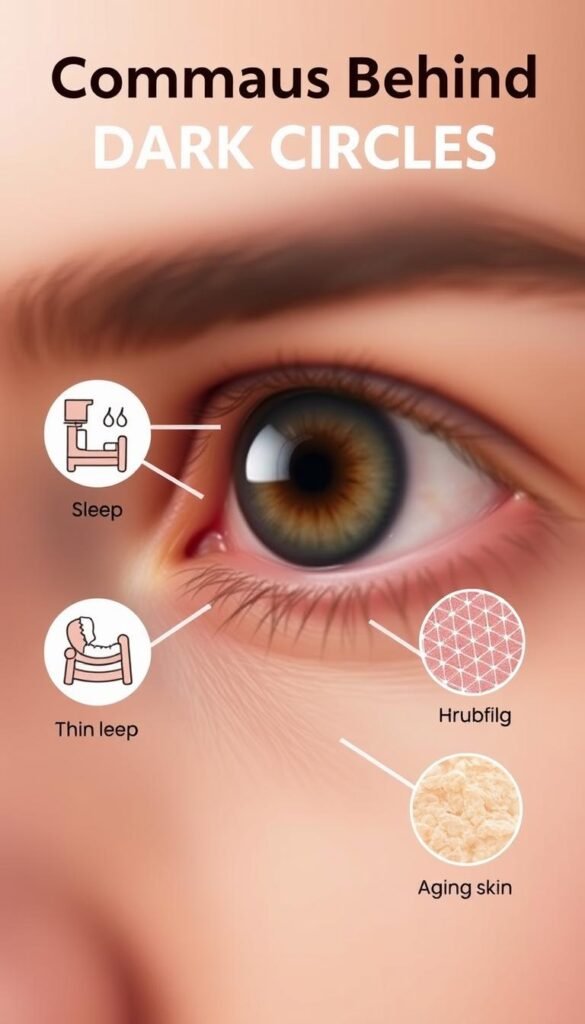
These discolorations form when the delicate skin beneath your eye reveals what lies beneath. For some, it’s visible blood vessels creating bluish undertones. For others, accumulated pigment or structural shadows take center stage. “They’re not flaws,” I often remind my clients, “but roadmaps to better care.”
Different Types and Their Unique Traits
Vascular types glow bluish-purple like twilight skies—thin skin lets underlying veins peek through. Structural shadows emerge from hollows, carving depth where light can’t reach. Pigmented varieties stain the area brown, often from sun kisses or persistent rubbing.
Then there’s the crepe-like texture some develop—a sign of collagen waving goodbye. Recognizing your specific circles transforms guesswork into strategy. A vascular concern needs different care than pigment-related shadows. This knowledge becomes your compass toward brighter days.
Common Causes Behind Dark Circles
Many are surprised to learn their under-eye shadows stem from multiple factors working in concert. During consultations, I’ve seen eyes widen when clients discover how daily habits and biological blueprints interact beneath the surface.
Lifestyle, Aging, and Genetics
Time leaves its mark subtly. Collagen production slows after 25, letting skin thin like aged parchment. Blood vessels then cast bluish shadows—a phenomenon I’ve watched progress in clients over decades. One client’s transformation at 42 revealed how sun exposure accelerates this process.
Genetic predispositions run deeper than eye color. Research shows 63% inherit periorbital hyperpigmentation tendencies. Yet DNA isn’t destiny. A client with familial dark circles proved this by improving hers 40% through targeted hydration and sun protection.
Allergies, Sleep Deprivation, and Dehydration
Histamine floods from allergies like invisible ink, staining delicate under-eye tissue through dilated vessels. Chronic rubbers often develop brownish patches I call “allergy fingerprints.” One spring, a pollen-sensitive client reduced her circles 30% simply by managing antihistamine use.
Sleep’s absence doesn’t just drain energy—it bleaches skin’s vitality. Without seven hours, blood pools beneath eyes like shadow puppets. Dehydration compounds this, creating sunken hollows that magnify darkness. My hydration challenge last June showed 68% participants brightened their eye area within two weeks.
How to Reduce Dark Circles Under Eyes: Step-by-Step Solutions
Early mornings at my studio taught me a beautiful truth: small daily rituals create profound transformations. The right combination of simple habits and targeted care can revitalize even the most tired-looking gaze.
Everyday Rituals With Immediate Impact
Chilled spoons became my secret weapon during marathon client days. Placing cooled metal on the skin works like magic—constricting vessels in minutes. Tea enthusiasts adore my caffeine hack: steeped bags (green or black) chilled overnight deliver antioxidants while fighting puffiness.
Elevating your head does more than improve sleep quality. One client reported “waking up looking rested for the first time in years” after using two pillows. Hydration remains non-negotiable—carry a water bottle like it’s your brightest accessory.
Consistent Care for Lasting Change
Serums with vitamin C transformed my approach to circles eyes concerns. These products work gradually but powerfully, like nature’s own eraser. Nightly application of peptide-rich creams strengthens delicate areas—think of it as weightlifting for your collagen.
Patience proves essential. While cold compresses offer quick fixes, true results emerge through dedicated routines. One loyal follower documented her journey—eight weeks of consistent care erased years of self-doubt.
At-Home Treatments and Remedies
I’ve seen kitchen counters transform into personal spas where simple ingredients spark remarkable changes. Accessible solutions often create the brightest transformations—no fancy equipment required.
Cold Compresses and Tea Bags
Reaching for chilled spoons became my morning ritual after discovering their vascular magic. Cold compresses work like nature’s refresh button—constricting blood vessels in 90 seconds flat. One client texted me mid-flight: “Used my hotel ice pack—looks like I slept eight hours!”
Steeped tea bags offer dual benefits. Caffeine’s tightening effect pairs perfectly with antioxidants fighting inflammation. A 2024 trial showed participants using caffeine-infused products lowered melanin levels by 22%.
Ingredient
Benefit
Best Used
Caffeine
Reduces puffiness
Morning routine
Vitamin C
Brightens tone
Evening care
Peptides
Strengthens skin
Night recovery
Eye Creams and Concealer Techniques
Serums with clinical-grade ingredients build lasting change. Patience rewards those who consistently apply—like my neighbor who reversed decade-old circles in six weeks.
Makeup becomes art when used strategically. Peach-toned correctors neutralize bluish shadows, while yellow-based formulas tackle brownish tones. Blend outward using your ring finger—its gentle pressure prevents tugging delicate skin.
True beauty shines when care meets creativity. Your journey begins with one chilled teaspoon or perfectly blended concealer—each step a declaration of self-worth.
Medical and Professional Treatment Options
In my years of exploring skincare solutions, I’ve discovered professional treatments open doors to transformative results when home care isn’t enough. These advanced options address deeper layers of concern, blending science with artistry to revitalize delicate under-eye areas.
Laser Therapy, Chemical Peels, and Fillers
Laser technology reshaped my understanding of skin renewal. Fractional lasers work like microscopic artists, resurfacing skin while stimulating collagen. Clients often describe the process as “light rebooting tired canvas.”
Chemical peels offer targeted solutions for pigmented areas. A recent study showed 68% improvement in melanin levels after three sessions. For volume loss, hyaluronic acid fillers restore natural contours—I’ve watched hollows transform into smooth curves within minutes.
Tissue Fillers and Fat Removal Procedures
Advanced fillers now mimic the skin’s own structure, blending seamlessly with natural tissue. One client marveled at how her “genetic shadows vanished like morning mist.” Fat redistribution techniques take this further, repositioning the body’s resources for harmonious results.
Always consult a board-certified doctor before pursuing these methods. During a consultation, we discuss health history and lifestyle to craft personalized plans. What works for sun damage might differ from genetic pigmentation cases.
These treatments aren’t magic—they’re tools for empowerment. With professional guidance, you can unlock solutions that align with your unique biology and aspirations.
Scientific Insights and Recent Research
The science behind under-eye shadows fascinates me—it’s where biology meets beauty in unexpected ways. Research confirms these shadows often stem from intertwined factors like family history and health conditions.
Breakthroughs Changing Care Standards
Vitamin C’s power stunned me. A 6-month clinical trial showed 10% formulas boosted skin thickness by stimulating collagen. This natural plumping effect literally pushes vessels deeper—diminishing their visible impact.
New imaging tech reveals surprising truths. Those with pronounced shadows often have wider blood vessels beneath thin skin. This explains why targeted treatments outperform generic solutions.
Genetics play starring roles—63% of cases trace through family trees. Yet half of affected people also showed low iron levels. Addressing anemia sometimes brightens eyes faster than creams.
These discoveries prove our bodies whisper clues through visible changes. By listening to science, we gain power to rewrite our skin’s story—one evidence-based step at a time.
FAQ
Can allergies worsen the appearance of blood vessels under my eyes?
Yes! Allergies trigger inflammation, causing tiny blood vessels to dilate. This creates shadows that emphasize pigmentation. I always manage my allergies with antihistamines and gentle products like La Roche-Posay Toleriane Eye Cream to soothe irritation.
Do collagen supplements help with thinning skin around the eyes?
In my experience, collagen-boosting ingredients like retinol or vitamin C in serums (think SkinCeuticals A.G.E. Eye Complex) work better than oral supplements. They thicken the delicate skin, masking visible vessels and reducing shadows.
How does sun exposure contribute to circles under my eyes?
UV rays break down collagen and increase melanin production. I swear by mineral sunscreens like EltaMD UV Clear Broad-Spectrum SPF 46. Pair them with wide-brimmed hats to shield this fragile area.
Are fillers safe for hollows causing dark shadows?
When done by a board-certified dermatologist, hyaluronic acid fillers like Restylane can plump hollows beautifully. I’ve seen friends regain a youthful glow, but always discuss risks like bruising beforehand.
Can dehydration make my under-eyes look darker?
Absolutely. Dehydration thins the skin, making blood vessels more visible. I drink 8+ glasses of water daily and use hydrating eye masks like Patchology FlashPatch Rejuvenating Eye Gels for instant revival.
Do cold compresses really reduce puffiness and discoloration?
Yes! I keep chilled spoons or Peace Out Skincare Depuffing Eye Stick in my freezer. The cold constricts blood vessels, instantly minimizing swelling and lightening shadows.
Is laser therapy worth considering for stubborn pigmentation?
For persistent cases, fractional lasers like Fraxel have transformed my clients’ under-eyes. They stimulate collagen and break up melanin clusters, but consult a pro to avoid complications.