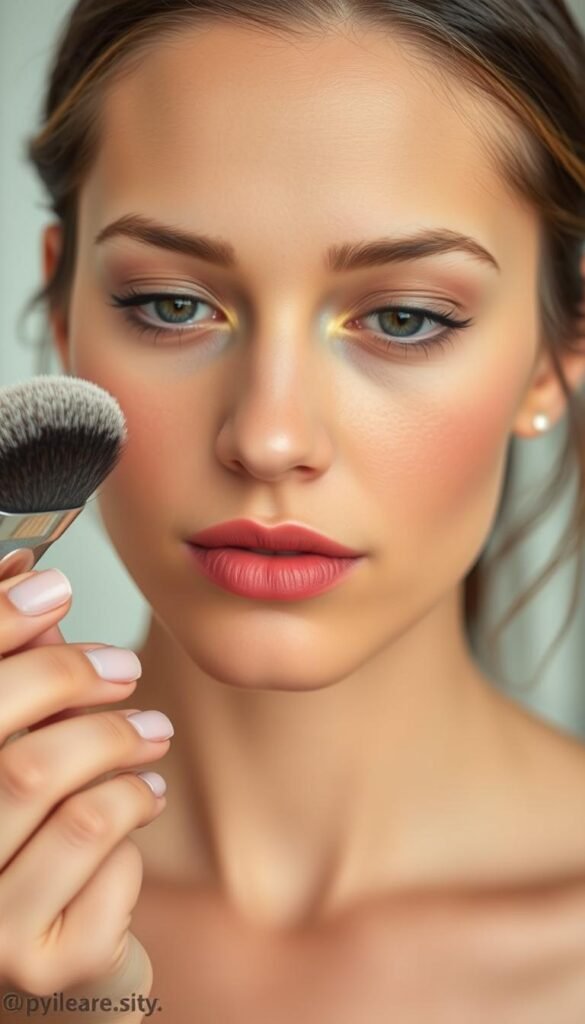
“Success is liking yourself, liking what you do, and liking how you do it.” – Maya Angelou’s words resonate deeply when tackling stubborn under-eye shadows. Like many, I’ve battled genetic dark circles that no amount of sleep could erase. But through trial and error, I discovered a transformative approach that celebrates self-care and smart techniques.
This Website contains affiliate links. That means I may earn a small commission if you purchase through my links, at no extra cost to you.
Growing up, I thought my blue-gray under-eye area was a flaw to fix. Now, I see it as a canvas for creativity. The secret? A strategic blend of skincare prep and color science. My method isn’t about masking imperfections—it’s about enhancing your natural radiant complexion with precision.
What makes this system work? Layering products in the right order prevents that dreaded cakey texture. Starting with hydration, moving through color correction, and finishing with setting spray creates a fresh-faced illusion that lasts. I’ll show you how choosing the right peach-toned corrector can neutralize shadows better than any heavy concealer alone.
Key Takeaways
Genetic under-eye shadows require targeted color correction techniques
Peach or salmon-toned products counteract blue-gray undertones
Product layering order determines long-lasting results
Lightweight formulas prevent creasing in delicate eye areas
Setting techniques lock in brightness without heavy textures
Confidence grows when techniques align with your unique features
Skincare and Priming: Laying the Foundation
My morning ritual begins long before makeup touches my skin. Cleansing with lukewarm water awakens my entire face, while a soft towel pat-dry preserves delicate under-eye area tissue. This mindful start transforms makeup application from a chore to self-care.
Embracing a Clean Canvas with Eye Cream
I reach for L’Oreal Paris Revitalift Eye Serum first. Its hyaluronic acid and caffeine blend depuffs my lids within minutes. A pea-sized amount, warmed between ring fingers, glides from inner corners to temples. This step isn’t optional—it’s my secret weapon against dark under-eye shadows.
Hydration matters most. Well-moisturized skin lets color corrector blend like watercolor. I wait three minutes before priming—patience prevents product pilling.
Choosing the Right Makeup Primer
L’Oréal Paris Matte Setter Primer becomes my second skin. Two pumps smooth over my T-zone first, then outward in gentle circles. For cover dark circles success, I press extra product beneath eyes using my pinky’s side.
This silicone-free formula creates a breathable grip for foundation. Mornings used to mean midday touch-ups. Now, my eye makeup stays fresh through sunset meetings and evening walks. The right prep work doesn’t hide—it elevates.
Effective Strategies: how to hide dark circles with makeup
Discovering color theory felt like unlocking a secret beauty code. Through years of experimentation, I’ve refined techniques that turn dark under-eye circles into opportunities for artistic expression. The magic happens when science meets skillful application.
Mastering Color Correction With the Color Wheel
Opposite hues neutralize each other—this principle revolutionized my routine. Blue-gray shadows vanish under peach corrector, while purple tones melt away with yellow-based formulas. For deeper skin tones, orange becomes the ultimate color-canceling hero.
I apply corrector sparingly using my ring finger. Tiny dots placed along the under-eye area’s hollows get gently pressed, not rubbed. This preserves the product’s neutralizing power without disturbing delicate skin.
Personal Tips for Seamless Concealer Application
After color correction, I reach for a concealer two shades brighter than my foundation. Starting at inner corners, I stamp product toward my temples—this diagonal placement creates an instant eye lift. A damp makeup sponge blends edges seamlessly into my complexion.
Patience makes perfect here. I let each layer set slightly before adding more. This prevents creasing and maintains that coveted “I woke up like this” freshness. The final result? Eyes that glow with natural vitality, not product buildup.
Building a Flawless Base: Foundation and Setting Techniques
My relationship with foundation deepened when I started treating it as the finishing touch, not the starting point. Applying it after color corrector and concealer creates a unified canvas that celebrates natural luminosity. This order prevents ashy undertones while letting your carefully neutralized under-eye area shine through.
Finding the Perfect Foundation for Your Complexion
Skin type dictates my formula choice every time. Dry skin thrives with L’Oréal Paris True Match Hyaluronic Tinted Serum – its 1% hyaluronic acid plumps as it covers. Oily types benefit from Infallible Up to 24H Fresh Wear Foundation in Powder format, while combination skin loves True Match Super-Blendable Foundation’s 47 shades. I build my base complexion like a using a damp makeup sponge with gentle dabbing motions.
Locking It In with Translucent Powder and Setting Spray
Baking transforms longevity. I press translucent powder under eyes for five minutes – just enough time to brew coffee. The Pro-Spray Setting Mist gets misted in X then T shapes, sealing my makeup look without stiffness. This combo keeps my complexion fresh through humid afternoons and late-night video calls.
These techniques taught me that true beauty isn’t about covering up – it’s about creating harmony between skin and artistry. When your base feels secure, confidence becomes your boldest accessory.
FAQ
Why is skincare essential before covering under-eye circles?
I’ve learned that hydrated skin creates a smooth base. Applying a lightweight eye cream first plumps the area, preventing concealer from settling into fine lines. Think of it as priming a canvas before painting—it makes everything blend effortlessly.
How do I pick the right color corrector for my dark circles?
Neutralizing tones is my secret! For bluish shadows, I reach for peach or orange correctors. If they’re more purple, a yellow-based corrector works wonders. Blend it gently with a damp makeup sponge before layering concealer—it’s like magic for brightening.
Can I skip foundation when focusing on under-eye coverage?
Absolutely! On minimal makeup days, I spot-conceal with a full-coverage formula that matches my complexion. Just set it with translucent powder to avoid creasing. Remember, less product often means a more natural, fresh-faced look.
What’s your trick for keeping concealer from looking cakey?
Less is more. I apply tiny dots of product and blend outward with a fluffy brush. Pressing—not rubbing—with a ring finger warms the formula, melting it into skin. A spritz of setting spray afterward locks it in without heaviness.
How do I choose a foundation that doesn’t emphasize texture?
I opt for buildable, hydrating formulas with a radiant finish. Avoid matte textures if dryness is a concern. Test shades in natural light, and don’t forget to blend slightly onto the eyelids for a cohesive, seamless base.
Is powder necessary after concealer?
For long-lasting wear, yes! I lightly dust translucent powder under my eyes using a velour puff. It sets the product without dulling the glow. If my skin feels dry, I’ll skip powder and rely on a hydrating setting spray instead.