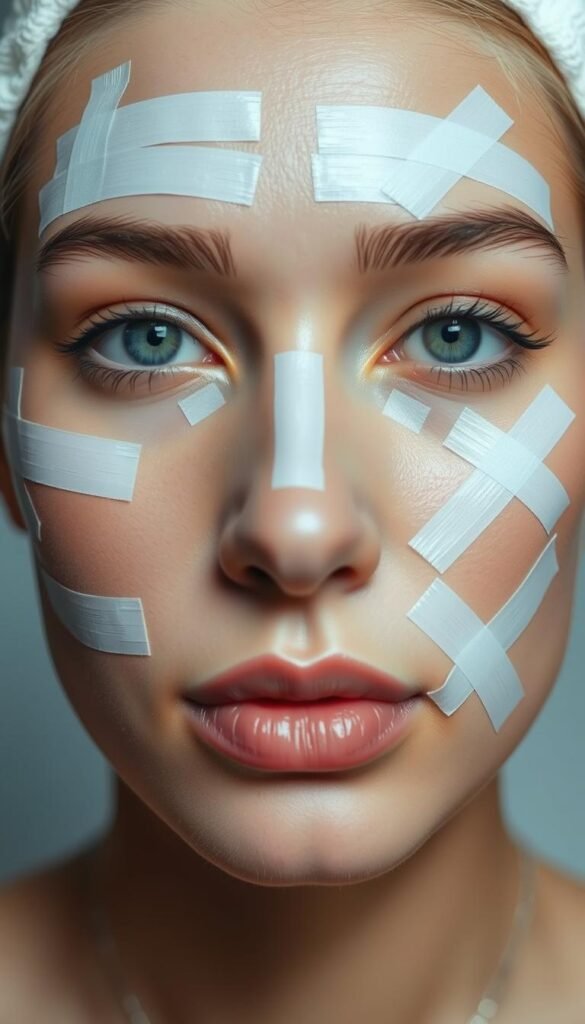
“The beauty of a woman is not in facial mode but the true beauty in a woman is reflected in her soul.” – Audrey Hepburn’s timeless words echoed in my mind as I cautiously pressed adhesive strips to my temples. Could manipulating muscles really preserve youthfulness? My experiment began not with hope, but genuine doubt.
This Website contains affiliate links. That means I may earn a small commission if you purchase through my links, at no extra cost to you.
Social media flooded my feed with influencers praising this low-cost beauty hack. Celebrities swore by temporary lifts for red carpets. Drag artists used it to reshape features. Yet the overnight “training” method intrigued me most – the idea that restricting facial movements might soften lines over time.
I approached this trend like a detective. Research revealed two camps: quick fixes for events versus long-term muscle retraining. Both promised smoother texture without injections. But could sticky solutions outsmart biology? My journals filled with questions about tension, collagen, and sleep positions.
Key Takeaways
Adhesive strips offer temporary smoothing effects for special occasions
Overnight use aims to reduce repetitive facial movements during sleep
Results vary based on skin elasticity and application technique
Not a replacement for medical treatments or skincare routines
Proper removal prevents irritation or damage to delicate areas
What followed was a month of trial, error, and unexpected discoveries. From stubborn forehead creases to laugh lines, I tested multiple methods – some rewarding, others laughably impractical. Let’s unravel the reality behind the viral sensation.
My Introduction to Face Taping and the Quest for Youthful Skin
Curiosity piqued when a viral video claimed adhesive strips could combat aging. At 31, I noticed subtle changes – faint creases framing my eyes, a stubborn groove between brows. My goal shifted from prevention to gentle correction without needles or downtime.
My Initial Interest in Anti-Aging Solutions
I’d cycled through retinoids that left me peeling and serums costing more than my electric bill. Each promised transformative results but delivered marginal improvements. The turning point came during a Zoom call when harsh lighting revealed lines that makeup couldn’t soften. I needed a solution working while I slept.
What Prompted Me to Try This Method?
A beauty blogger’s side-by-side photos caught my attention – smoother texture after three weeks of nightly use. Skepticism battled hope. Could restricting muscle movements during sleep truly impact my appearance? I devoured studies showing how skin loses 1% collagen yearly after 20. This low-commitment way to support elasticity deserved a trial run.
Understanding the Science Behind Face Taping
Skin’s resilience relies on two key architects working beneath the surface. While browsing clinical studies one evening, I discovered a fascinating parallel between athletic recovery tools and dermal rejuvenation. This revelation shifted my perspective from quick fixes to biological processes.
The Role of Collagen and Elastin in Skin Health
Collagen acts like scaffolding, while elastin functions as a rubber band. Together, they create a dynamic support system. Our bodies produce less of these proteins starting in our mid-20s – about 1% annual loss according to dermatological research.
This decline causes tissues to loosen. Gravity then exaggerates the effect. I realized my experiment needed to address both structural support and protein production.
Mechanical Influence on Tissue Behavior
Specialized adhesive materials interact with our biology in unexpected ways. Kinesiology-grade strips possess elasticity matching healthy skin, creating gentle tension when applied. This tension sends signals to underlying muscles and connective tissues.
Superficial Effect
Physiological Effect
Timeframe
Immediate smoothing
Muscle movement restriction
Hours
Visible lift
Collagen stimulation
Weeks
Texture improvement
Elastin reorganization
Months
Studies suggest consistent mechanical pressure encourages fibroblasts – our skin’s construction workers – to produce more collagen. The key lies in creating enough tension to activate cellular responses without causing strain. My nightly routine became a balancing act between these factors.
How Face Taping for Wrinkles Works
The magic lies in strategic placement rather than brute force. Like architectural supports for aging buildings, these adhesive strips provide external reinforcement where our natural collagen framework weakens.
Mechanics of Tape Application and Skin Lifting
Proper positioning follows facial muscle maps. I learned to anchor strips near hairline endpoints, creating gentle upward trajectories. The key? Less than 5% stretch – enough to encourage tissue repositioning without triggering inflammation.
Direction matters more than pressure. Applying from jawline to temple mimics youthful contours. This subtle guidance helps redistribute tension across broader surface areas rather than concentrating stress on creased zones.
During sleep, the strips act as silent coaches. They remind muscles to relax into supported positions, potentially reducing repetitive squinting or frown motions. While results vanish upon removal, consistent use might train facial behavior patterns.
My bathroom mirror became a laboratory. Testing different configurations revealed surprising truths – diagonal placements smoothed crow’s feet better than horizontal ones. Over-tightening caused morning redness, while precise alignment delivered temporary but convincing lifts.
This approach offers mechanical rather than biological change. Think of it as rearranging curtains rather than altering window frames. The effect lasts only while the adhesive holds, making it ideal for events but requiring nightly commitment for sustained benefits.
Exploring Different Tape Application Techniques
Mastering adhesive placements felt like learning a new language. Each crease demanded specific grammar – precise angles, measured tension, and strategic anchors. My bathroom counter transformed into a workstation with scissors and skin-safe adhesives.
Forehead Lines and Dynamic Creases
Horizontal strips became my first vocabulary lesson. Starting at the hairline, I pressed downward with 5% stretch – barely perceptible tension. Morning reveals showed modest smoothing, but diagonal patterns near temples worked better for stubborn elevens.
Marionette Zones and Jawline Definition
Fan-shaped configurations near ears proved trickiest. Cutting crescent-shaped pieces required three attempts per strip. Anchoring near the earlobe then stretching toward mouth corners created subtle uplift. Jawline applications demanded military precision – too much pull caused neck puckering.
Area
Tape Shape
Stretch %
Result
Forehead
Horizontal strips
3-5%
Temporary line softening
Marionette
Fan segments
5% max
Mild cheek elevation
Jawline
Double fan units
Base 0%, tips 5%
Subtle contouring
The radial “Sun” method surprised me. Six strips arranged like clock hands provided all-over support. Though time-consuming, this approach felt gentler than concentrated tension points. Comfort varied wildly – forehead applications stayed put, while jawline strips often peeled before dawn.
Through trial and error, I discovered combinations matter. Pairing temple anchors with marionette supports created natural-looking lift. But simplicity often won – single well-placed strips frequently outperformed complex webs.
The Impact on Collagen Production and Lymphatic Drainage
The secret to youthful vitality might lie in our dermis’ ability to respond to gentle persuasion. Through consistent use, these adhesive tools create a dialogue with deeper layers – nudging cells toward renewal while assisting the body’s natural detox processes.
How Taping Stimulates Collagen and Elastin Production
Mechanical tension from specialized materials triggers fascinating biological responses. Fibroblasts – our skin’s construction crew – activate when sensing subtle pressure changes. This stimulation encourages increased production of structural proteins over time.
Lymphatic benefits emerged as an unexpected bonus. Gentle lifting action helps fluid move through drainage pathways more efficiently. Morning puffiness decreased noticeably after two weeks of regular use.
Timeframe
Biological Process
Visible Change
0-48 Hours
Improved circulation
Reduced puffiness
2-6 Weeks
Collagen synthesis begins
Firmer texture
3+ Months
Elastin reorganization
Enhanced elasticity
Combining this method with vitamin C serums amplified results. Nightly applications became part of a broader strategy – like strength training for delicate areas. However, professional microneedling treatments still outperformed in collagen induction.
Patience proved essential. While temporary lifts appeared immediately, structural improvements required months. My décolletage showed the most dramatic transformation – crepey texture softened through consistent mechanical signaling.
Face Taping Versus Other Anti-Aging Solutions
My bathroom mirror became a battleground between temporary fixes and medical interventions. While adhesive strips offered morning-after lifts, I needed to understand their role in a world filled with advanced cosmetic procedures.
Mechanisms and Longevity Compared
Neurotoxin injections operate like mute buttons for facial muscles. By blocking nerve signals, they prevent dynamic creases from forming during expressions. Clinical studies show effects lasting 3-5 months with continuous action. The strips I used? Their smoothing effects vanished before my morning coffee cooled.
Treatment
Mechanism
Duration
Cost/Year
Best For
Neurotoxins
Muscle paralysis
3-5 months
$400-$800
Dynamic lines
Fillers
Volume restoration
6-18 months
$600-$2000
Static folds
Adhesive Method
Mechanical lifting
8-12 hours
$150-$300
Temporary events
For deep creases unaffected by muscle movement, even premium strips proved ineffective. A dermatologist friend explained: “Static lines need structural support – tape can’t replace lost volume.” Hyaluronic acid injections address this through precise placement, though costs escalate quickly.
The convenience factor surprised me. While professional treatments require appointments, nightly applications became tedious. Peeling strips off pillowcases at 2 AM made me question the time investment versus quarterly clinic sessions.
Marketing claims about “natural” alternatives warrant scrutiny. Though non-invasive, the method doesn’t stimulate collagen like retinoids or lasers. It’s best suited for those seeking occasional lifts without needles – not a substitute for medical-grade solutions.
Tips for a Safe and Effective Taping Experience
Safety became my top concern after an adhesive mishap left temporary marks. Through trial and error, I discovered that success hinges on two factors: material quality and proper technique. What follows are the protocols I wish I’d known before my first strip touched skin.
Best Practices for Applying and Removing the Tape
Always start with a clean, dry canvas. I learned this the hard way when moisturizer residue caused midnight peeling. Medical-grade silicone strips proved gentler than drugstore alternatives, adhering securely without tugging delicate areas.
Removal requires patience. Gently massaging jojoba oil along edges dissolves adhesive bonds. Pulling upward rather than outward minimizes stress on pores. Post-application, I swipe cooled green tea toner to soothe any residual tension.
How to Avoid Irritation and Skin Damage
Redness signals trouble. I now test new products behind my ear for 24 hours before full-face use. Those with sensitive conditions might consider alternating nights – my dermatologist recommended three-day weekly cycles for optimal recovery.
Key warning signs include itching, burning, or raised texture. If these appear, cease use immediately and apply ceramide-rich creams. For persistent reactions, professional guidance becomes essential. My regimen now balances ambition with respect for biology’s limits.
My Personal Experience and the Visible Results
Morning light revealed more than sunrise during my experiment. Strategic placements became part of my skincare ritual – mornings for instant lifts, evenings for muscle guidance. The mirror never lied, showing both promise and reality.
Day Versus Nighttime Methods: What Worked
Day applications delivered camera-ready smoothing. Midday peeling often ruined the effect. Nighttime use felt subtler, like training wheels for resting muscles.
Forehead creases softened visibly overnight. Jawline definition faded faster than morning dew. While convenient for events, the results vanished quicker than my motivation to reapply.
Six weeks revealed no cumulative benefits. My appearance reset daily, proving this method’s temporary nature. It’s a clever shortcut for photos, not a lasting solution. For those seeking real change, professional treatments remain superior.
FAQ
Can kinesiology tape improve skin elasticity over time?
While taping may temporarily lift and smooth areas like the jawline, its long-term impact on elastin production isn’t scientifically proven. I noticed subtle firmness after consistent use, but results vary based on skin type and age.
How does taping compare to Botox for dynamic wrinkles?
Unlike Botox, which relaxes muscles to reduce movement-related lines, adhesive strips physically hold skin in place. I found taping less invasive but also less effective for deep forehead creases caused by repetitive motions.
What’s the safest way to apply tape near delicate areas?
Use medical-grade silicone tapes with gentle adhesive. I avoided stretching the material too tightly around my eyes and mouth to prevent tugging. Always cleanse skin thoroughly before application to minimize irritation.
Can this method help with sagging jowls or a double chin?
Strategic placement along the jawline created a temporary lifting effect for me. However, gravity and muscle tension return once the tape is removed—so it’s not a permanent solution for loss of collagen in these regions.
Does nighttime taping yield better results than daytime use?
I preferred wearing strips overnight since daytime facial movements often loosened them. Night sessions allowed longer tension-free periods, potentially enhancing the smoothing effect on fine lines around my cheeks.
Are there risks of irritation from frequent taping?
Yes—overusing strong adhesives damaged my skin barrier initially. Now I limit sessions to 3-4 nights weekly and apply nourishing serums post-removal to maintain hydration and protect against redness.
How does taping influence lymphatic drainage?
Properly positioned strips may encourage fluid movement by gently directing flow. I experienced reduced puffiness under my eyes when combining this technique with light massage, though individual results can differ.