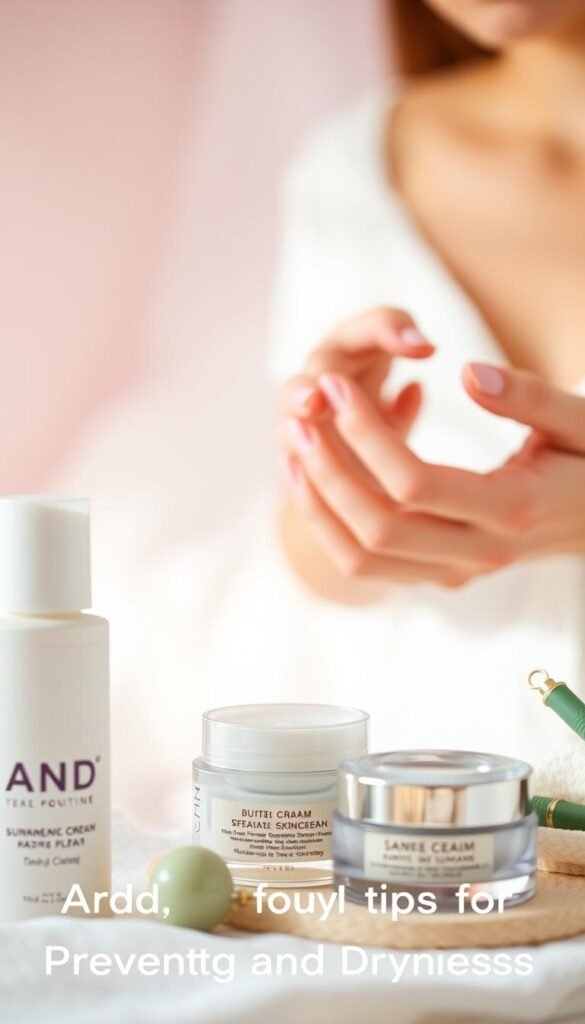
“The beauty of a woman is seen in her skin,” Audrey Hepburn once said. Like many, I spent years battling a dull, tight-feeling complexion that no quick fix could solve. My journey taught me one truth: consistent care creates lasting change.
This Website contains affiliate links. That means I may earn a small commission if you purchase through my links, at no extra cost to you.
After endless trials with harsh products that left my face redder than before, I discovered a gentler approach. It wasn’t about layering creams blindly—it was about understanding what my body needed to thrive. This method transformed flakes into radiance, proving hydration isn’t a luxury—it’s a necessity.
In this guide, I’ll break down the exact steps that rebuilt my moisture barrier. You’ll learn how to pair morning and evening habits with formulas that nourish without irritation. From cleansers that feel like silk to lifestyle tweaks that boost results, every detail matters.
Key Takeaways
Gentle products outperform aggressive treatments for lasting hydration
Consistency matters more than occasional intensive care
Morning and evening habits should complement each other
Waking up to a face that felt like parchment paper changed everything. For years, I battled stubborn flakes and persistent redness. My cheeks would sting after cleansing, and makeup clung to rough patches like glitter glue. This wasn’t just discomfort—it felt like my confidence was peeling away.
The Breaking Point With Reactive Complexions
I learned the hard way that aggressive scrubs and alcohol-based toners make delicate types rebel. Licensed Advanced Practice Aesthetician CLT Jessie Pasquarello confirms: “Facial tissue has 16 oil glands per square centimeter versus 2 on the body”. My mistake? Using body-grade products that ignored this science.
Why Daily Commitment Wins
Switching to gentle formulas wasn’t enough. Skipping nights or mixing random serums stalled progress. True healing began when I treated my regimen like brushing teeth—non-negotiable and timed perfectly.
Factor
Sporadic Approach
Consistent Care
Time Investment
45+ minutes weekly
10 minutes daily
Results
Temporary relief
Lasting improvement
Product Effectiveness
Inconsistent absorption
Enhanced benefits
Within six weeks, my reflection told the story. Tightness faded first, then uneven texture smoothed like sea glass. Now, I recognize what reactive types need most: predictability beats experimentation.
Understanding Dry Skin: Causes and Concerns
My bathroom mirror became a truth-teller during winter months. Chapped cheeks and papery textures revealed how environmental factors and daily choices conspired against my comfort. Licensed Advanced Practice Aesthetician CLT Jessie Pasquarello notes: “Indoor heating and extreme temperatures create a perfect storm for compromised barriers”.
Common Triggers Beyond Your Control
Subzero winds and arid climates aren’t the only culprits. Central heating systems suck moisture from surfaces like invisible vacuums. I learned this when my forehead developed sandpaper-like patches despite staying hydrated. Dryness often creeps in through these silent aggressors.
When Daily Habits Backfire
Lukewarm showers shortened to five minutes transformed my routine. Previously, steaming water stripped protective oils faster than I could replenish them. Sulfate-laden face washes compounded the issue, leaving my cheeks taut like overstretched canvas.
Redness around my nose and feathery lines near my eyes signaled trouble. Overzealous scrubbing with grainy exfoliants worsened flaking instead of smoothing it. Now, I spot these warning signs early—tightness after cleansing means immediate hydration is non-negotiable.
Essential Ingredients for a Hydrating Skincare Routine
The day I stopped chasing quick fixes and started studying labels changed my complexion forever. Discovering how specific components work together taught me that hydration thrives on teamwork—not single miracle workers.
Humectants: Moisture Magnets
Hyaluronic acid became my hydration hero when I learned its science. This powerhouse holds 1,000 times its weight in water, with different molecular weights targeting multiple layers. Lightweight formulas combining low-weight (deep penetration) and high-weight (surface plumping) versions gave me lasting suppleness without heaviness.
Ingredient Type
Key Players
Primary Benefit
Humectants
Hyaluronic acid, Glycerin
Attract & retain water
Emollients
Jojoba oil, Ceramides
Smooth & soften
Soothers
Chamomile, Mallow
Calm irritation
Antioxidants
Vitamins C/E
Shield from damage
Barrier Support
Rosehip seed oil
Strengthen protection
Beyond Basic Hydration
Chamomile extracts surprised me by cooling midday redness better than expensive serums. Now I seek formulas pairing these botanical soothers with ceramides—they’re like mortar between bricks for your moisture barrier.
Antioxidants became non-negotiable after city pollution revived my tightness. Vitamin C teamed with evening primrose oil now shields while brightening. But I stay vigilant: alcohol denat or synthetic fragrances undo progress faster than you can say “irritation”.
Through trial and error, I’ve learned that ingredient synergy creates resilience. It’s not about one superstar—it’s building an all-star team that works day and night.
Step-by-Step Morning Skincare Routine for Dry Skin
Mornings used to feel like a battle against my reflection until I perfected this five-stage process. The right sequence makes formulas work harder while protecting against daytime stressors. Here’s how I transformed dawn into my complexion’s favorite time.
First Contact: Awakening Without Aggression
I begin with Lancôme’s Crème Mousse Confort – its creamy texture feels like silk on damp cheeks. Warm water opens pores slightly, helping the hyaluronic acid-infused cleanser dissolve impurities gently. Circular motions boost circulation without tugging, while lukewarm rinsing preserves essential lipids.
Tonique Confort comes next, applied with a cotton pad. This alcohol-free formula does double duty: removing residual cleanser and prepping for hydration. The cotton glides smoothly when skin’s still dewy from washing – no dragging or irritation.
Layering Liquid Nourishment
Advanced Génifique serum goes on within 30 seconds of toning. Damp surfaces help its low-weight molecules penetrate deeper. I press rather than rub – fingertips gently pushing moisture into thirsty areas around my nose and brow.
Hydra Zen Anti-Stress cream seals everything in. A pea-sized amount warms between palms before pressing upward. This technique avoids stretching delicate facial tissue while encouraging absorption. Waiting 90 seconds before sunscreen prevents pilling.
Morning Product Performance Comparison
Product
Key Benefit
Absorption Time
Crème Mousse
Non-stripping cleanse
20 sec rinse
Tonique Confort
pH balancing
Instant dry-down
Génifique
Deep hydration
45 sec set
Hydra Zen
Barrier support
90 sec cure
Final touch? Broad-spectrum SPF 50. UV rays accelerate moisture loss, making protection non-negotiable. I choose fluid formulas that layer invisibly over creams – no chalky residue or midday shine.
Transforming Your Evening Regimen for Dry Skin
Twilight became my complexion’s reset button when I mastered strategic nighttime repair. This ritual isn’t about piling on products—it’s creating optimal conditions for cellular renewal while you sleep.
Effective Makeup Removal and Gentle Cleansing
Bi-Facil Makeup Remover transformed stubborn mascara removal from a tug-of-war to a swipe-and-dissolve process. I soak a cotton pad, press it against lids for 15 seconds, then glide downward. For full-coverage days, I follow with Crème Mousse Confort—its milky texture whisks away sunscreen residue without that dreaded squeaky-clean feel.
Targeted Serums and Rich Creams for Overnight Repair
Rénergie H.C.F. Triple Serum became my trifecta solution. I dispense one pump, warm it between fingers, and press into cheeks first—where dehydration shows earliest. Absolue Rich Cream follows, its velvety texture melting into collarbones and décolletage. The final touch? Patting Advanced Génifique Eye Cream along orbital bones with my ring finger.
Double-cleanse only when wearing makeup or heavy SPF
Let toners air-dry completely before serums
Apply eye treatment before facial moisturizer
Use upward palm presses instead of rubbing
This sequence lets each layer absorb fully. By morning, my face feels like satin—plump, calm, and ready for daylight challenges. That’s the magic of synchronized nighttime care.
Additional Tips for Preventing and Managing Dryness
A harsh winter day revealed my biggest oversight: neglecting UV protection. Windburned cheeks and crêpey lids taught me that defensive measures matter as much as treatments. What good are hydrating serums if sunlight undoes their work by noon?
Shielding Delicate Zones From Environmental Stress
My game-changer? Total Protection No-Show Mineral Sunscreen SPF 50. Unlike chalky zinc formulas, this blends invisibly while doubling as a makeup primer. I apply a nickel-sized portion after moisturizer, sweeping upward in one direction. No rubbing, no pilling—just even coverage that survives spin class.
The orbital area demands special tactics. I layer Eye Rescue Serum (caffeine + baobab) under Nourishing Eye Cream (hyaluronic acid + evening primrose). Using my ring finger, I pat from inner corners outward. This combats puffiness without stretching fragile tissue.
Product
Key Benefit
Best Use Time
Mineral SPF 50
UVA/UVB protection + hydration
Morning final step
Eye Serum
Depuffs + brightens
Before moisturizer
Eye Cream
Locks in moisture
Post-serum
Extra safeguards? Wide-brimmed hats during dog walks and a bedroom humidifier set to 50% humidity. These tweaks help maintain suppleness between skincare steps. Remember: consistency in protection creates cumulative benefits—like compound interest for your face.
Choosing the Right Skincare Products for My Skin
Decoding skincare labels became my secret weapon against irritation. What started as confusion between “fragrance-free” and “unscented” evolved into a science—one that saved my comfort and confidence.
Ingredient Intelligence Over Hype
I now scan labels like a detective. Alcohol denat and sulfates get redlined immediately—these troublemakers disrupt moisture balance. Certifications matter more than claims: “Fragrance-free” must appear explicitly, not hidden in footnotes.
Barrier Pro 1-Step Cleanser taught me the power of simplicity. Its minimalist formula avoids 1,300+ EU-regulated irritants while delivering ceramides. For deeper nourishment, Susanne Kaufmann’s blends shine—their honey and rosehip seed oil combo feels like liquid silk.
Test new items on my inner arm first
Introduce one product weekly to isolate reactions
Track ingredient overlaps to prevent overloading
Product Type
Must-Have Features
Red Flags
Cleansers
pH-balanced, non-foaming
Sulfates, drying alcohols
Moisturizers
Ceramides, fatty acids
Heavy fragrances
Serums
Hyaluronic acid, vitamins
Undisclosed “parfum”
Synergy matters most. My current lineup combines Barrier Pro’s cleansing efficiency with Susanne Kaufmann’s nutrient-rich oils. Together, they reinforce my defenses better than any solo superstar. Smart selection beats endless experimentation every time.
Creating a Customized Dry Skin Routine
Customizing my approach transformed my results from temporary fixes to lasting solutions. What works in July often fails by January—and vice versa. Personalization became my compass, guiding choices that respect my body’s ever-changing needs.
Tailoring Tactics for Delicate Types
Sensitivity demands vigilance. I swapped scented lotions for oat-infused balms after noticing midday itching. Warm showers now last under seven minutes, with bathroom doors shut to trap steam. This simple shift preserves natural oils better than any cream.
Patch testing new products on my inner arm prevents full-face reactions. When redness flares, I simplify to three steps: milky cleanser, ceramide serum, and a fragrance-free mask. Less truly becomes more during reactive phases.
Seasonal Shifts Demand Flexibility
Winter’s chill taught me to layer hydration like clothing. A humidifier runs nightly from November to March, while summer calls for gel textures that breathe. I rotate SPF types too—mineral formulas for snowy glare, fluid options for humid days.
Through trial and error, I’ve learned: adaptability fosters resilience. My regimen now evolves with weather forecasts and life stresses alike. Your turn? Start tracking how your complexion responds to temperature drops or schedule changes—then adjust one product at a time.
FAQ
How can I tell if my skin is dehydrated versus naturally dry?
Dehydration refers to a lack of water, while dryness relates to low oil production. If your face feels tight or shows fine lines after cleansing but becomes oily midday, it’s likely dehydrated. True dryness often involves persistent flakiness, rough texture, and minimal sebum.
Why does hyaluronic acid sometimes make my face feel tighter?
Hyaluronic acid draws moisture from its surroundings. In arid climates or without a damp base, it may pull hydration from deeper layers. I always apply it to slightly damp cheeks and layer a moisturizer immediately to seal in the plumping effects.
Can I skip sunscreen if my moisturizer has SPF?
While SPF-infused creams offer some protection, they’re often insufficient for full-day coverage. I use a dedicated broad-spectrum sunscreen with at least SPF 30 daily—even indoors—to shield against UV-induced moisture loss and collagen breakdown.
What’s the best way to remove makeup without stripping natural oils?
I opt for balms or milky cleansers with emulsifying agents. They dissolve impurities while maintaining the lipid barrier. Massage gently in circular motions, then rinse with lukewarm water. Avoid foaming formulas, which can disrupt pH balance.
How do seasonal changes impact my regimen?
Winter demands richer textures like ceramide creams, while summer calls for lighter gel-based hydration. I adjust my nighttime treatment by adding a facial oil during colder months and switching to humectant-rich layers when humidity rises.
Are exfoliants safe for reactive complexions?
Gentle chemical exfoliants like PHAs (polyhydroxy acids) work without irritation. I avoid physical scrubs and limit use to once weekly. Always follow with a soothing serum containing panthenol or oat extract to calm any sensitivity.