“We may encounter many defeats but we must not be defeated,” Maya Angelou once said. That quote became my mantra during my decade-long battle with relentless breakouts. Let me tell you—nothing tests your resolve like staring at inflamed bumps every morning, wondering if they’ll ever disappear.
This Website contains affiliate links. That means I may earn a small commission if you purchase through my links, at no extra cost to you.
For years, my skin felt like a battleground. Red papules and angry pustules dominated my forehead, mocking every cream or cleanser I tried. I blamed stress, my haircare routine, even my pillowcase. But the truth? Random product hopping and half-hearted routines kept me stuck in a cycle of frustration.
Then came the turning point. After researching how pores clog from excess oil and dead cells, I crafted a targeted strategy. No magic pills—just science-backed habits layered with consistency. The results shocked me: Within weeks, my complexion transformed from chaotic to calm.
Key Takeaways
- Persistent breakouts often stem from clogged pores caused by oil and dead skin buildup
- Random product experiments rarely solve chronic skin concerns
- Understanding your skin’s biology is crucial for lasting results
- Consistency with tailored routines outperforms quick fixes
- Clear skin requires addressing both internal habits and external care
This isn’t another generic “wash your face” lecture. What follows is the exact blueprint that rewrote my story—and can rewrite yours. Let’s explore how to outsmart stubborn acne once and for all.
Introduction
Mornings used to begin with a ritual I hated. I’d lean toward the bathroom mirror, counting angry red bumps like they were keeping score. While friends joked about “teenage skin,” mine clung to me through college and beyond. My forehead became a map of frustration—every pimple a reminder of failed treatments.
My Ongoing Battle with Forehead Acne
Hormonal shifts during puberty first awakened my skin struggles. Unlike classmates whose breakouts faded, mine intensified. By twenty-five, stress from late work nights added fuel to the fire. Cortisol surges turned my T-zone into an oil slick, trapping dead cells in pores.
I tried everything—harsh scrubs, trendy masks, even DIY remedies. Temporary improvements vanished like mirages. The cycle left me drained: “Maybe clear skin isn’t for people like me.”
What Prompted My Search for a Solution
The wake-up call came during a video call. My reflection showed clusters of acne framing my face—and my hairstylist’s comment: “Your products might be causing this.” I finally connected the dots between my pomade and recurring breakouts.
| Trigger | Impact | Solution |
|---|---|---|
| Hair Products | Clogged pores | Oil-free formulas |
| Stress | Increased oil | Mindfulness routine |
| Hormones | Sebum spikes | Balanced diet |
That moment sparked change. I committed to understanding oil production cycles instead of chasing miracle cures. Research replaced guesswork—and hope replaced resignation.
Understanding Forehead Acne: Causes and Contributing Factors
Unlocking the mystery behind my persistent breakouts became my greatest weapon. Three key forces shaped my skin’s rebellion: biology, environment, and routine.
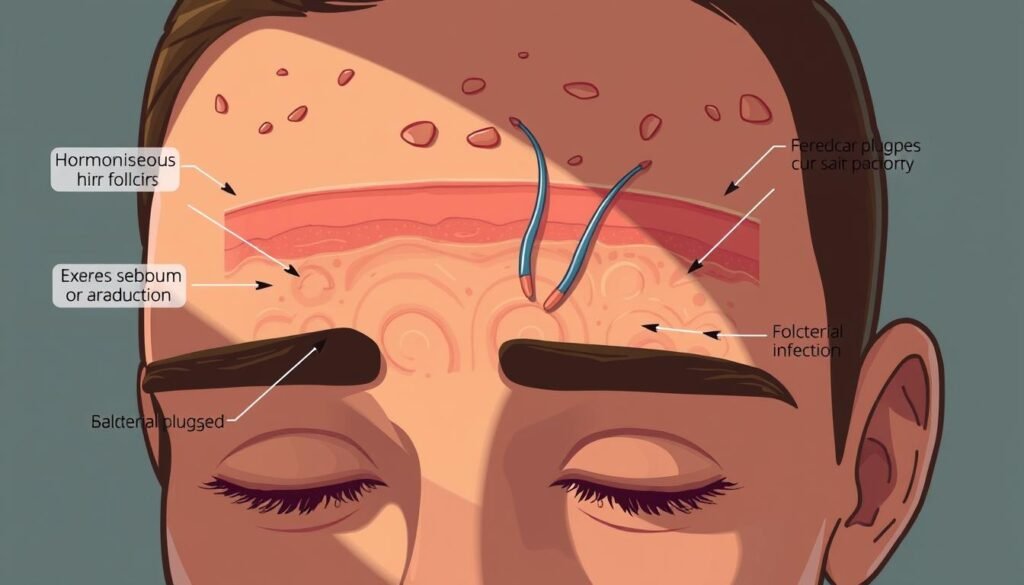
How Hormonal Changes and Stress Impact Oil Production
My menstrual cycle held unexpected clues. Days before my period, hormonal changes sent my glands into overdrive. Estrogen dips and testosterone surges created perfect storms of sebum production.
Stress compounded the issue. Late nights at work triggered cortisol spikes. My skin responded like an oil rig—pumping out shine that trapped dead cells. This created a breeding ground for acne.
The Role of Hair Products and Daily Habits
My styling routine was sabotaging me. Thick gels and pomades migrated onto my forehead during workouts and sleep. These hair products contained coconut oil—a known pore-clogger.
Small habits mattered too. Resting my chin in my hands transferred bacteria. Skipping pillowcase changes let oils accumulate. Each choice either fed or fought the cycle.
Understanding this trifecta changed everything: – Biology: High gland density in the T-zone – Chemistry: Stress hormones boosting oil output – Environment: Product residues clogging pores
Knowledge became power. I stopped blaming myself and started strategizing.
My Personal Journey to Clearer Skin
The mirror became my toughest critic. Every glance revealed new acne clusters, but I decided to turn observation into action. My breakthrough began when I stopped fighting symptoms and started decoding causes.
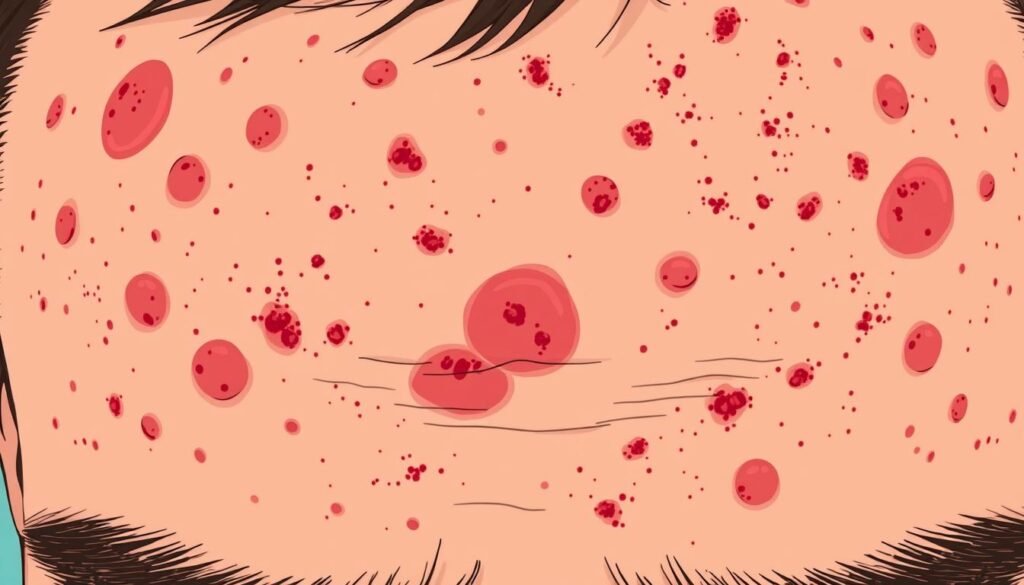
Identifying Triggers and Recognizing Patterns
I created an acne diary—not just dates, but emotions, meals, and product rotations. Within weeks, patterns emerged:
- Breakouts peaked 5 days before my period
- Late-night work sessions doubled oil production
- Hair wax residue worsened forehead congestion
Tracking taught me hormonal fluctuations weren’t enemies—just signals. Stress management became as crucial as cleansers.
Early Attempts and Lessons Learned
My initial approach? Throw every treatment at the wall. Harsh scrubs stripped my skin, triggering rebound oil. Acid toners caused redness. “If it burns, it works,” I’d rationalize—until inflammation spread.
Three hard truths changed everything:
- Picking spread bacteria like wildfire
- Products need 6-8 weeks to prove effectiveness
- Consistency beats intensity in skincare
When I stopped squeezing bumps and started nurturing skin barriers, healing accelerated. The journey wasn’t linear—but each relapse taught resilience.
Can’t Get Rid of Forehead Acne? This Is What Finally Cleared Mine
The real shift happened when I stopped viewing each pimple as an enemy. My skin needed balance, not warfare. Three components became my trifecta: gentle cleansing, smart ingredient layering, and patience.
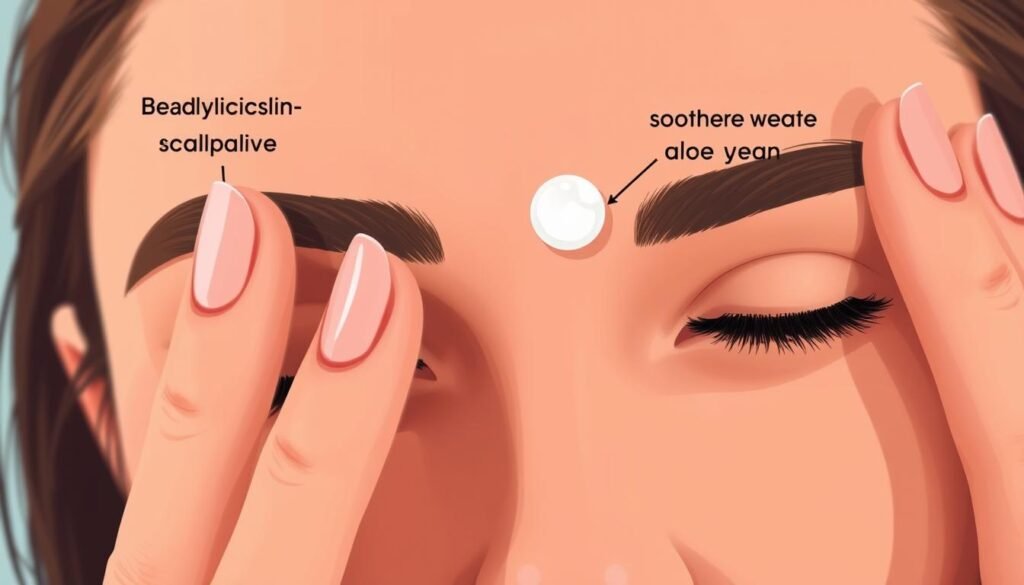
The Breakthrough Moment in My Skincare Routine
Salicylic acid became my morning ally. Its beta-hydroxy formula dissolved dead skin cells without scrubbing. Paired with nighttime benzoyl peroxide, this combo tackled both congestion and bacteria. The magic happened when I added retinoids—they transformed my clogged pores into smooth terrain.
My old mistakes taught valuable lessons:
- Harsh scrubs stripped protective oils
- Spot treatments alone couldn’t prevent new breakouts
- Consistency mattered more than product quantity
For those battling tiny bumps across your forehead, here’s what worked:
- Morning cleanse with 2% salicylic acid
- Thin layer of 2.5% benzoyl peroxide at night
- Retinoid cream every third evening
Results didn’t come overnight. By week six, my reflection showed fewer angry red marks. At three months, my forehead finally matched the rest of my face—calm and resilient. The war wasn’t won through aggression, but through understanding my skin’s language.
Step-by-Step Guide: My Forehead Acne Treatment Routine
Consistency became my secret weapon in transforming my skin care approach. I designed a simple yet strategic regimen that respected my face’s biology while tackling acne at its root.
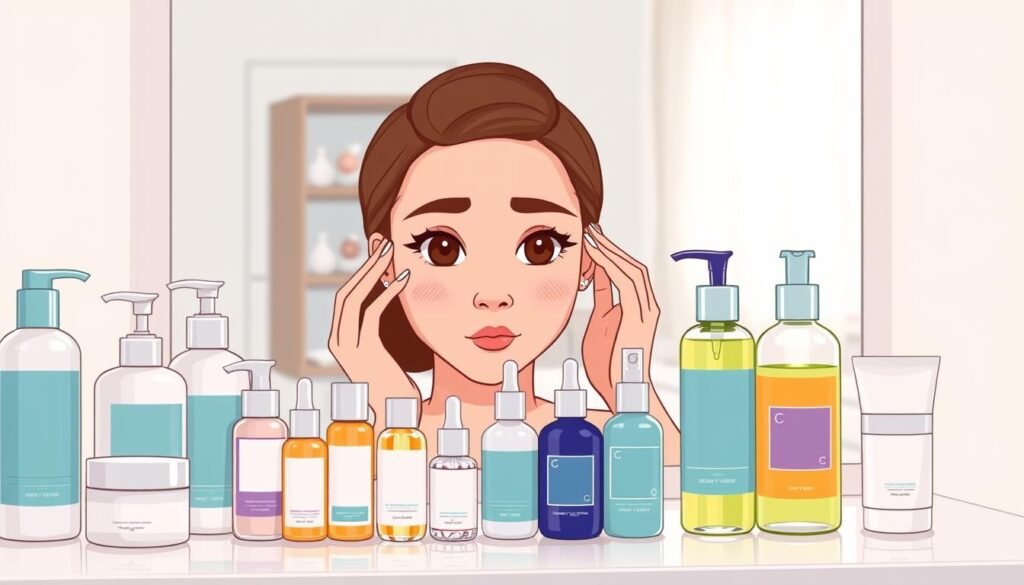
Daily Cleansing and Targeted Ingredients
Mornings began with a gentle cleanser containing 2% salicylic acid. I massaged it onto damp skin for 30 seconds—long enough to dissolve debris in pores without stripping moisture. CeraVe Foaming Cleanser became my staple for its hydrating ceramides.
Evenings followed a two-phase attack:
- Repeat morning cleanse to remove sweat and pollutants
- Apply 2.5% benzoyl peroxide gel to my forehead and chin
This twice-daily rhythm maintained clean pores while preventing bacterial overgrowth. I learned to pat—not rub—my face dry to avoid micro-tears.
Spot Treatments and Professional Recommendations
For stubborn bumps, I dabbed benzoyl peroxide directly onto spots before bed. My dermatologist’s advice proved golden: “Start low, go slow with retinoids.” I began applying adapalene gel every third night, building tolerance over six weeks.
| Product Type | Key Benefit | Frequency |
|---|---|---|
| Salicylic Acid Cleanser | Unclogs pores | Twice daily |
| Benzoyl Peroxide Gel | Kills bacteria | Nightly |
| Retinoid Cream | Prevents congestion | 3x weekly |
Hydration remained crucial. I layered a fragrance-free moisturizer after each acne treatment to maintain my skin’s barrier. Within eight weeks, my forehead acne faded from raging battlefield to smooth terrain—proof that disciplined skin care outshines fleeting quick fixes.
Effective Ingredients and Advanced Treatments for Acne
Discovering the right combination of ingredients changed my skin’s trajectory. Through trial and error, I learned which formulas could dismantle acne at its source while respecting my skin’s delicate balance.
Three Powerhouse Players in My Routine
Salicylic acid became my gentle exfoliation hero. It dissolved the glue binding dead skin cells without scrubbing. Paired with benzoyl peroxide—a bacteria-slaying warrior—this duo tackled both clogs and inflammation.
Retinoids transformed my approach entirely. These vitamin A derivatives taught my skin cells to renew faster, preventing future congestion. Starting with low concentrations built tolerance, avoiding the redness I’d feared.
Knowing When to Level Up
When stubborn cysts resisted my routine, my dermatologist recommended prescription options. Oral antibiotics temporarily reduced bacterial loads, while stronger retinoids accelerated cellular turnover. For severe cases, isotretinoin became the nuclear option—reserved but revolutionary.
This journey taught me that effective acne treatments combine science with patience. By layering targeted ingredients and seeking expert guidance, I finally unlocked lasting clarity.