Medium length haircuts with layers offer the perfect balance of versatility, style, and manageability. As a timeless choice that works for virtually every hair type and face shape, layered cuts add dimension, movement, and volume while maintaining enough length for various styling options. Whether you’re looking to refresh your current style or planning a complete transformation, this comprehensive guide will walk you through everything you need to know about layered medium-length hair – from choosing the right layers for your face shape to styling and maintaining your new look.
This Website contains affiliate links. That means I may earn a small commission if you purchase through my links, at no extra cost to you.
What Is a Medium Length Layered Haircut?
A medium length haircut with layers is characterized by hair that typically falls between the chin and shoulders, with shorter pieces strategically cut throughout to create dimension and movement. Unlike a blunt cut where all hair ends at the same length, layered cuts feature varying lengths that blend together seamlessly.
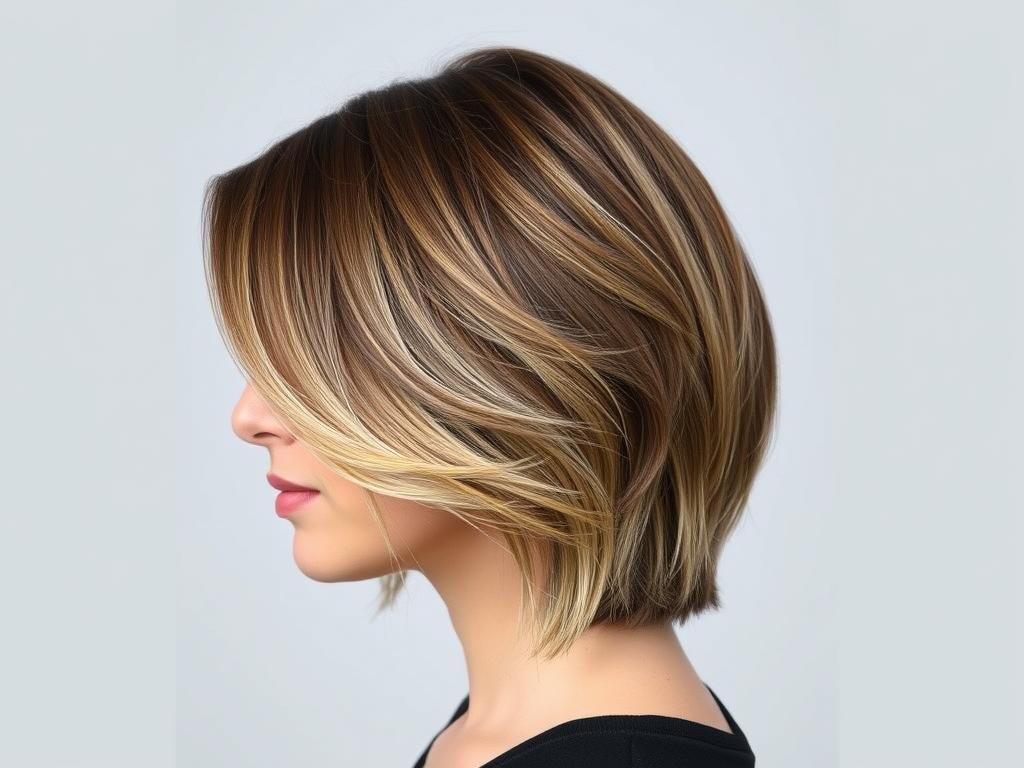
There are several types of layering techniques that create different effects:
- Long layers: Subtle layers with minimal length difference, ideal for adding movement while maintaining fullness
- Face-framing layers: Shorter pieces around the face that highlight facial features and add softness
- Feathered layers: Light, wispy ends that create a soft, feathery effect
- Choppy layers: More dramatic, textured layers for an edgier look
- Internal layers: Hidden layers cut underneath the top layer to remove bulk without changing the overall silhouette
Benefits of Medium Length Layered Haircuts
- Adds volume: Layers lift hair away from the scalp, creating the appearance of fuller, more voluminous hair
- Creates movement: Varying lengths allow hair to flow and move naturally
- Reduces weight: Removes bulk from thick hair without sacrificing length
- Frames the face: Enhances your best features and softens facial contours
- Versatile styling: Works with various styling methods from straight to curly
- Easier maintenance: Typically takes less time to blow dry than one-length cuts
- Grows out gracefully: Many layered styles maintain their shape as they grow
- Adds texture: Creates dimension in otherwise flat or lifeless hair
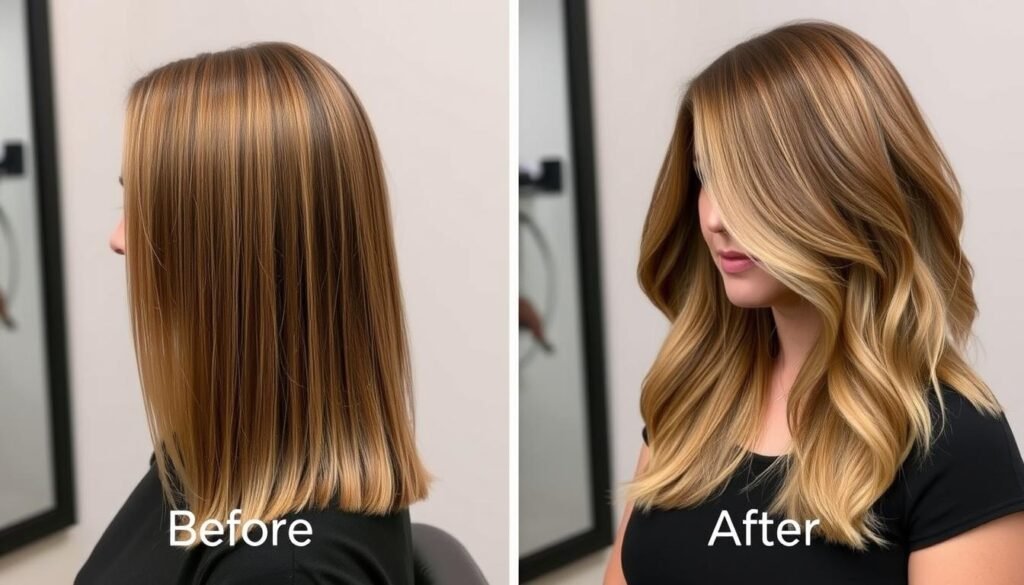
Choosing the Right Layered Cut for Your Face Shape
The key to finding your perfect medium length haircut with layers is understanding how different layering techniques complement your unique face shape. The right layers can highlight your best features while creating balance and harmony.
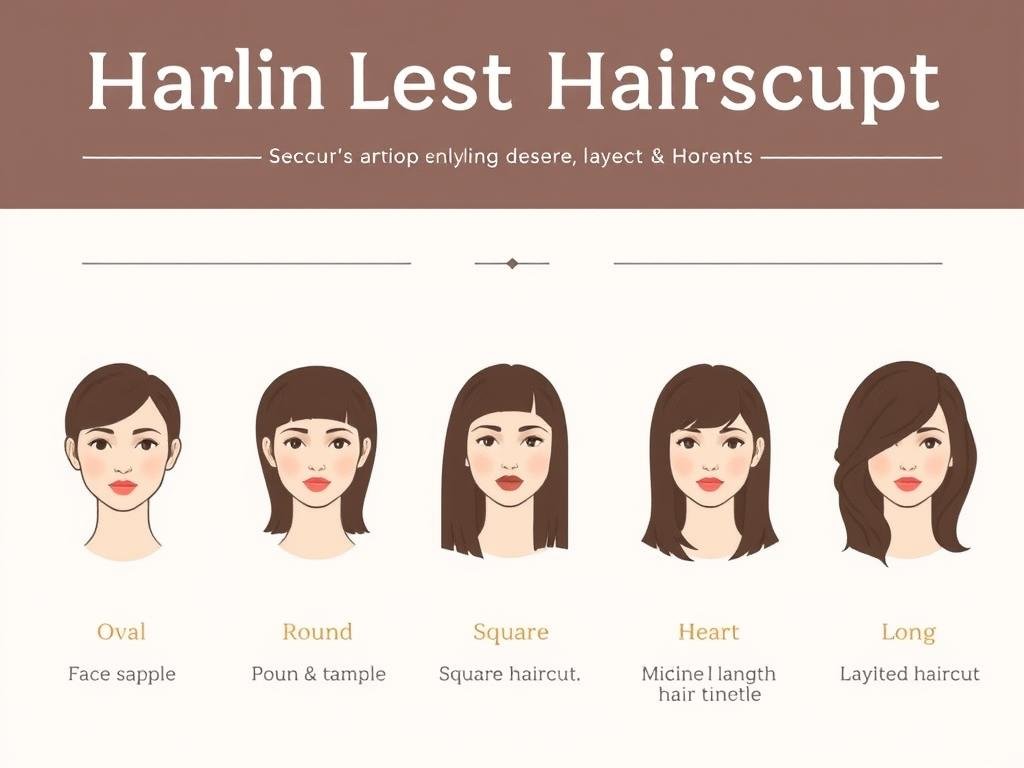
Oval Face Shape
If you have an oval face shape, consider yourself lucky! This versatile shape works well with virtually any type of layers. For the most flattering look:
- Try long, soft layers throughout to enhance your natural balance
- Consider face-framing layers starting at the cheekbones or chin
- Both center and side parts work beautifully with your face shape
- Curtain bangs with layers create a soft, romantic frame
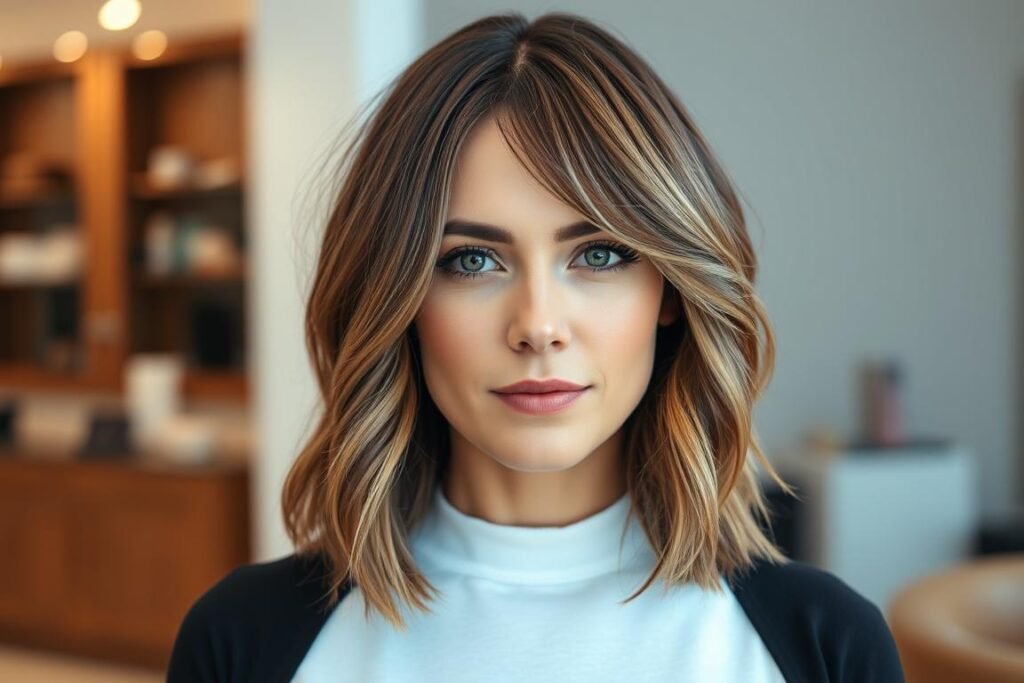
Round Face Shape
For round face shapes, the goal is to create the illusion of length and definition:
- Opt for layers that start below the chin to elongate your face
- A side part adds asymmetry that slims fuller cheeks
- Long, angled layers around the face create definition
- Consider a long side-swept bang to add angles to your softer features
- Avoid short layers that add width at the cheeks
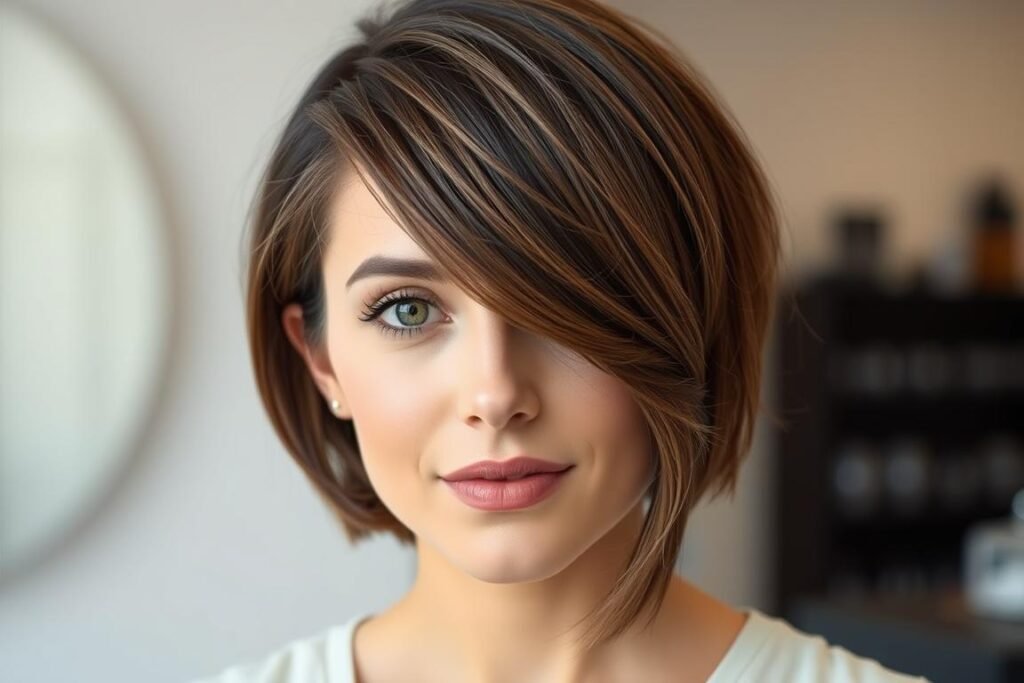
Square Face Shape
Square face shapes benefit from layers that soften angular jawlines:
- Soft, feathered layers around the face soften strong jawlines
- Wispy, textured ends create movement and reduce sharpness
- Face-framing layers starting at the cheekbones draw attention upward
- Consider soft curtain bangs to balance forehead width
- Avoid blunt, one-length cuts that emphasize angles

Heart Face Shape
Heart-shaped faces (wider at the forehead, narrower at the chin) benefit from layers that balance proportions:
- Layers starting at the chin or jawline add width to the lower face
- Side-swept bangs soften a wider forehead
- Medium to long layers throughout create balance
- Consider a middle part with curtain bangs to frame the face
- Avoid too much volume at the crown which can emphasize forehead width
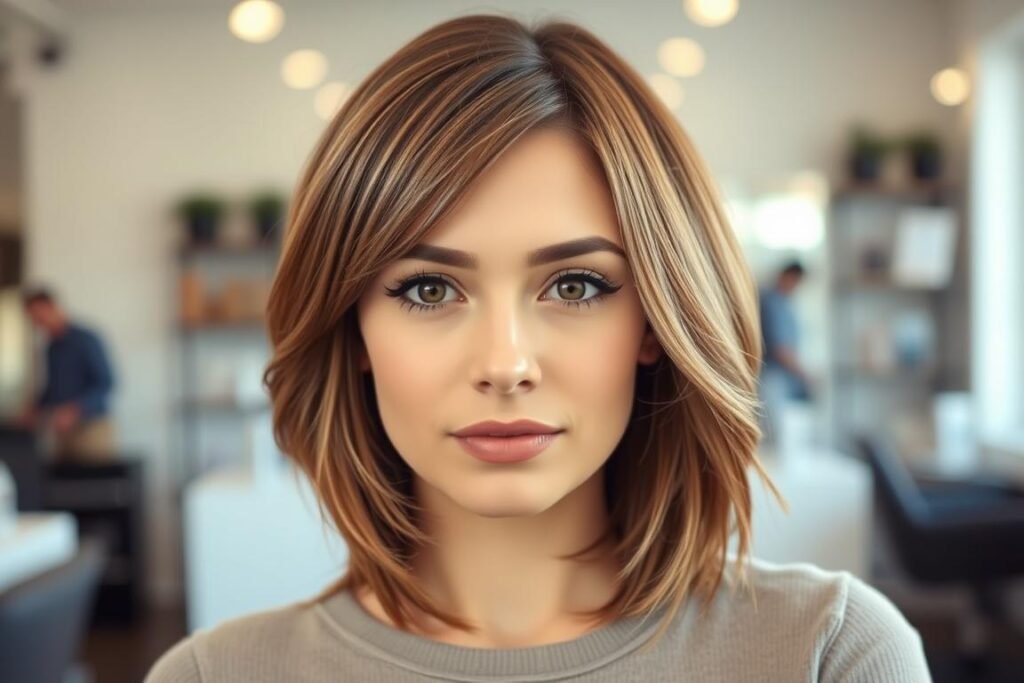
Long Face Shape
For longer face shapes, the goal is to create width and minimize length:
- Layers throughout add fullness at the sides
- Curtain bangs or full fringe shortens the face visually
- Face-framing layers starting at the cheekbones create width
- Consider a butterfly cut with lots of movement around the face
- Avoid long, straight layers that can elongate your face further

“The perfect layered cut should enhance your natural features while creating balance. When consulting with your stylist, bring photos of styles you love, but be open to their expert advice on adapting the look to your specific face shape and hair type.”
Medium Length Layered Cuts for Different Hair Types
Beyond face shape, your hair’s natural texture and density play a crucial role in determining the most flattering layered cut. Let’s explore the best approaches for different hair types:
Fine Hair
Fine hair can appear limp and flat without the right cut. The goal with layers is to create the illusion of volume without removing too much hair:
- Opt for minimal, long layers to maintain density at the ends
- Consider a blunt perimeter with light internal layers for movement
- Face-framing layers can add dimension without sacrificing fullness
- A textured lob (long bob) with subtle layers creates the appearance of thicker hair
- Avoid over-layering which can make fine hair look sparse
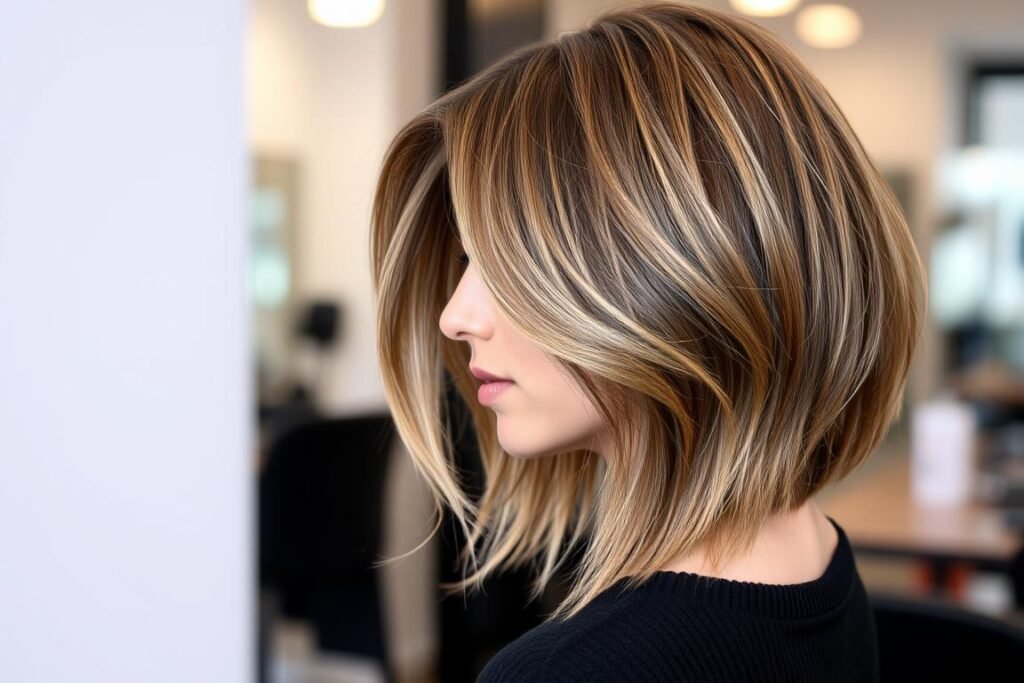
For styling fine hair with layers, use a volumizing mousse on damp hair before blow-drying with a round brush to maximize body and movement.
Thick Hair
Thick hair benefits tremendously from layers, which remove weight and bulk while adding movement:
- Incorporate layers throughout to reduce heaviness
- Consider a shag-inspired cut with lots of texture
- Longer layers maintain length while removing weight
- Face-framing layers prevent the “triangle” effect
- Internal layers can remove bulk without changing the overall silhouette

For thick hair, a smoothing cream helps tame frizz while enhancing your layers’ natural movement.
Straight Hair
Straight hair showcases layers beautifully, with each level clearly visible:
- Long, subtle layers add movement without looking choppy
- Face-framing layers soften the line around your face
- Consider a butterfly cut for dimension and flow
- Feathered ends create softness and prevent a harsh line
- Textured ends add interest to otherwise flat hair

For straight hair, a texture spray can add definition between layers and create separation.
Wavy Hair
Wavy hair and layers are a match made in heaven, as the natural texture enhances the dimension of the cut:
- Medium to long layers enhance natural wave patterns
- Face-framing layers highlight your features
- Consider a shag cut to maximize texture and movement
- Layers throughout prevent waves from weighing themselves down
- Curtain bangs complement wavy layered cuts beautifully
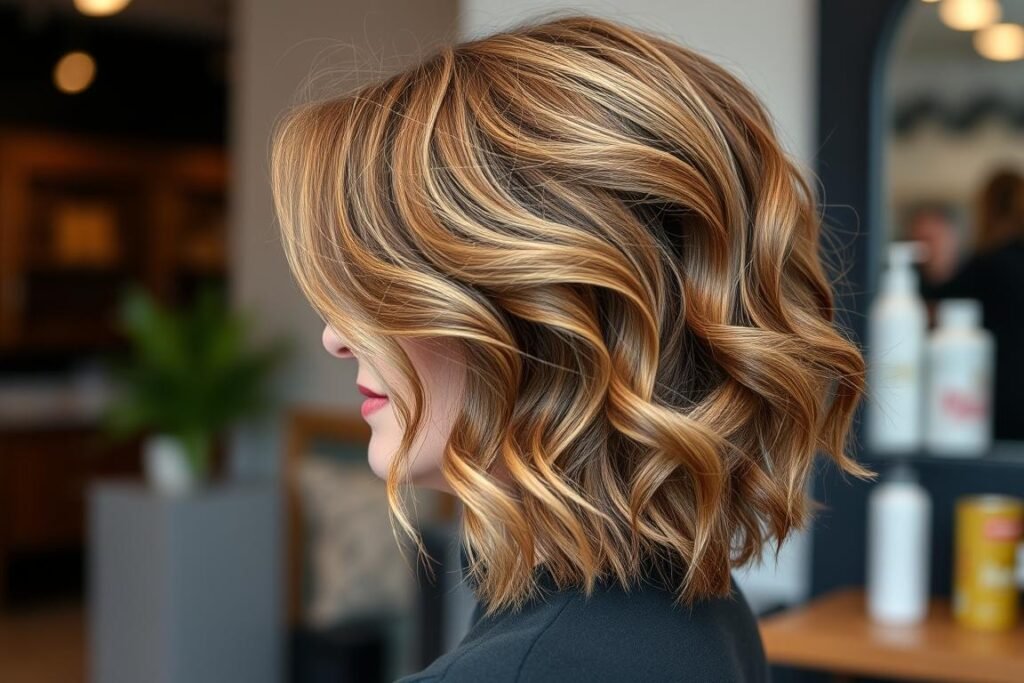
Enhance your wavy layers with a curl enhancing cream scrunched into damp hair before air-drying or diffusing.
Curly Hair
Curly hair benefits from strategic layering that enhances natural curl patterns:
- Layers remove weight that can pull curls down
- Medium to long layers maintain length while adding shape
- Face-framing layers prevent the “triangle” effect
- Consider a curly shag for maximum volume and texture
- Avoid too-short layers that can create poofiness

For curly layers, use a curl defining gel to enhance definition and reduce frizz.
Trending Medium Length Layered Haircuts
Medium length haircuts with layers continue to evolve with new trends emerging each season. Here are some of the most popular styles that are perfect for your Pinterest inspiration board:
The Butterfly Cut
One of the hottest trends in layered haircuts, the butterfly cut features face-framing layers that cascade like butterfly wings, creating movement and volume.
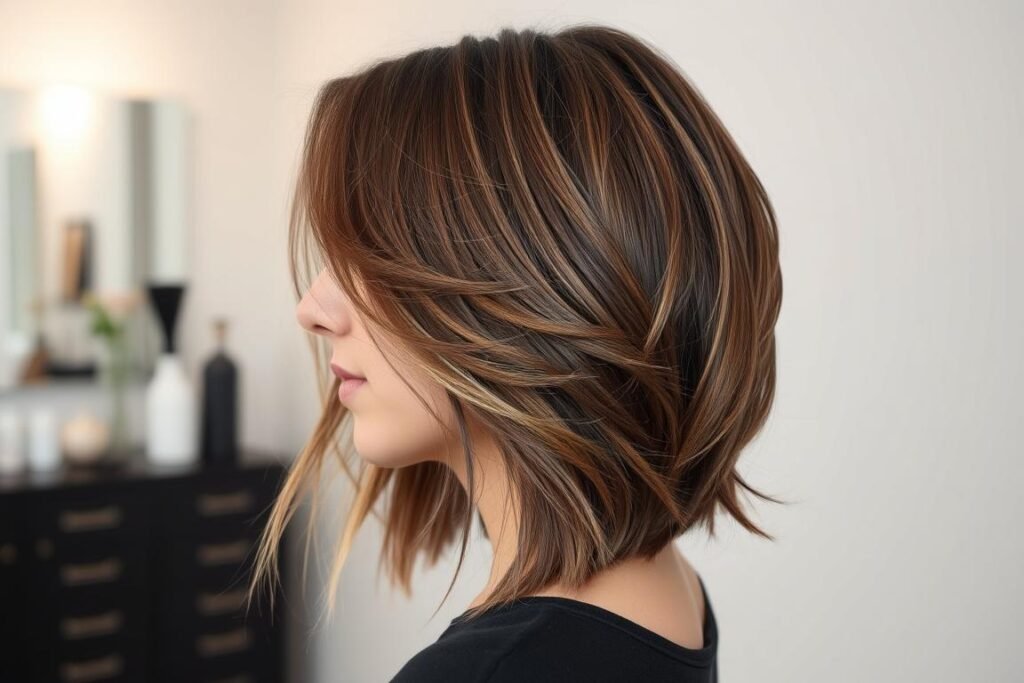
Key characteristics:
- Shorter layers around the face that blend into longer lengths
- Lots of movement and bounce
- Works beautifully with curtain bangs
- Flattering on most face shapes and hair types
The Modern Shag
The shag has made a major comeback, updated with softer, more wearable layers that create texture without the harsh look of the original 70s version.
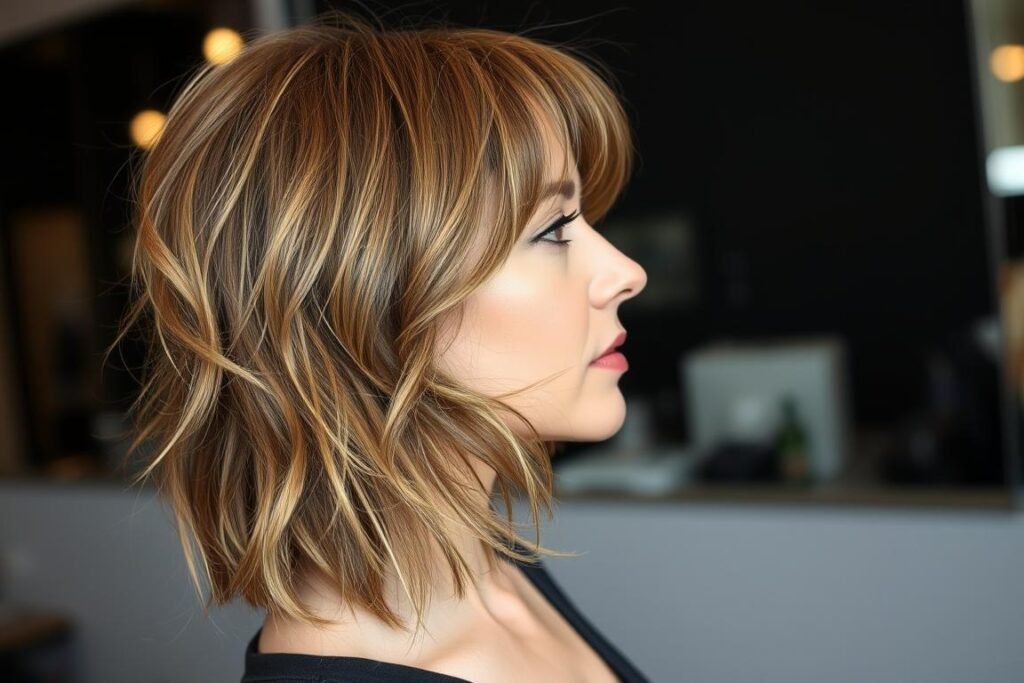
Key characteristics:
- Lots of layers throughout, with shorter layers at the crown
- Often paired with curtain bangs or fringe
- Textured, piece-y ends
- Works well with natural texture, from straight to curly
The Textured Lob
The long bob (lob) gets an update with textured layers that add movement and dimension to this classic cut.
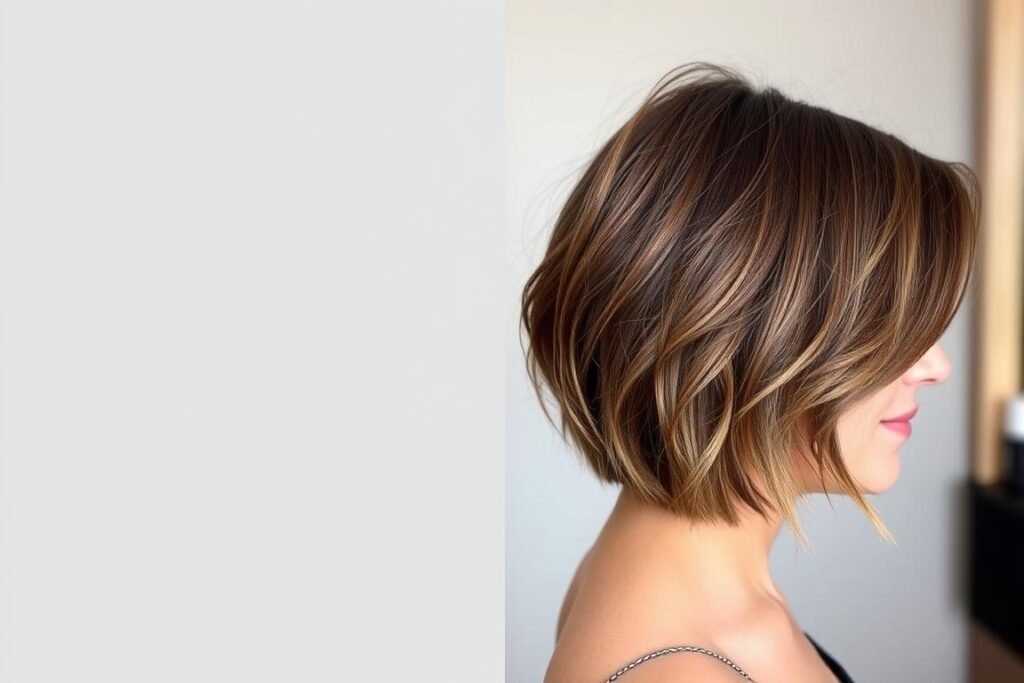
Key characteristics:
- Length typically between chin and shoulders
- Subtle layers throughout for movement
- Textured, piece-y ends
- Often styled with beachy waves or tousled texture
Face-Framing Layers with Curtain Bangs
This combination creates a soft, flattering frame around the face while maintaining length and versatility.
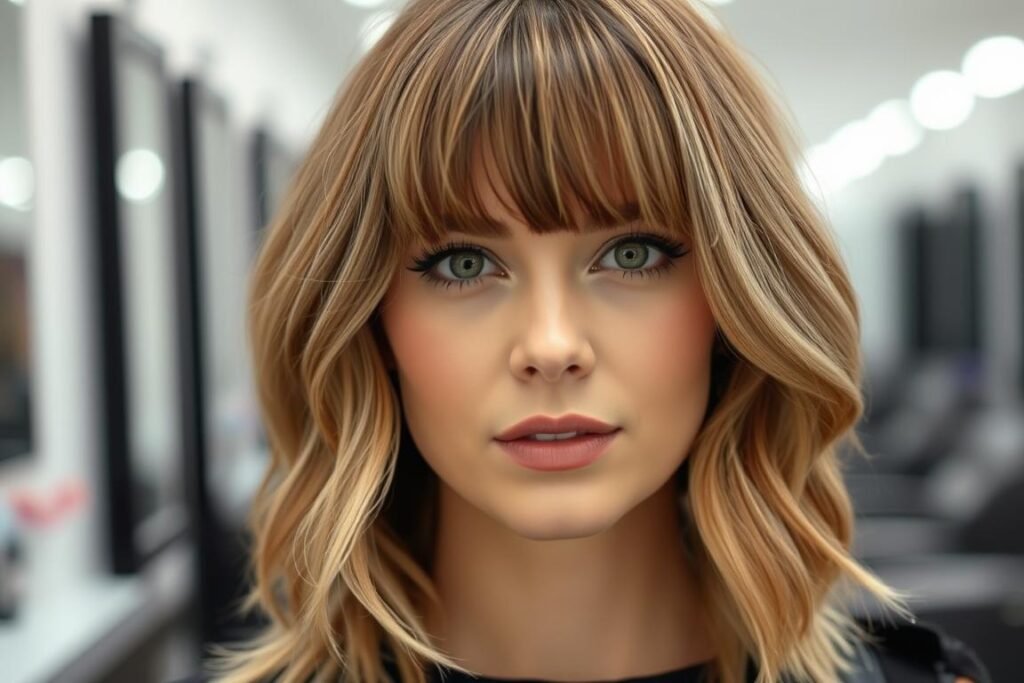
Key characteristics:
- Soft, center-parted curtain bangs that blend into face-framing layers
- Layers that start at or below the cheekbones
- Minimal layering through the back for a fuller look
- Versatile styling options from sleek to wavy
The Wolf Cut
A hybrid between a shag and a mullet, the wolf cut features short, choppy layers on top with longer layers at the bottom.
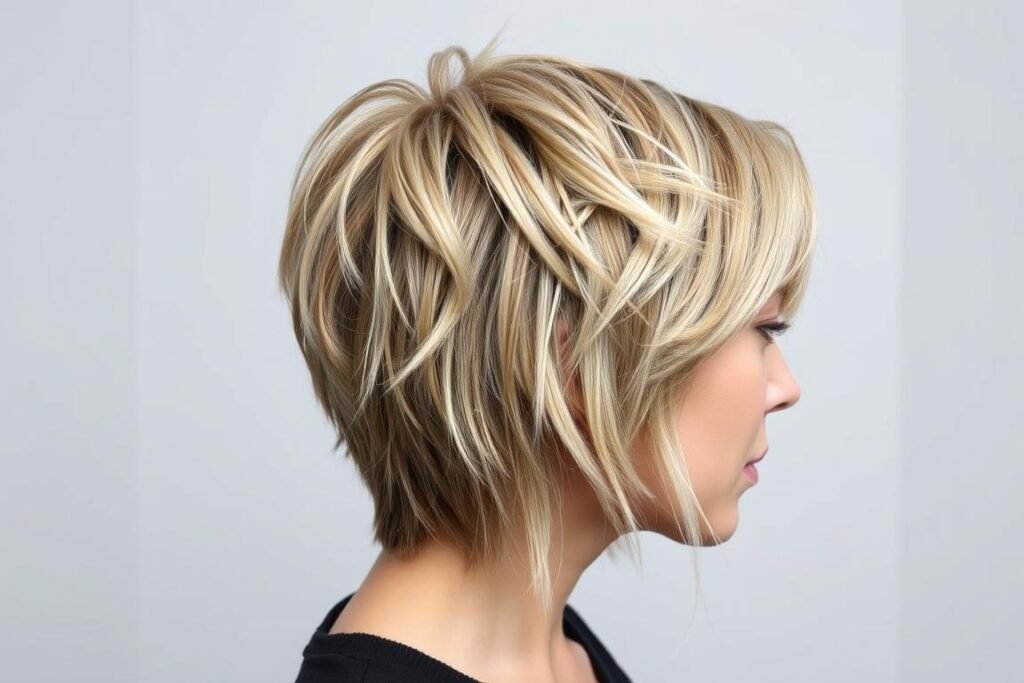
Key characteristics:
- Dramatic contrast between shorter top layers and longer bottom layers
- Lots of volume at the crown
- Often paired with curtain bangs or fringe
- Works well with natural texture
“The beauty of medium length layered cuts is their versatility. You can go from professional to playful with just a change in styling. These trending cuts are designed to work with your natural texture while offering multiple styling options.”
How to Style Your Medium Length Layered Haircut
One of the greatest benefits of a medium length haircut with layers is its styling versatility. Here are expert techniques to help you achieve different looks with your layered cut:
Effortless Waves
Beachy, tousled waves highlight the dimension of layers and create a relaxed, effortless look.
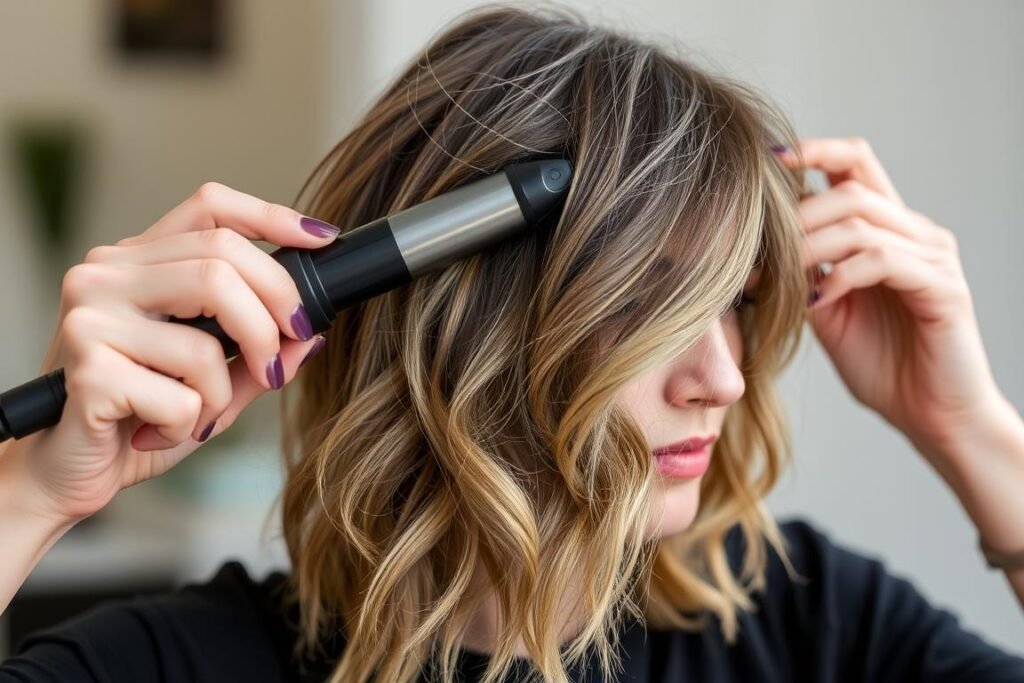
- Step 1: Apply a heat protectant spray to damp hair
- Step 2: Rough dry hair until 80-90% dry
- Step 3: Using a 1-inch curling iron, wrap sections away from your face
- Step 4: Leave the ends out for a more natural look
- Step 5: Once cooled, break up the curls with your fingers
- Step 6: Finish with a texturizing spray for added definition and hold
Sleek and Straight
A sleek, straight style showcases the precision of your layers while creating a polished, sophisticated look.
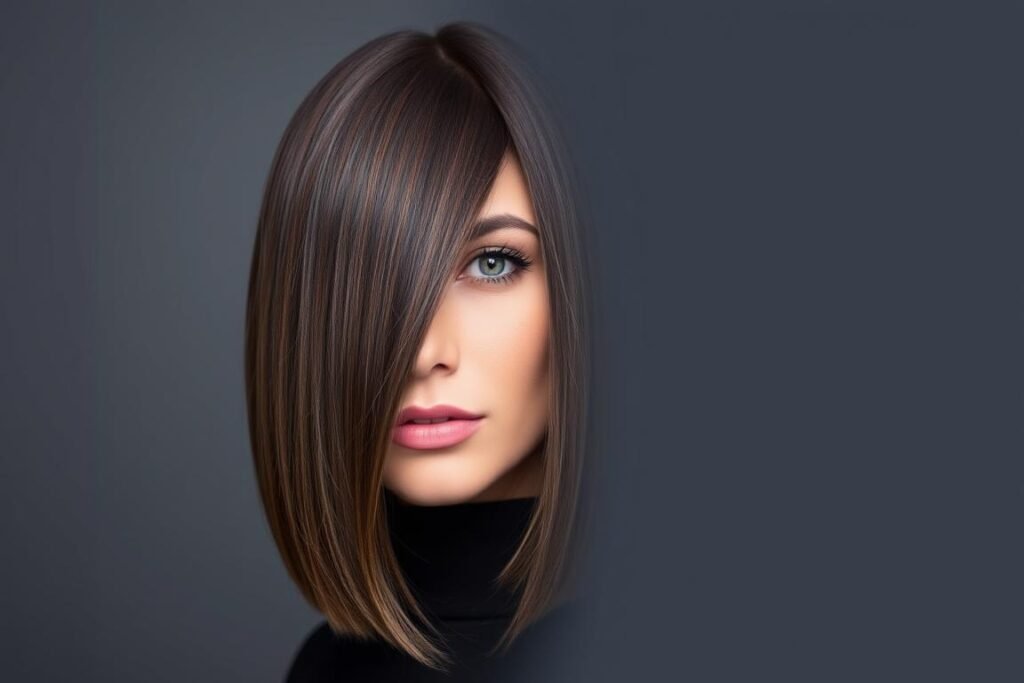
- Step 1: Apply a smoothing blow dry cream to damp hair
- Step 2: Using a paddle brush, blow dry hair in sections, pulling downward
- Step 3: Once dry, apply a small amount of heat protectant serum
- Step 4: Use a flat iron in small sections, focusing on smoothing each layer
- Step 5: Finish with a shine spray for a glossy finish
Voluminous Blowout
A full, bouncy blowout maximizes volume and movement, perfect for special occasions or whenever you want to make a statement.
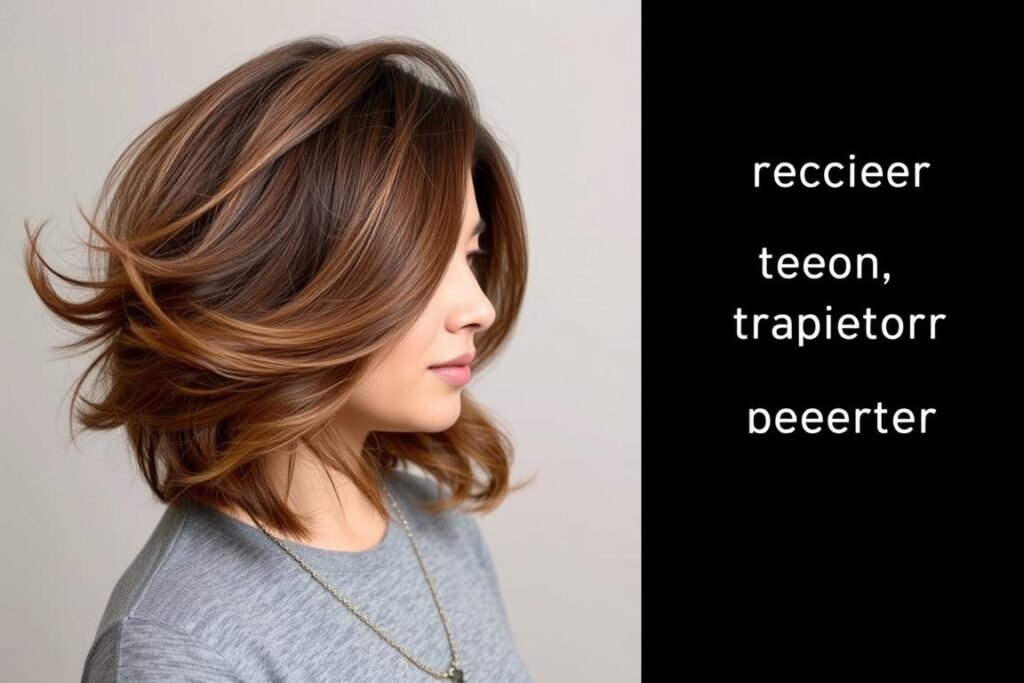
- Step 1: Apply a volumizing mousse to damp roots
- Step 2: Flip your head upside down and rough dry until 50% dry
- Step 3: Section hair and blow dry using a large round brush, lifting at the roots
- Step 4: For extra volume, use velcro rollers at the crown while hair cools
- Step 5: Remove rollers and gently brush through with a boar bristle brush
- Step 6: Set with a flexible-hold hairspray
Textured and Tousled
A lived-in, textured look enhances your layers for an effortlessly cool style that’s perfect for everyday wear.
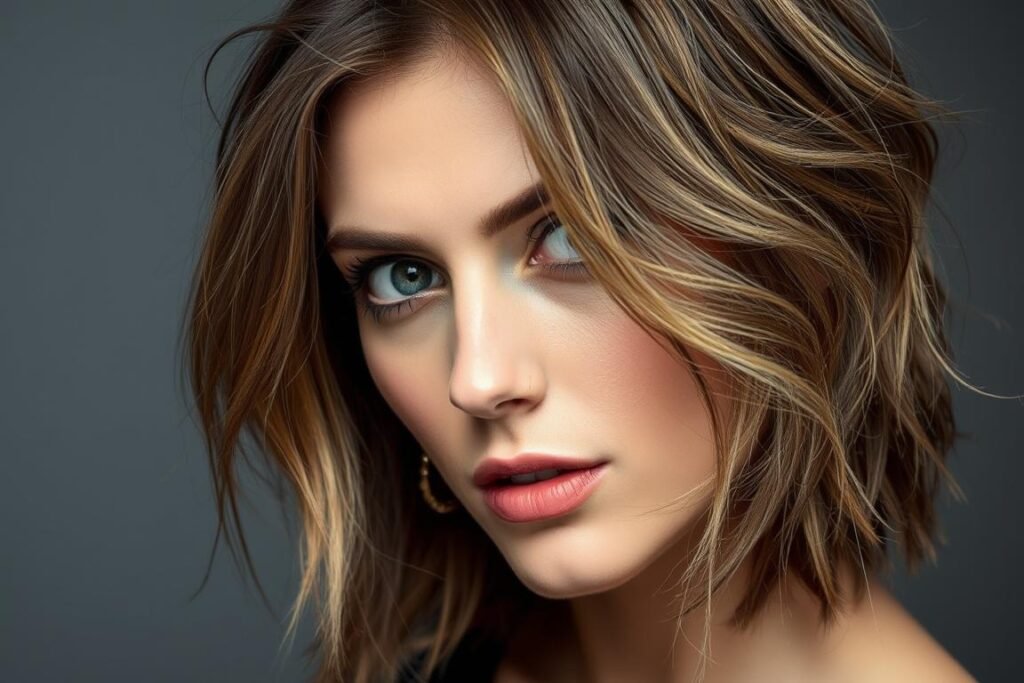
- Step 1: Apply a sea salt spray to damp hair
- Step 2: Scrunch hair while blow drying with a diffuser attachment
- Step 3: Once dry, enhance texture by wrapping random sections around a curling wand in different directions
- Step 4: Break up the curls with your fingers
- Step 5: Apply a texturizing paste to the ends for piece-y definition
Half-Up Styles
Half-up styles showcase your layers while keeping hair off your face – perfect for both casual and formal occasions.
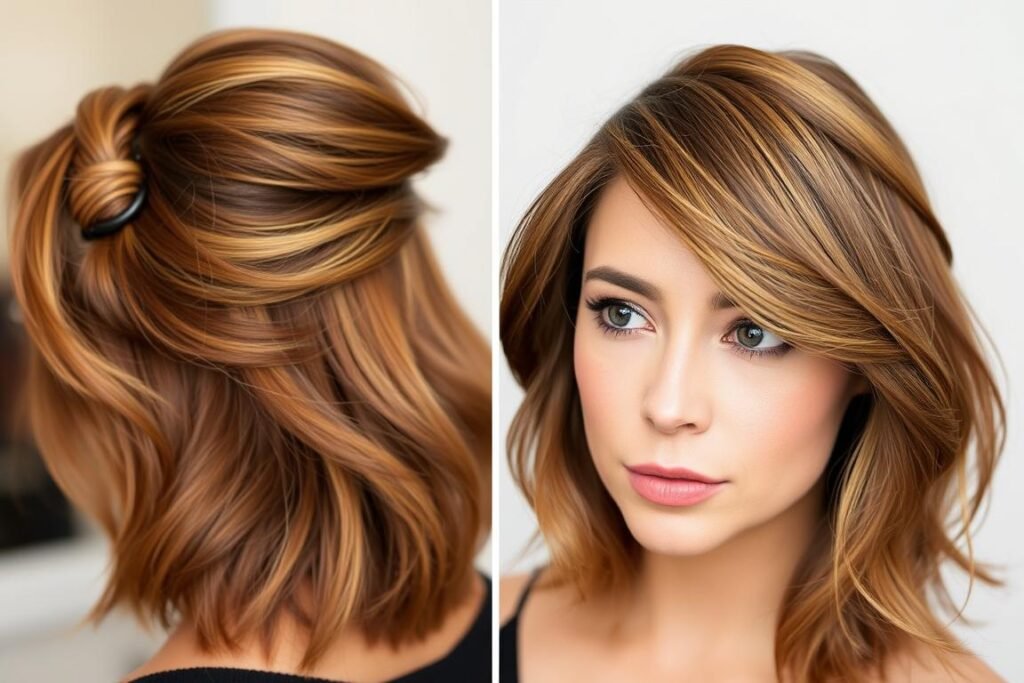
- Step 1: Style hair with your preferred technique (waves, straight, etc.)
- Step 2: Take the top section of hair from temple to temple
- Step 3: Gently tease at the roots for volume if desired
- Step 4: Secure with bobby pins or a decorative hair clip
- Step 5: Pull out a few face-framing pieces for a softer look
- Step 6: Set with a light-hold hairspray
Pro Tip: To maintain the shape of your layers between salon visits, use the right styling tools. A round brush during blow-drying helps emphasize layers and add volume, while a wide-tooth comb is gentler for detangling layered hair when wet.
Maintaining Your Medium Length Layered Haircut
To keep your layered cut looking its best, proper maintenance is essential. Here’s how to care for your medium length layered haircut between salon visits:
Regular Trims
Layered haircuts require regular maintenance to maintain their shape and prevent split ends:
- Schedule trims every 6-8 weeks to maintain the shape of your layers
- For growing out layers, you can extend to 8-10 weeks between trims
- Communicate clearly with your stylist about maintaining your current shape versus growing it out
- Consider “dusting” the ends (minimal trim) if you’re trying to maintain length
Washing and Conditioning
Proper cleansing and conditioning helps maintain the health and movement of your layers:
- Use a sulfate-free shampoo to prevent stripping natural oils
- Apply conditioner primarily to mid-lengths and ends where layers need the most moisture
- Consider a weekly hair mask to keep layers soft and manageable
- Use a leave-in conditioner to prevent tangling between layers

Heat Protection
Layered cuts often require heat styling to look their best, so protection is crucial:
- Always use a heat protectant before using hot tools
- Consider air-drying partially before blow-drying to minimize heat exposure
- Use the lowest effective heat setting on styling tools
- Take breaks from heat styling when possible to prevent damage
Nighttime Care
How you treat your hair while sleeping affects how your layers look the next day:
- Sleep on a silk pillowcase to reduce friction and maintain layer definition
- For curly or wavy layers, consider a loose pineapple (high, loose ponytail) to preserve texture
- Apply a small amount of hair oil to ends before bed to prevent dryness
- For longer-lasting blowouts, wrap hair in a silk scarf or use velcro rollers
Product Recommendations
The right products can enhance your layers and make styling easier:
- For volume: Root lifting spray or volumizing mousse
- For definition: Texturizing spray or sea salt spray
- For smoothing: Anti-frizz serum or smoothing cream
- For hold: Flexible hold hairspray or texture paste
- For refreshing: Dry shampoo or hair refresher spray
- For protection: Heat protectant and UV protection spray
“The key to maintaining beautiful layers is consistency. Regular trims, proper heat protection, and using the right products for your hair type will keep your cut looking fresh and vibrant between salon visits.”
Communicating with Your Stylist
Getting the perfect medium length haircut with layers starts with clear communication with your stylist. Here’s how to ensure you get exactly what you want:
Before Your Appointment
- Collect inspiration photos: Save 3-5 images of layered cuts you love (Pinterest is perfect for this!)
- Be specific about length: “Collarbone length” is more precise than “medium length”
- Consider your lifestyle: Be honest about how much time you’re willing to spend styling
- Think about your hair history: Previous colors, treatments, or cuts can affect your results

During Your Consultation
- Be specific about layer placement: “Face-framing layers starting at the chin” is clearer than “some layers”
- Discuss your face shape: Ask which layering technique would be most flattering
- Talk about texture: Mention if you want blunt, feathered, or textured ends
- Address concerns: If you’re worried about too much volume or thinning ends, speak up
- Ask questions: “How would this look with my natural texture?” or “How often will I need trims?”
Key Questions to Ask Your Stylist
Pro Tip: When showing inspiration photos, be specific about what you like in each picture. “I love the face-framing layers in this photo, but I’d like the overall length from this other photo” helps your stylist create a customized look.
Common Mistakes to Avoid with Layered Haircuts
Even the most beautiful medium length layered haircut can be compromised by these common pitfalls. Here’s what to avoid:
What Works
- Choosing layers that complement your face shape
- Considering your natural texture when selecting a layered style
- Using the right products to enhance your specific type of layers
- Regular trims to maintain the shape and prevent split ends
- Proper heat protection before styling
What Doesn’t Work
- Too-short layers that create a mushroom effect
- Over-layering fine hair, making it appear thinner
- Ignoring your natural texture when choosing a layered style
- Skipping heat protection when styling layers
- Waiting too long between trims, causing layers to lose shape
Over-Layering Fine Hair
One of the biggest mistakes is removing too much weight from already-fine hair:
- Excessive layers can make fine hair appear sparse and thin at the ends
- Instead, opt for minimal, long layers that maintain density
- Consider internal layers that add movement without compromising the perimeter
- Face-framing layers should be subtle and not start too high
Ignoring Your Natural Texture
Choosing a layered style that fights against your natural hair pattern leads to styling frustration:
- Very short layers on straight hair may stick out without daily styling
- Blunt layers on curly hair can create a triangular shape
- Super long layers on wavy hair might not show the texture’s full potential
- Work with your stylist to find layers that enhance your natural pattern
Skipping Heat Protection
Layered cuts often require heat styling to look their best, making protection crucial:
- Heat damage can make layers look frizzy and uneven
- Always use a heat protectant before styling
- Consider heat-free styling methods when possible
- Invest in quality styling tools with adjustable heat settings
Waiting Too Long Between Trims
Layers grow out unevenly, making regular maintenance essential:
- Overgrown layers can lose their shape and movement
- Schedule trims every 6-8 weeks to maintain your cut’s integrity
- Even a “dusting” of the ends can refresh your layers
- If growing out layers, regular reshaping helps manage the transition
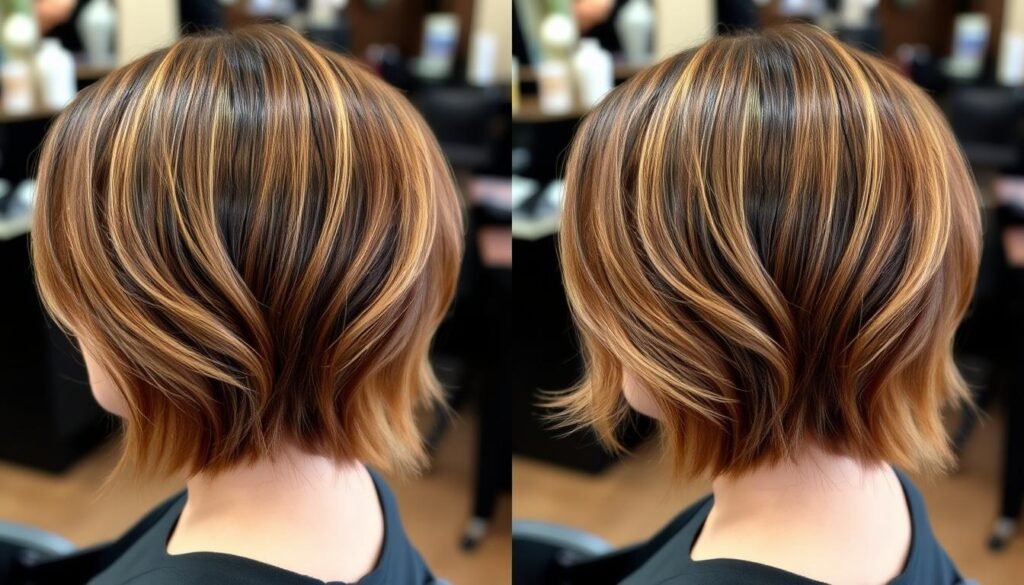
Embracing Your Perfect Medium Length Layered Haircut
A medium length haircut with layers offers the perfect balance of versatility, style, and manageability. By understanding your face shape, hair texture, and styling preferences, you can find a layered cut that enhances your natural beauty while fitting seamlessly into your lifestyle.
Remember that the perfect layered cut is a collaboration between you and your stylist. Bring inspiration photos, ask questions, and be specific about your needs and concerns. With the right communication and maintenance routine, your medium layered haircut will keep you looking and feeling your best.
Whether you opt for subtle, face-framing layers or a bold, textured shag, the right medium length layered haircut can transform not just your hair, but your entire look. So take the plunge, pin your favorite styles, and book that salon appointment – your perfect layered cut is waiting!

Ready to Transform Your Look?
Save this article to your Pinterest board for inspiration before your next salon visit! And don’t forget to grab the essential styling tools to make the most of your new layered cut.