“The beauty of a woman is not in facial mode, but the true beauty in a woman is reflected in her soul.” – Audrey Hepburn’s timeless words remind us that confidence begins with feeling comfortable in our own skin. For those navigating the challenges of excess oil production, finding gentle solutions can be transformative.
This Website contains affiliate links. That means I may earn a small commission if you purchase through my links, at no extra cost to you.
Your skin’s natural oil, called sebum, plays a vital role in maintaining hydration and protection. But when glands overproduce this substance due to genetics, hormones, or stress, it can lead to clogged pores and uneven texture. The good news? Nature offers gentle alternatives to balance your complexion without stripping its essential moisture.
Imagine harnessing everyday ingredients to create personalized solutions that respect your skin’s delicate ecosystem. From soothing botanical blends to nutrient-rich kitchen staples, these approaches prioritize long-term harmony over quick fixes. By understanding how your skin functions, you can build a routine that celebrates its unique needs while addressing shine effectively.
Key Takeaways
- Excess oil production stems from sebum overactivity influenced by internal and external factors
- Natural ingredients can balance oil levels without harsh side effects
- Customizable solutions adapt to your skin’s changing needs
- Common household items often hold surprising skincare benefits
- Consistent care supports lasting improvements in texture and radiance
Introduction: Setting the Stage for Natural Oily Skin Solutions
The shift toward natural skincare reflects a deeper desire for authenticity in self-care routines. As modern life grows more complex, simple solutions rooted in nature offer a refreshing counterbalance to overwhelming product aisles and ingredient lists.
Why Personalized Care Wins Hearts
People increasingly trust what they can recognize and control. Homemade treatments let you adjust formulas based on how your skin responds day-to-day. This flexibility often beats rigid commercial regimens.
Consider the kitchen shelf: honey’s antibacterial properties or oatmeal’s soothing texture. These aren’t trendy gimmicks—they’re time-tested allies for managing excess oil. Their accessibility removes barriers to consistent care.
Cost plays a role too. Investing in multi-use household items cuts expenses while reducing environmental waste from packaging. It’s skincare that aligns with values and budgets.
Success stories abound, though results vary. What works for one person might need tweaking for another. That’s the beauty of crafting your own solutions—every batch becomes a step toward understanding your skin’s unique language.
Exploring the Causes and Challenges of Oily Skin
Your skin’s natural brilliance depends on harmony between protection and moderation. Sebum, nature’s built-in moisturizer, keeps your barrier resilient—but when glands work overtime, this vital substance can overwhelm pores and texture.
How Sebum Production Impacts Your Skin
Think of sebaceous glands as tiny guardians beneath your skin’s surface. They release oil to shield against dryness, bacteria, and pollution. Problems arise when stress, hormones, or dehydration signal them to overproduce.
Excess sebum mixes with dead cells, creating a sticky trap for impurities. This leads to clogged pores and uneven tone. Yet stripping oil entirely backfires—your skin compensates by making more sebum to restore balance.
The Role of Genetics, Diet, and Lifestyle
Family history often determines gland size and activity levels. If relatives battled shine, your skin might follow suit. But DNA isn’t destiny—lifestyle choices significantly influence oil production.
High-sugar diets spike insulin, revving up sebum creation. Humid weather and harsh cleansers disrupt your skin’s equilibrium too. Even stress hormones whisper to your glands: “Produce more oil now.”
Hydration plays a surprising role. Dehydrated skin triggers emergency oil release. Drinking water and using lightweight moisturizers help glands stay calm and focused on their true purpose—protection.
Overview of 7 DIY Remedies for Oily Skin That Aren’t Just Lemon Juice
Nature’s laboratory offers unexpected treasures for balancing shine. Seven carefully selected solutions work with your skin’s biology rather than against it, combining science-backed effectiveness with kitchen-shelf simplicity.
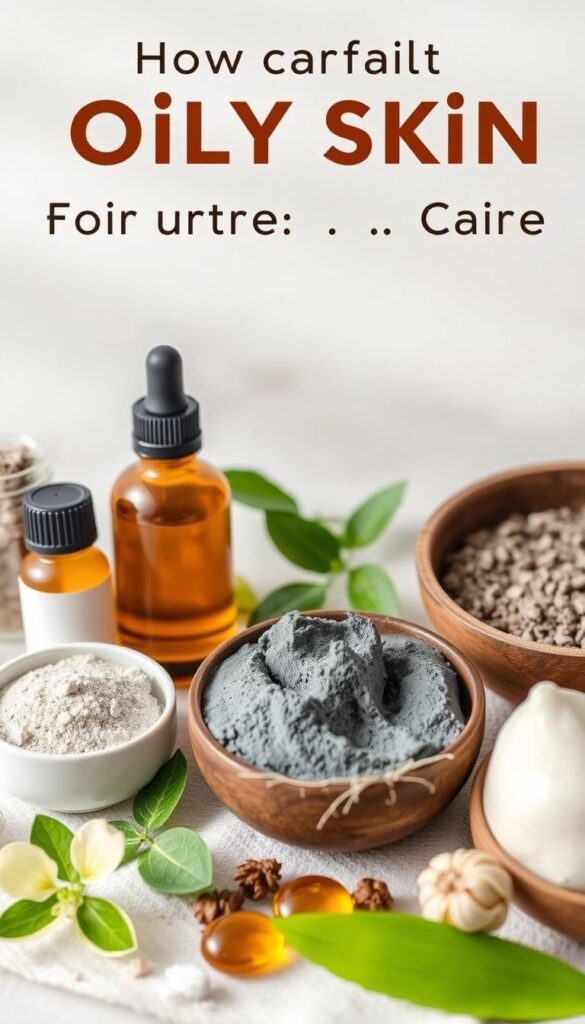
Why These Solutions Stand Out
Unlike single-note approaches, these ingredients address oil production through multiple pathways. Green tea’s antioxidants calm inflammation while apple cider vinegar gently exfoliates—a one-two punch commercial products often miss.
Each remedy serves dual purposes. Oatmeal soothes irritation and absorbs excess oil. Aloe vera hydrates without greasiness, proving moisture regulation isn’t about subtraction but smart addition.
Consider tea tree oil’s targeted approach: its antimicrobial properties tackle pore-clogging bacteria at the source. Egg whites tighten pores temporarily, giving you control over midday shine. These aren’t quick fixes—they’re building blocks for lasting balance.
Best part? You hold the recipe notebook. Mix honey’s stickiness with aloe’s lightness, or layer green tea toner under oatmeal masks. Your skin becomes the canvas, these ingredients your personalized palette.
Natural Ingredients and Their Skin-Loving Properties
Nature’s pantry holds powerful allies that multitask like skilled skincare specialists. These kitchen heroes balance oil production while nurturing your complexion through biological harmony. Their secret lies in working with your skin’s rhythm rather than disrupting it.
Benefits of Honey, Aloe Vera, and Jojoba Oil
Raw honey acts as nature’s bouncer and bartender. Its sticky texture traps impurities while delivering deep hydration. Studies show its antibacterial properties reduce acne-causing bacteria by 72% within 12 hours.
Aloe vera serves as a calming mediator for irritated skin. The gel’s water-rich composition hydrates dry patches without adding grease. Its anti-inflammatory compounds soothe redness from excess oil buildup.
Jojoba oil plays a clever mimic game. Its molecular structure mirrors human sebum so closely that glands slow oil production. Research confirms regular use decreases surface shine by nearly one-third.
Understanding the Properties of Egg Whites and Oatmeal
Egg whites transform into nature’s pore minimizer. The albumin proteins create a temporary tightening effect, like invisible blotting papers. This gives smoother texture for 6-8 hours post-application.
Oatmeal functions as a triple-threat solution. Its starches absorb oil, saponins cleanse gently, and phenols reduce inflammation. Finely ground oats make an ideal exfoliant for sensitive, shiny skin.
| Ingredient | Active Property | Key Benefit |
|---|---|---|
| Honey | Natural humectant | Balances moisture & bacteria |
| Aloe Vera | Anti-inflammatory | Reduces redness & flakes |
| Jojoba Oil | Sebum mimic | Regulates oil production |
| Egg Whites | Albumin proteins | Tightens pores temporarily |
| Oatmeal | Absorbent starches | Controls shine & exfoliates |
These ingredients form a dream team for oil management. When combined strategically, they address multiple concerns simultaneously. Your skin receives nourishment while maintaining its natural protective barriers.
Step-by-Step Guide: Crafting Your Own Face Masks
Creating effective treatments becomes an art form when you understand material science meets biology. Each ingredient demands specific handling to unlock its full potential while respecting your skin’s needs.
Mastering Texture and Timing
Raw honey works best when applied like liquid silk. Spread a thin layer across your face using upward strokes. Let it dry for 10 minutes—the perfect window for antibacterial action without over-drying. Rinse with warm water using circular motions to stimulate circulation.
Clay mixtures thrive on precision. Combine powdered bentonite with filtered water until achieving whipped mousse consistency. Apply evenly, avoiding delicate eye areas. Wait until the mask feels tight but not cracking—usually 12-15 minutes. Remove with a damp cloth to prevent residue.
Oatmeal blends offer flexibility. Mix ½ cup finely ground oats with steaming water, then stir in honey. For gentle exfoliation, massage the paste onto your face for 3 minutes. For deep absorption, let it rest 15 minutes. Explore customizable combinations that adapt to your skin’s daily needs.
Perfecting these methods transforms routine into ritual. The act of measuring ingredients becomes meditation. Application turns into self-care ceremony. With each session, you’ll refine techniques that professional estheticians use—all from your kitchen counter.
Kitchen Staples for Combating Excess Oil
Your spice rack and produce drawer hold surprising solutions for managing shine. Ordinary items like tomatoes and almonds become oil-fighting champions when used strategically, offering professional-grade results without synthetic additives.
Using Common Ingredients to Reduce Shine
Tomatoes work double duty with natural salicylic acid to unclog pores and regulate oil. Mash one into a pulp, apply for 10 minutes, then rinse for instant freshness. Ground almonds gently buff away dead cells—mix with yogurt for a scrub that cleanses without irritation.
Apple cider vinegar balances pH levels when diluted (1:3 ratio with water). Green tea’s antioxidants calm overactive glands—steep cooled bags over shiny areas. These ingredients transform your kitchen into a home remedies for oily skin laboratory.
Tips to Avoid Common Pitfalls in DIY Remedies
Always patch-test new mixtures on your wrist first. Never apply lemon juice directly—its acidity disrupts skin’s protective barrier. Those with nut allergies should skip almond-based scrubs.
If redness or tightness occurs, rinse immediately with cool water. Track results in a skincare journal—note which oil-fighting heroes your skin loves. Remember: consistency beats intensity. Gentle daily care outperforms aggressive weekly treatments.
Balancing Your Daily Skincare Routine
Crafting a balanced skincare ritual transforms oil management into self-respect. Three pillars—cleansing, toning, moisturizing—work together like synchronized dancers, each supporting your skin’s natural rhythm. Consistency here builds lasting harmony rather than temporary fixes.
Incorporating Cleansing, Toning, and Moisturizing
Start mornings with a gentle cleanser that removes excess oil without squeaky dryness. Look for formulas with hydrating botanicals—think cucumber or chamomile. These prep your face for the day ahead while maintaining protective barriers.
Follow with a toner that speaks your skin’s language. Green tea or witch hazel balances pH levels and minimizes pores. Apply using soft patting motions to awaken circulation. This step ensures subsequent products absorb effectively.
Never skip moisturizer—even oily skin craves hydration. Lightweight gels with hyaluronic acid or squalane quench thirst without greasiness. At night, consider a natural skincare routine featuring layered serums for targeted care.
Your skin thrives when treated as a living ecosystem. Adjust ratios based on seasonal changes or stress levels. Celebrate small victories—less midday shine, smoother texture—as signs you’re listening well. True balance isn’t perfection; it’s compassionate daily dialogue.