“Healthy skin is a reflection of overall wellness,” Audrey Hepburn once observed. Her words became my mantra during a frustrating battle with persistent redness and discomfort. Like 60% of Americans who experience sensitivity, I faced a compromised protective layer that left me desperate for solutions.
This Website contains affiliate links. That means I may earn a small commission if you purchase through my links, at no extra cost to you.
Dermatologists emphasize that our body’s first defense thrives on balance. When mine weakened, everyday stressors caused tightness and flaking. I cycled through countless options, but relief stayed fleeting. Then I discovered three non-negotiable components: ceramides to rebuild, fatty acids to nourish, and humectants to lock in hydration.
This journey taught me healing requires both science and patience. Through meticulous trial, I found formulations that transformed my texture and resilience. The right combination didn’t just soothe – it created lasting change by addressing root causes rather than masking symptoms.
Key Takeaways
- A weakened protective layer increases sensitivity to environmental stressors
- Ceramide-rich formulas accelerate natural recovery processes
- Consistent use of targeted ingredients yields cumulative benefits
- Hydration and lipid restoration work synergistically for repair
- Product efficacy depends on addressing both immediate and long-term needs
Understanding the Skin Barrier and Its Importance
I never realized how fragile my body’s natural armor was until it started failing. The stratum corneum – our outermost layer – works like microscopic bricks and mortar. Corneocytes form protective “bricks,” while lipids act as cement holding them together. This structure keeps irritants out and moisture in.
When my barrier weakened, everything changed. Without enough ceramides and fatty acids, the surface became porous. Moisture evaporated like water through a sieve. I’d feel tightness by noon, then redness by evening. My skin reacted to breezes like alarms blaring.
Research taught me healthy barriers maintain a slightly acidic pH – nature’s security system. Mine had shifted alkaline, inviting inflammation. “A compromised barrier can’t regulate healing or temperature,” my dermatologist explained. Every sunbeam or skincare product became a potential threat.
Rebuilding required understanding three essentials: ceramides (50% of the layer), cholesterol (25%), and free fatty acids (15%). These lipids form protective sheets that deflect pollution and pathogens. Without them, the surface cracks under pressure.
Now I see my skin barrier as living architecture. Nourishing it daily isn’t pampering – it’s preventive maintenance. Strong defenses mean fewer flare-ups and faster recovery. What once felt like battle armor now feels like a second chance.
7 Skin Repair Products That Healed My Irritated Skin: How They Work
What transformed my journey from frustration to relief was understanding how targeted formulations interact with compromised barriers. Unlike basic moisturizers that sit on the surface, dermatologist-recommended options work like cellular architects. They reconstruct from within while shielding against external assaults.
Ceramides became my first line of defense. These lipid molecules act like mortar between bricks, rebuilding what daily stressors had eroded. I learned they’re most effective when paired with fatty acids – nature’s reinforcement crew that seals microscopic cracks.
Humectants surprised me with their dual action. Hyaluronic acid pulled moisture into parched areas while glycerin created a protective veil. Together, they turned my flaky patches into supple terrain within weeks.
The real game-changer? Formulas with oat extract and panthenol. These anti-inflammatory agents cooled angry redness like a breath of alpine air. They didn’t just mask discomfort – they taught my cells to respond rather than react.
I discovered occlusion isn’t suffocation. Lightweight silicones in evening treatments formed an invisible shield, trapping hydration without clogging. Morning revealed softer texture and diminished tightness – proof my barrier was regenerating overnight.
These carefully chosen allies work like a symphony. Each addresses distinct needs yet harmonizes to accelerate recovery. Now I see every application as laying bricks in a fortress – one that grows stronger with consistent, mindful care.
Key Ingredients for Effective Skin Repair
Navigating the world of skincare ingredients felt like deciphering a foreign language until I uncovered their true roles in healing. Three powerhouse components emerged as non-negotiables in my recovery toolkit – each addressing specific aspects of barrier restoration and cellular renewal.
Ceramides, Fatty Acids, and Shea Butter
Ceramides became my cellular glue, reconstructing the fractured mortar between weakened surface cells. I learned these lipid molecules make up 50% of our natural barrier – without them, hydration escapes like sand through fingers. Paired with linoleic acid (a fatty acid hero), they formed protective sheets that smoothed my rough patches within weeks.
Shea butter surprised me with its dual action. Rich in oleic and stearic acids, it melted into parched areas like liquid gold. Unlike heavier occlusives, it allowed my barrier to breathe while locking in essential moisture. Morning applications revealed softer texture without that dreaded greasy residue.
Antioxidants and Hydrators for Optimal Healing
My discovery of resveratrol changed the game. This antioxidant powerhouse didn’t just calm redness – it taught my cells to combat environmental stressors proactively. Combined with glycerin’s moisture-trapping magic, my complexion transformed from reactive to resilient.
| Ingredient | Primary Source | Key Function |
|---|---|---|
| Ceramides | Synthetic & plant-based | Rebuild lipid matrix |
| Linoleic Acid | Safflower oil | Strengthen barrier |
| Shea Butter | African shea tree | Seal & nourish |
| Resveratrol | Grape skin | Combat oxidative stress |
Through trial and error, I realized true repair requires layered approaches. Hydrators pull moisture inward while fatty acids prevent escape routes. Antioxidants shield against future damage – creating a self-sustaining ecosystem where healing compounds multiply benefits.
Expert Insights on Repairing Skin Barrier Damage
My turning point came during a consultation where experts revealed how everyday habits were sabotaging recovery. Board-certified dermatologists illuminated critical connections between routine choices and lasting barrier health – knowledge that reshaped my entire approach.
Advice from Board-Certified Dermatologists
Dr. Lesley Clark-Loeser’s warning struck deep: “Cracks in your protective layer act like open doors for pollutants.” Her analogy explained why environmental damage accelerated whenever I skipped moisturizer. I finally understood my tight, reactive skin wasn’t being dramatic – it was pleading for mercy.

Dr. Mary Lupo challenged my steaming-hot shower habit with data: “Lukewarm water preserves 30% more natural oils than hot.” Swapping scalding rinses for tepid splashes became my first act of daily kindness to struggling cells.
Safe Exfoliation and Cleansing Techniques
Enzymatic exfoliation became my revelation. Pumpkin-derived acid gently dissolved dead cells without abrasive scrubbing. Weekly dermaplaning sessions replaced harsh peels, revealing smoother texture minus the redness.
| Method | Active Component | Benefit |
|---|---|---|
| Enzyme Cleanse | Fruit-derived acids | Non-abrasive renewal |
| Dermaplaning | Sterile blade | Removes vellus hair/debris |
| Oil Cleansing | Jojoba esters | Dissolves impurities gently |
Introducing one active ingredient monthly let my skin rebuild tolerance. What once felt like stagnation became strategic healing – each week revealed stronger barrier function through measured progress.
The Science Behind Skin Damage and Healing
Our bodies perform microscopic miracles daily, orchestrating repair processes I once took for granted. When I mapped my skin’s recovery journey, I discovered four biological phases working like synchronized dancers. Hemostasis stops bleeding, inflammation cleans debris, proliferation rebuilds tissue, and remodeling strengthens weak areas.
Inflammation became my paradoxical ally. Essential for fighting invaders, it turns destructive when overactive. Chronic redness wasn’t just uncomfortable – it stalled remodeling by flooding tissues with corrosive enzymes. “Think of inflammation as fire,” my research revealed. “Controlled burns clear deadwood. Wildfires destroy ecosystems.”
Reactive oxygen species (ROS) emerged as stealth saboteurs. Stress and pollution cranked up their production, creating cracks in my skin’s foundation. These unstable molecules attacked collagen like termites gnawing wood, perpetuating a cycle of damage I mistook for normal sensitivity.
Antioxidants became my molecular firefighters. Vitamin C neutralized ROS before they could spark new flare-ups. Niacinamide boosted my skin’s natural defense enzymes, turning vulnerable areas into fortified zones. Nightly applications felt like deploying microscopic repair crews.
Understanding these mechanisms transformed my routine. Gentle cleansing preserved protective peptides. pH-balanced toners supported enzymatic activity. Each choice became a calculated move in nurturing my body’s innate healing intelligence – proof that science and self-care create unstoppable allies.
Must-Have Moisturizers and Creams for Dry Skin
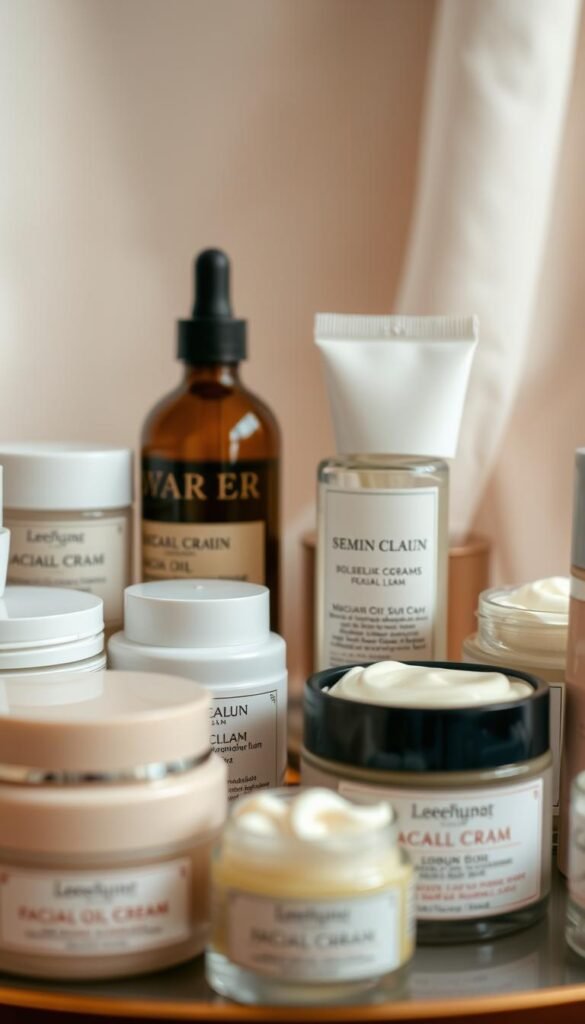
The quest for relief led me to formulas that transform parched surfaces into supple landscapes. Through months of testing, I learned true hydration requires multi-layered defense systems. Moisturizers became my daily armor, while richer creams served as overnight reconstruction crews.
Rich Formulas that Retain Moisture
Dr. Jart+ Ceramidin Cream revolutionized my nighttime routine. Its 5-Cera Complex delivers double the ceramides, while hyaluronic acid creates a moisture reservoir. Within days, my rough patches softened like clay under a sculptor’s hands.
| Product | Key Ingredients | Best For |
|---|---|---|
| Ceramidin Cream | Ceramide Complex, Hyaluronic Acid | Intensive overnight repair |
| La Roche-Posay Cicaplast | Panthenol, Shea Butter | Redness reduction |
| Kiehl’s Ultra Facial | Squalane, Glacial Glycoprotein | Extreme cold protection |
Budget-Friendly Options to Repair Dry Skin
CeraVe Healing Ointment proved luxury prices aren’t mandatory for results. Its ceramide-petrolatum blend created an invisible forcefield against winter winds. Dermatologists praise this best moisturizer for dry skin for mimicking our natural barrier at drugstore prices.
| Product | Price Range | Hero Component |
|---|---|---|
| Vanicream Moisturizer | $ | Ceramide Complex |
| Aquaphor Healing | $ | Petrolatum |
| Eucerin Advanced | $$ | Licochalcone |
Layering became my secret weapon. Lightweight serums prep the canvas, while occlusive creams lock in hydration like treasured memories. Consistency with these allies taught my dry skin to retain moisture through even the harshest conditions.
Harnessing the Power of Natural Plant Oils for Skin Repair
Exploring natural remedies led me to uncover nature’s hidden architects – plant oils that rebuild compromised defenses from within. When commercial creams fell short, these botanical extracts became my partners in restoring balance through biochemical harmony.
Benefits of Olive, Avocado, and Shea Oils
Avocado oil emerged as my daytime hero. Rich in linoleic acid and vitamin E, it reinforced my lipid matrix like nature’s reinforcing mesh. Morning applications left a protective veil against pollution without clogging pores.
Olive oil taught me crucial nuance. Though praised for its antioxidants, its high oleic acid content actually weakened my barrier over time. This revelation shifted my focus to oils with balanced fatty acid profiles that support rather than disrupt.
| Oil Type | Key Component | Barrier Impact |
|---|---|---|
| Avocado | Linoleic Acid | Strengthens permeability |
| Olive | Oleic Acid | Potential disruption |
| Shea | Stearic Acid | Seals & nourishes |
Shea oil transformed my nighttime routine. Its unique combination of fatty acids and anti-inflammatory compounds worked synergistically with my natural skin salve, accelerating recovery as I slept. Morning revealed supple texture where tightness once reigned.
Through careful experimentation, I learned lighter oils hydrate while heavier ones occlude. This layered approach – guided by molecular science – helped my body reclaim its protective intelligence. Nature’s chemistry became my ultimate ally in sustainable healing.
Tips to Avoid Further Skin Barrier Damage
Protecting my skin’s defenses became a daily practice, not just a reaction. Barrier maintenance starts with prevention – I learned this through trial and error. Experts like those at Vogue emphasize avoiding extremes: no scalding showers or abrasive scrubs that strip natural oils.
I swapped harsh cleansers for pH-balanced formulas. Hot water? Gone. Lukewarm rinses preserved my skin’s fragile lipid layer better than any serum. Physical exfoliants were replaced with enzyme-based options that dissolve dead cells gently.
Consistency matters more than complexity. My streamlined routine now focuses on ceramide-rich moisturizers and broad-spectrum SPF. Even stress management plays a role – cortisol spikes can weaken the barrier faster than winter winds.
Patience became my ultimate tool. Repairing damage takes weeks, but protecting against new threats starts today. Every choice – from pillowcases to product pH – builds resilience. Your body’s armor deserves nothing less.