“You may not control all the events that happen to you, but you can decide not to be reduced by them,” Maya Angelou once said. This wisdom perfectly mirrors my journey with temperamental complexions – and possibly yours too.
This Website contains affiliate links. That means I may earn a small commission if you purchase through my links, at no extra cost to you.
Staring at flushed cheeks in the mirror used to fill me with defeat. Like 70% of women, I’ve battled unpredictable irritation that made simple joys – trying new products, wearing bold lipstick – feel like minefields. Makeup became armor, not self-expression.
But true transformation began when I stopped masking symptoms and started healing my skin’s ecosystem. Through years of trial (and plenty of error), I discovered that reactive complexions crave simplicity over complexity. The right combination of soothing ingredients and mindful habits can reset your skin’s balance.
This approach isn’t about strict rules, but understanding your skin’s language. When we eliminate common irritants and nourish the moisture barrier, even delicate complexions find their rhythm. My method focuses on prevention rather than damage control – because calm skin shouldn’t feel like a luxury.
Key Takeaways
- 70% of women experience visible irritation and discomfort from reactive complexions
- Consistent gentle care outperforms quick fixes for lasting results
- Identifying and removing irritants is crucial for barrier repair
- Strategic hydration helps minimize flare-ups and discomfort
- Preventative maintenance creates resilient, balanced skin over time
Introduction: Embracing My Sensitive Skin Journey
My turning point came during a friend’s wedding. As I smiled for photos, my cheeks burned like campfire embers beneath layers of foundation. That night, I finally understood: my persistent redness wasn’t a phase – it was my face begging for change.
My Experience With Redness and Irritation
Years of experimenting taught me harsh truths. Many “soothing” products contained hidden irritants like alcohol denat or synthetic fragrances. My skin responded with angry patches and sandpaper-like texture. Every flare-up felt like betrayal – why couldn’t my face handle what others used effortlessly?
The breakthrough arrived when I tracked reactions in a journal. Patterns emerged:
| Common Triggers | Effective Solutions |
|---|---|
| Sulfate cleansers | pH-balanced milk cleansers |
| Alcohol-based toners | Chamomile hydrating mists |
| Physical exfoliants | Enzyme-based formulas |
Why a Calm, Effective Routine Matters
Switching from reactive fixes to preventive care transformed everything. Gentle products became allies, not enemies. Morning and night, my ritual focused on barrier support rather than camouflage. The mirror stopped being my adversary.
True skincare freedom came when I stopped fighting my complexion’s needs. Now, calm isn’t just a goal – it’s my daily reality.
Understanding the Causes of Redness and Irritation
My bathroom cabinet used to resemble a chemistry lab – countless products promising relief, yet my complexion remained unpredictable. It took years to realize reactive skin isn’t flawed, just misunderstood. True healing began when I mapped the invisible forces aggravating my face.
When Good Ingredients Turn Bad
I once believed “natural fragrance” meant gentle. Wrong. Many botanical extracts irritated my skin more than synthetic perfumes. Through painful trial and error, I identified four primary offenders:
- Disguised alcohols (ethanol, SD alcohol 40) masquerading as toners
- Overzealous exfoliants stripping my moisture barrier
- Sulfates creating that squeaky-clean deception
- pH disruptors in “balancing” formulas
Even makeup removers containing isopropyl myristate caused flare-ups. My skin’s protests taught me to decode labels like a detective.
Beyond the Surface: Hidden Influences
During spring allergy season, I noticed my cheeks flushing with each pollen surge. My dermatologist confirmed what I suspected – environmental triggers and internal imbalances often team up. That wool scarf I loved? Scratchy fibers caused contact dermatitis. My beloved spicy tacos? Nightshade inflammation.
Three lifestyle shifts made dramatic differences:
- Swapping coffee for anti-inflammatory turmeric tea
- Using HEPA filters during high-pollution days
- Tracking flare-ups against my menstrual cycle
Skin isn’t just our largest organ – it’s a living journal documenting everything from stress levels to nutrient gaps. Now when redness appears, I ask “What’s my body saying?” before reaching for creams.
5-Step Sensitive Skin Routine That Reduces Redness
Each morning begins with a simple ritual that transformed my relationship with my face. Where frustration once lived, there’s now a roadmap to calmness – one that works even when stress or pollution try to derail progress.
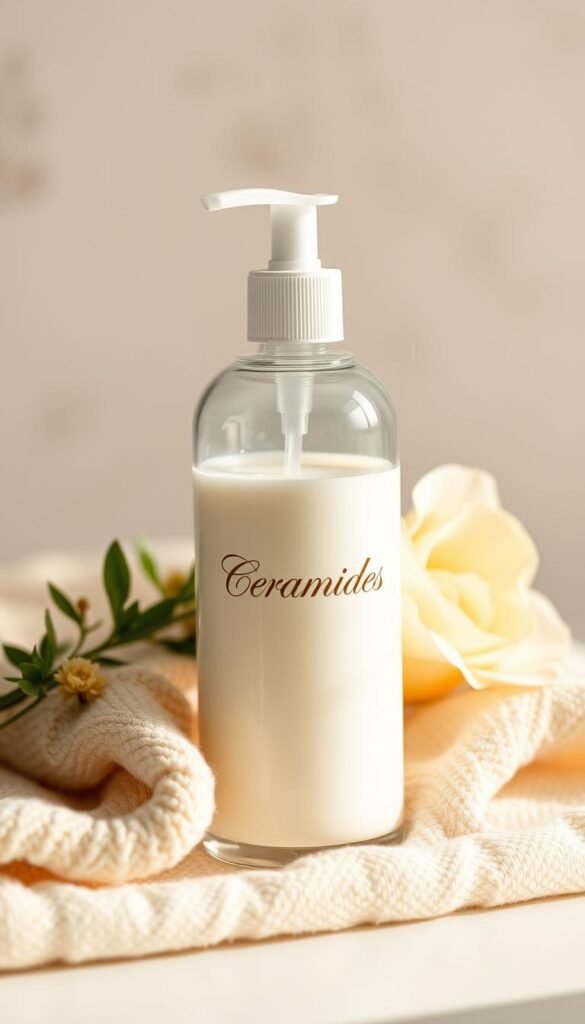
Gentle Cleanse and Soothe: Detoxing Common Irritants
I start by washing away the invisible enemies. My game-changer? A colloidal oatmeal cleanser that feels like a security blanket for my face. Research reveals its anti-inflammatory powers – mine proves it daily as pink tones fade during the 60-second massage.
Three rules govern this step:
- Water slightly cooler than room temperature
- Fingertip circles softer than a butterfly’s wings
- Pat-drying with bamboo cloths I wash in fragrance-free detergent
Moisturize and Restore: Using Ceramides for Barrier Repair
The magic happens in the next 90 seconds. I smooth on a ceramide cream while my face still glistens. These lipid heroes fill cracks in my skin’s armor like microscopic masons. Days of this routine rebuilt what years of harsh products destroyed.
My nighttime version contains 2% more ceramides – a trick my dermatologist approved. Now when wind bites my cheeks or pollen fills the air, my face stays fortress-strong. Redness used to announce every irritation; now, calm speaks louder.
Ingredient Insights and Product Suggestions
Decoding ingredient labels became my superpower. What once looked like chemical jargon now reveals healing potential or hidden threats. This knowledge transformed how I select skincare products – no more guessing games or hopeful experiments.
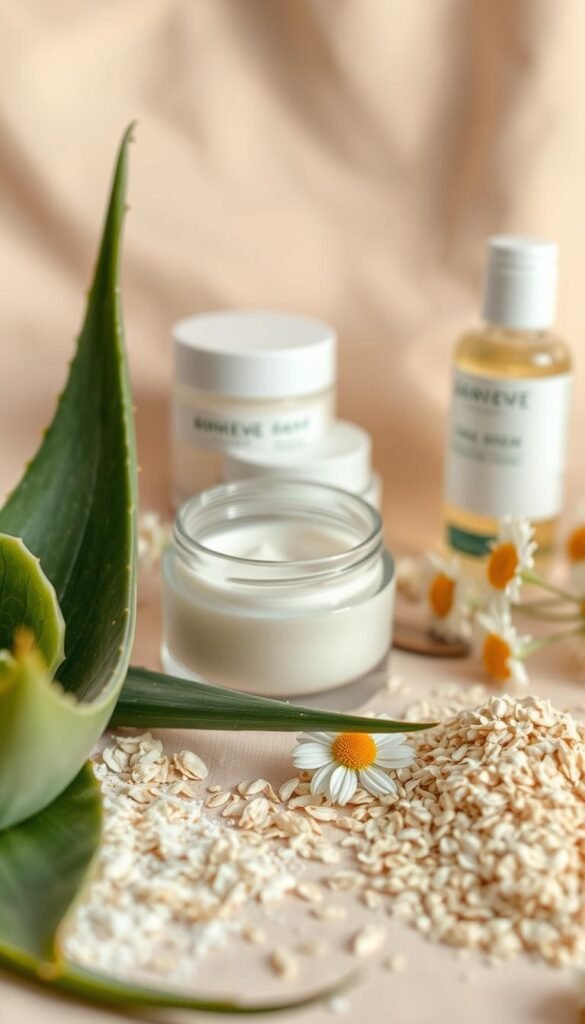
The Science Behind Soothing Components
Three active ingredients became my holy trinity for calmness. Colloidal oatmeal works like microscopic firefighters, reducing inflammation confirmed by clinical studies. Aloe vera’s gel provides instant cooling while rebuilding moisture reserves. Ceramides – making up 50% of our skin’s barrier – act as biological mortar sealing cracks.
| Ingredient | Key Benefit | Best In |
|---|---|---|
| Ceramides | Barrier repair | Night creams |
| Oatmeal | Redness reduction | Cleansers |
| Allantoin | Sensitivity relief | Serums |
Navigating the Clean Beauty Landscape
My hunt for suitable sensitive skin products taught me “clean” doesn’t always mean gentle. Through trial and error, I developed a checklist:
- Fragrance-free (even natural essential oils can irritate)
- pH-balanced formulas matching skin’s 5.5 acidity
- Multi-tasking ingredients like licorice root for dual calming and brightening
The BYOMA Creamy Jelly Face Cleanser exemplifies this philosophy. Its ceramide-rich formula cleanses without stripping, while green tea delivers antioxidants. For those seeking suitable sensitive options, prioritizing these components creates lasting calm rather than temporary fixes.
Enhancing My Routine with Supplements and At-Home Treatments
What began as basic skincare evolved into a holistic practice when I discovered the power of internal nourishment. My journey taught me that lasting calm requires addressing inflammation from multiple angles – not just topically.
Skin-Savvy Supplements to Reduce Inflammation
I transformed my morning vitamins into targeted allies. Curcumin capsules became my sunrise ritual – their anti-inflammatory effects visible within weeks. Paired with omega-3 fish oil, these supplements created an internal shield against environmental stressors.
Three game-changers emerged:
- Alpha-lipoic acid for whole-body inflammation control
- Spirulina tablets boosting antioxidant defenses
- Evening primrose oil balancing hormonal triggers
These additions complemented my topical routine, addressing redness at its source. My complexion stopped reacting to every pollen count spike or stressful deadline.
At-Home Techniques: Sheet Masks and Facial Steaming
Wednesday nights now mean self-care science. I alternate between facial steaming and chilled sheet masks – thermal contrast therapy that revitalizes without irritation. The steam session lasts precisely seven minutes, followed by a ceramide-infused mask straight from the fridge.
My favorite discovery? The Pyunkang Yul Essence Toner. Its astragalus root extract works like liquid resilience, preparing my face to absorb subsequent treatments. When paired with natural remedies, these techniques create lasting calm between professional appointments.
Conclusion
Three years ago, I avoided mirrors. Today, I greet my reflection with quiet pride – not because my face became “perfect,” but because I learned its language. This journey taught me that radiance isn’t about erasing flaws, but nurturing resilience through mindful care.
Combining internal wellness with gentle skincare created lasting change. Consistency with ceramide-rich moisturizers and anti-inflammatory cleansers outshone every quick-fix experiment. When I prioritized my skin’s needs over trends, the mirror stopped reflecting frustration.
For those navigating similar struggles: your complexion isn’t fragile – it’s discerning. Like cultivating a garden, success comes from removing irritants while feeding what thrives. My mornings now begin with protective layers that shield against pollution, using products from research-backed regimens free from harsh additives.
True glow emerges when we stop fighting our biology. By honoring my skin’s boundaries and nourishing its ecosystem, calm became my default setting. Your path to confidence starts here – one intentional step, one deep breath, one moment of trusting your skin’s wisdom.