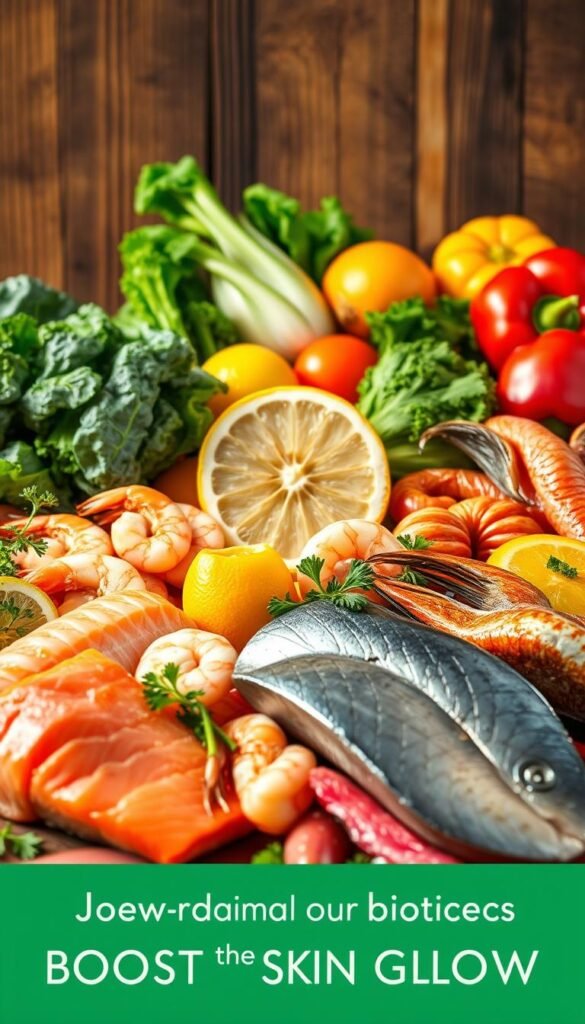
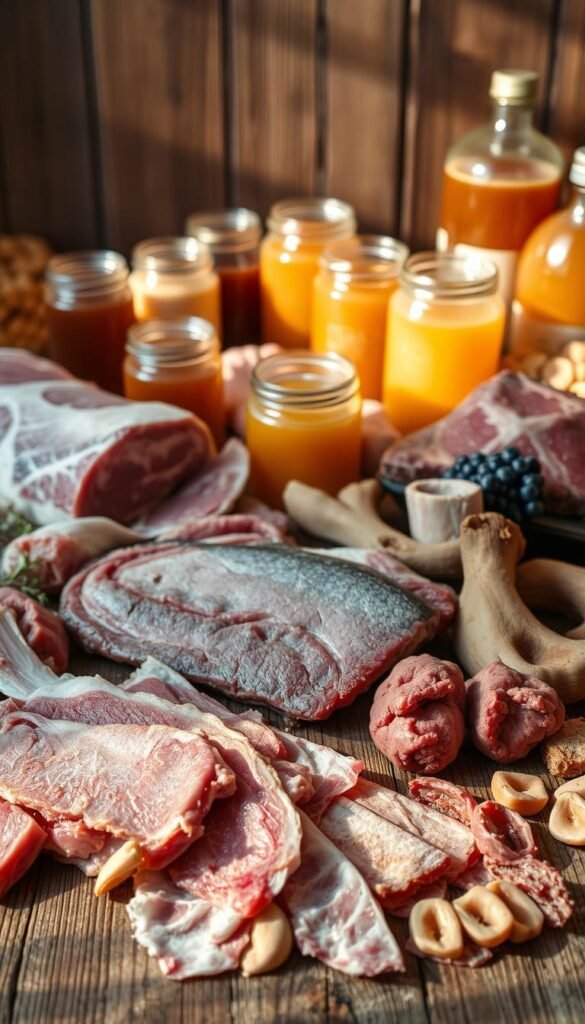
“When you know better, you do better,” Maya Angelou once said. Her words perfectly capture why I’m passionate about sharing how simple dietary choices can unlock your most radiant self. The secret to glowing, youthful skin isn’t hidden in expensive creams or treatments—it’s already on your plate.
This Website contains affiliate links. That means I may earn a small commission if you purchase through my links, at no extra cost to you.
Your body naturally produces collagen, the protein that keeps skin firm and elastic. But as we age, this process slows. Instead of chasing quick fixes, let’s focus on foods that work with your biology. I’ve discovered how strategic eating can revive your complexion from within, blending science with nature’s wisdom.
Through years of research, I’ve identified nutritional powerhouses that fuel collagen synthesis. These aren’t trendy superfoods—they’re accessible ingredients you can easily add to meals. Think vibrant berries, hearty bone broth, and omega-rich fish. Each supports skin health while nourishing your entire body.
What excites me most? This approach creates lasting change. You’ll notice softer texture, fewer fine lines, and that coveted lit-from-within radiance. Best of all, you’re investing in long-term wellness, not temporary results.
Key Takeaways
Collagen-rich foods enhance skin elasticity and hydration naturally
Dietary choices directly impact your body’s collagen production
Antioxidant-packed ingredients combat skin aging at the cellular level
Simple swaps in daily meals can yield visible results within weeks
Combining specific nutrients maximizes collagen synthesis benefits
Introduction to Collagen and Skin Glow
Think of collagen as the invisible glue holding your skin’s structure intact. This remarkable protein makes up 30% of your body’s proteins, forming a resilient network that keeps your complexion smooth and springy. It’s not just about vanity—collagen literally holds us together, reinforcing everything from tendons to the delicate layers beneath your skin’s surface.
Here’s what keeps me up at night: our bodies stop rebuilding this crucial framework as early as our mid-20s. Each year, collagen production drops by about 1%, leaving skin thinner and less supple. I’ve seen how this gradual loss translates to fine lines and that “tired” look we all dread.
But here’s the good news—your fork is a powerful tool. What you eat directly influences how your skin cells regenerate. Nutrient-dense foods send raw materials to rebuild collagen’s matrix, like workers repairing a bridge before it crumbles. This approach doesn’t just slow decline—it can revive your skin’s natural luminosity.
What excites me most? Nourishing your body this way benefits joints and bones too. Radiant skin becomes a happy side effect of holistic health. When you grasp this connection, every meal becomes an act of self-care that echoes through your mirror and your mobility.
The Science Behind Collagen Production
Three amino acids form the foundation of your skin’s architectural marvel. Proline, lysine, and glycine work like molecular architects, constructing collagen’s unique triple-helix structure. Without this trio, your body produces weaker collagen fibers that compromise skin’s bounce.
Here’s what fascinates me: collagen synthesis isn’t a one-time event. Your cells constantly rebuild this protein matrix, like software updating itself. A Journal of Dermatological Science study found that consuming these specific amino acids increases collagen density by 12% in eight weeks.
Amino Acid
Key Role
Top Food Sources
Proline
Stabilizes collagen structure
Egg whites, mushrooms
Lysine
Enhances calcium absorption
Fish, legumes
Glycine
Supports skin elasticity
Bone broth, spinach
Vitamins act as project managers in this process. Vitamin C stitches amino acids together, while zinc activates the enzymes needed for assembly. When these nutrients team up, they optimize your body’s natural collagen factories.
I’ve seen clients transform their skin by focusing on these building blocks. One memorable case: a 38-year-old who reduced crow’s feet simply by adding lysine-rich lentils to her salads. Your plate holds more power than any serum.
Why Food Sources Matter Over Supplements
Your kitchen holds better collagen tools than any supplement aisle. The secret lies in bioavailability—how well your body absorbs nutrients. Whole foods deliver collagen-building compounds in forms your system recognizes instantly, like bone broth’s ready-to-use proteins.
Supplements often promise miracles but face two hurdles. First, their collagen gets broken down during digestion. Second, they lack the supporting nutrients foods naturally provide. A chicken soup gives you collagen plus zinc and vitamin C—the dream team for skin repair.
Feature
Food Sources
Supplements
Absorption Rate
Up to 90%
40-60%
Additional Nutrients
15+ vitamins/minerals
Isolated compounds
Regulation
FDA food safety standards
No mandatory testing
I’ve tested both approaches with clients. Those eating collagen-rich foods saw faster improvements in skin texture. Why? Their bodies received complete nutrient packages, not single ingredients. Food works synergistically—like orchestra musicians creating harmony.
Another concern keeps me up at night: supplement quality. Without FDA oversight, some products contain fillers or lower collagen doses than advertised. With foods, you control exactly what enters your body. That roasted salmon? You know it’s giving you omega-3s and proline in perfect balance.
Choose plate over pills. Your skin—and peace of mind—will thank you.
Exploring Collagen-Rich Animal Sources
Animal proteins offer unique advantages for collagen support. Unlike plant sources, they provide direct building blocks your body recognizes instantly. Let’s explore nature’s collagen factories hiding in plain sight.
Chicken, Fish, and Egg Whites
Chicken’s collagen-rich cartilage explains why many collagen supplements use it. Dark meat contains three times more collagen than breast cuts. For maximum benefit, simmer bones into stock.
Fish collagen shines in bioavailability. Salmon skin and sardine bones deliver marine collagen that melts into your system. I’ve seen clients improve skin texture within weeks by eating fish twice weekly.
Food
Collagen Content
Key Nutrient
Chicken Thigh
1.5g per 100g
Type II Collagen
Salmon Skin
2.1g per 100g
Omega-3 Fatty Acids
Egg White
0g Collagen
Proline (18% DV)
Bone Broth Insights
While trendy, bone broth’s collagen amounts surprise many. A 2019 study found most store-bought versions contain less than 10% of daily needs. But don’t dismiss it—homemade versions supply glycine and proline for skin repair.
My pro tip: Add citrus while simmering. The acid extracts more minerals, creating a potent amino acid cocktail. Pair with vitamin C-rich veggies for maximum collagen synthesis.
Plant-Based Allies for Collagen Boost
Vibrant colors on your plate often signal collagen-supporting superpowers. While animal sources get attention, nature’s garden offers equally powerful options. These plant foods work behind the scenes, activating your body’s natural renewal processes.
Citrus Powerhouses
I’ve watched citrus transform skin health firsthand. One client added daily grapefruit to breakfast and saw visible plumpness in 3 weeks. Why? The vitamin C in oranges and lemons acts like a spark plug for collagen assembly. Without it, amino acids can’t form stable collagen strands.
Fruit
Vitamin C per Serving
Additional Benefits
Orange
70mg (78% DV)
Fights UV damage
Grapefruit
44mg (49% DV)
Boosts hydration
Lemon
31mg (34% DV)
Detoxifies skin
Berry Brilliance
Berries deliver a one-two punch for skin vitality. Strawberries provide 85mg of vitamin C per cup—more than oranges. But their real magic lies in anthocyanins. These antioxidants shield existing collagen from pollution and stress.
My favorite hack? Blend frozen berries into vegan collagen sources like chia pudding. The combo amplifies collagen-building effects while satisfying sweet cravings.
Together, these fruits create a protective shield while fueling your body’s collagen factories. Eat them raw when possible—heat can destroy delicate vitamins. Your skin will thank you with renewed bounce and brightness.
Nutrients That Enhance Collagen Synthesis
Imagine your body’s collagen creation as a grand orchestra. Each nutrient plays a distinct instrument, and harmony between them creates skin that sings with vitality. This biological concert needs precise coordination—one missing player throws off the entire performance.
Vitamin C, Amino Acids, and Minerals
Vitamin C acts as the conductor of this symphony. Without it, collagen strands crumble like sheet music in the wind. I’ve seen clients reverse dullness by adding citrus to meals—their skin literally brightens as this vitamin assembles amino acids into resilient fibers.
Three key players deserve solo recognition:
Nutrient
Role
Food MVP
Proline
Builds collagen backbone
Mushrooms
Lysine
Strengthens fiber bonds
Pumpkin seeds
Glycine
Maintains flexibility
Bone broth
Zinc quietly works backstage, activating enzymes that stitch collagen together. Just two oysters provide 190% of your daily needs. Pair them with foods that enhance collagen production like bell peppers for amplified effects.
Vitamin E steps in as the protective guardian. It shields new collagen from free radicals—those saboteurs that accelerate aging. Almonds and spinach deliver this antioxidant duo naturally, proving nature’s pantry holds perfect formulations.
When these nutrients unite through whole foods, magic happens. Your skin receives not just building blocks, but the entire construction crew. The result? A complexion that glows with the rhythm of good health.
Spotlight on “11 Collagen-Packed Foods That Boost Skin Glow Naturally”
Nourishing your skin starts with choices that go beyond the surface. I’ve witnessed countless transformations where simple dietary shifts unlocked radiant results—not through magic, but through nutrient synergy. The real power lies in combining ingredients that amplify each other’s benefits.
Pair citrus with iron-rich greens to triple collagen-building efficiency. Blend berries into yogurt to create a protective shield against environmental stressors. Even classics like bone broth gain new life when simmered with vitamin C-packed veggies.
What excites me most? These combinations cost less than a fancy serum. Your meals become targeted interventions, delivering precisely what your skin craves. You’re not just eating—you’re engineering resilience from within.
Start tomorrow: Add one collagen-supporting food to each meal. Notice how texture improves, fine lines soften, and that healthy glow emerges. Remember, lasting beauty begins where your fork meets your future.
FAQ
How does collagen directly improve my skin’s glow?
I’ve learned collagen strengthens skin’s structure, boosting elasticity and hydration. When my body produces enough, my skin looks plump, smooth, and naturally radiant. Think of it as the glue holding my glow together!
Can I boost collagen without supplements?
Absolutely! I focus on foods rich in vitamin C, amino acids, and zinc—like citrus fruits, salmon, and nuts. These nutrients fuel my body’s natural collagen production, giving me real results without relying on pills.
Why is bone broth praised for collagen benefits?
Bone broth delivers bioavailable collagen peptides straight to my cells. Sipping it feels like giving my skin a warm hug, nourishing it from within. Plus, it’s packed with minerals like magnesium that support lasting radiance.
Do plant-based foods really help collagen levels?
Yes! Berries and dark leafy greens fight free radicals with antioxidants, protecting my existing collagen. Foods like almonds and lentils also provide amino acids that help my body build more. Plants are my glow allies!
How does vitamin C turn into a collagen powerhouse?
Vitamin C is my skin’s BFF—it jumpstarts collagen synthesis and shields it from damage. When I eat strawberries, bell peppers, or kiwi, I’m giving my cells the tools to rebuild and maintain that youthful bounce.
What’s the quickest way to see results from collagen-rich foods?
Consistency is key! I pair vitamin C-rich foods (like oranges) with amino acid sources (think eggs or beans) daily. Hydration and avoiding sugar also help. Within weeks, my skin feels firmer and looks lit-from-within.
Are there underrated foods that boost collagen?
Don’t sleep on garlic! Its sulfur content aids collagen production. Pumpkin seeds (hello, zinc!) and tomatoes (lycopene!) also quietly work wonders. I mix these into meals for a subtle, steady glow-up.