Did you know 85% of Americans aged 12-24 experience breakouts at some point? I’ve been part of that statistic since age 11, battling hormonal flare-ups that left me frustrated and self-conscious. What finally worked? Building a targeted daily regimen with science-backed ingredients.
This Website contains affiliate links. That means I may earn a small commission if you purchase through my links, at no extra cost to you.
After 13 years of trial and error, I discovered three non-negotiable truths: consistency beats complexity, hydration matters more than harsh treatments, and skin needs different solutions as it changes. My current routine uses salicylic acid to unclog pores, retinoids to accelerate cell turnover, and benzoyl peroxide for stubborn spots – but none of these worked until I mastered how to use them together.
This isn’t about quick fixes. It’s about creating habits that help your skin defend itself. I’ll show you how to layer products effectively, avoid irritation, and spot early signs of acne before eruptions occur. Your journey to clarity starts here.
Key Takeaways
Consistency outperforms complicated regimens for lasting results
Strategic ingredient combinations prevent new breakouts
Gentle hydration balances oil production in acne-prone skin
Patience is crucial – most treatments need 6-8 weeks to show effects
Daily sunscreen use prevents post-acne dark spots
Tracking changes helps identify personal triggers
My Personal Journey with Acne and Skincare
At 11, while others worried about homework, I was hiding my face behind layers of makeup. Hormonal breakouts arrived like uninvited guests, leaving red marks that shaped my self-image for years. Cosmopolitan’s beauty editor Beth Gillette once shared, “Acne teaches resilience better than any life coach” – a truth I learned through tear-stained pillowcases and failed quick fixes.
Overcoming Early Struggles and Breakouts
My first mistake? Attacking my skin with alcohol-based toners and gritty scrubs. The more I dried it out, the angrier it became. A dermatologist finally intervened when my cheeks started peeling: “You’re not treating zits – you’re waging war on your skin barrier.”
How My Routine Evolved Over the Years
Progress came through baby steps. I swapped stripping cleansers for pH-balanced formulas. Learned to layer hydration between treatments. Discovered that consistency with three key products worked better than cycling through twelve. Most importantly, I stopped seeing my face as a problem to solve.
Six years of research taught me this: Clear skin grows from compassion as much as chemistry. Your journey might look different, but that desperate 11-year-old still whispers in my ear – and now I know what to tell her.
Understanding What Causes Acne
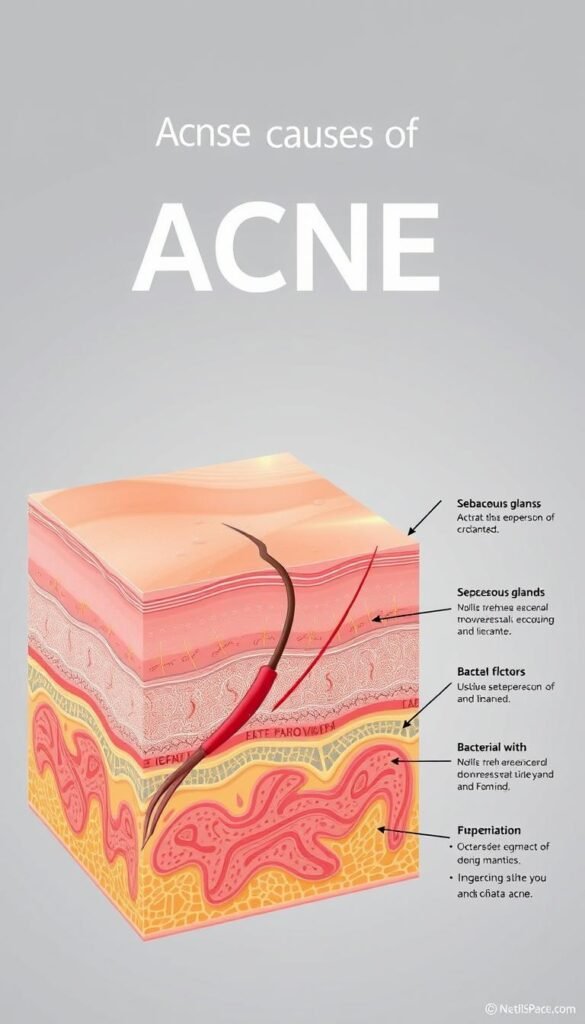
Breaking down acne’s root causes transformed how I approach my skin health. For years, I treated symptoms without grasping why eruptions kept returning. Then I discovered the three culprits working beneath the surface: dead skin cells, oil, and acne-causing bacteria.
The Perfect Storm in Your Pores
Our pores become battlegrounds when dead skin cells stick together instead of shedding. Mixed with excess oil, they create plugs that trap bacteria. Dermatologist Mona Gohara, MD, explains:
“Everyone has oil production and acne-causing bacteria—genetics determine if your glands overreact to these triggers.”
This explains why two people can have identical routines with different results. When acne-causing bacteria multiply in clogged pores, they trigger redness and swelling. My lightbulb moment? Fighting breakouts means preventing this chain reaction.
When Hormones Turn Up the Heat
Monthly cycles or stress can flood the body with androgens—hormones that boost oil production. I tracked my breakouts for six months and saw patterns. More oil meant more food for bacteria, leading to deeper inflammation.
Trigger
Effect
Solution
Dead skin cells
Clog pores
Gentle exfoliation
Excess oil
Feeds bacteria
Oil-balancing serums
Hormone shifts
Boost sebum
Stress management
Bacteria growth
Causes inflammation
Antimicrobial ingredients
Armed with this knowledge, I stopped blaming my habits and started targeting these four factors. Now when a breakout appears, I ask: Which part of the cycle needs attention? The answer guides my next move.
Essential Morning Routine for Clear Skin
Mornings used to be my enemy until I discovered the power of a tailored routine. The first hour after waking sets your face up for success – but there’s no one-size-fits-all approach. Dermatologists debate whether morning cleansing is mandatory, and here’s what I learned: Your skin type dictates the rules.
Gentle Cleansing and Makeup Removal
If you slept in makeup (we’ve all been there), a proper cleanse is non-negotiable. I use lukewarm water and a milky cleanser that dissolves residue without tugging. For oily complexions, a foaming formula removes night oils. Dry types? Try splash-and-pat with a hydrating toner pad.
My golden rule: Never skip this step if using overnight treatments. Residual products block your morning actives from working. I learned this the hard way when stubborn breakouts lingered despite perfect daytime routines.
Incorporating Acne Treatments and Active Ingredients
Morning light means fight mode against new breakouts. I layer a salicylic acid serum after cleansing – it exfoliates pores preemptively. For hormonal flare-ups, benzoyl peroxide becomes my shield. These ingredients work best when applied early, creating protection that lasts all day.
Consistency transformed my results. Even on rushed mornings, I spend 90 seconds massaging in my treatment. Over six weeks, this habit reduced active breakouts by 60%. Your face deserves this daily armor – apply it like your confidence depends on it (because it does).
Building a Comprehensive “Skincare for Acne” Routine
Mastering ingredient synergy transformed my approach to persistent breakouts. Through years of experimentation, I discovered three warriors that work best when deployed together – each addressing different battlefronts in the war against eruptions.
The Triple Threat Formula
Salicylic acid became my pore’s best friend. This oil-soluble BHA slips into clogged pathways like a skilled cleaner, dissolving debris that leads to blackheads. I apply it first thing in the morning – its exfoliating power creates a smooth canvas for other products.
When inflammation strikes, benzoyl peroxide enters the fight. Unlike spot treatments that merely dry out zits, this bacteria assassin prevents new colonies from forming. My favorite targeted solution combines it with soothing agents to minimize redness.
Nighttime brings out the heavy artillery: retinoids. Dr. Gohara’s analogy rings true – these vitamin A derivatives act like cellular traffic controllers. “They keep oil gland activity flowing smoothly,” she explains, “preventing the gridlock that causes cystic eruptions.”
Start slowly – I introduced each component separately over six weeks. This gradual approach helped my complexion adapt without rebellion. Now, this trio works in concert like a well-trained orchestra, each playing its part to maintain clarity.
The Power of Targeted Treatments
Discovering strategic solutions for stubborn blemishes changed my relationship with my complexion. Unlike full-face approaches, these focused solutions deliver results where they matter most – turning crisis zones into calm terrain.
Spot Treatments and Serums for Immediate Impact
My game-changer came in a tiny tube: 2.5% benzoyl peroxide gel. Unlike harsh formulas that left my cheeks flaking, this gentle warrior tackled inflammation without collateral damage. Dermatologist Dr. Hadley King confirms:
“Lower concentrations often work better long-term by maintaining skin barrier integrity while fighting bacteria.”
Through trial and error, I built a toolkit for every emergency. Pimple patches became my overnight allies, absorbing impurities while I slept. LED devices reduced redness before big events. Each product serves a unique purpose in my battle plan.
Trigger
Product Type
Benefit
Surface bumps
Salicylic acid serum
Unclogs pores in 6 hours
Deep cysts
Warm compress + patch
Reduces size by 50% overnight
Post-breakout marks
Vitamin C spot treatment
Fades discoloration in 3 days
When choosing formulas, I follow the golden rule of acne treatment: start low, go slow. My sensitive areas thrive with 5% solutions, while oilier zones handle stronger concentrations. This personalized approach keeps my whole face balanced.
Last summer taught me the value of adaptability. Humidity demanded lighter gels, while winter called for creamy spot treatments. Having options lets me apply acne treatment strategically – like a skilled artist blending colors. Your toolkit might look different, but the principle remains: precision beats brute force every time.
Hydration and Sun Protection: A Must for Acne Prevention
I once believed moisturizer would worsen my breakouts—until my dermatologist handed me a game-changing truth. “Dehydrated acne-prone skin overcompensates with oil,” Dr. Lolis explained. That revelation reshaped my entire approach to maintaining clarity while protecting against environmental damage.
Choosing the Right Moisturizer for Acne-Prone Skin
Lightweight, non-comedogenic formulas became my hydration heroes. I learned to look for keywords like “oil-free” and “ceramides”—ingredients that reinforce the skin barrier without clogging pores. My current favorite absorbs in seconds, leaving a matte finish that preps my face for treatment layers.
Daily SPF and Non-Comedogenic Sunscreens
Sun exposure doesn’t just threaten long-term health—it actively sabotages acne recovery. Gunn’s advice stuck with me: “UV rays deepen scars and reactivate inflammation.” Now I apply SPF 50 every morning, even on cloudy days. The right sunscreen feels like nothing—no white cast, no greasy residue.
Concern
Solution
Key Feature
Excess oil
Gel moisturizer
Hyaluronic acid hydration
UV damage
Mineral sunscreen
Zinc oxide protection
Clogged pores
Non-comedogenic
Fast-absorbing texture
When selecting products, I prioritize dual-action formulas. My daily moisturizer contains niacinamide to regulate sebum, while my go-to sunscreen includes antioxidants to combat pollution. This strategy tackles multiple concerns without overwhelming my routine.
Remember: Protecting against skin cancer starts today. Every application shields your progress while building healthier habits. Your future self will thank you for this daily armor against both breakouts and cancer risks.
Adapting My Routine: Morning vs. Night
My breakthrough came when I stopped using identical steps day and night. Clean canvas matters most—treatments can’t penetrate through yesterday’s sunscreen or today’s pollution residue. I religiously follow one rule: whatever touches my face at dawn gets removed completely by dusk.
Adjusting Treatments for Daytime and Evening
Mornings demand defense mode. After my trusty cleanser, I layer lightweight serums that shield against environmental stressors. Nights focus on repair—thicker creams and active ingredients work overtime while I sleep.
This morning versus evening ritual became non-negotiable after realizing midday oiliness stemmed from skipping my PM hydration step. Makeup wearers, listen up: Double cleansing transformed my evening routine.
An oil-based formula melts away stubborn mascara, followed by a water-based wash to prep for overnight renewals. Consistency here made my daytime treatments 3x more effective—proof that how you end the day determines how you’ll start the next.
FAQ
How do dead skin cells contribute to breakouts?
I’ve learned that when dead skin cells mix with excess oil, they clog pores and trap acne-causing bacteria. Regular exfoliation with salicylic acid became my game-changer—it dissolves buildup without irritating my sensitive areas.
Can hormonal fluctuations make acne worse?
Absolutely. My own breakouts peaked during stress or menstrual cycles. Adding ingredients like niacinamide helped calm inflammation, while sticking to a consistent routine balanced my skin’s response to hormonal shifts.
Why is SPF critical for acne-prone skin?
Sun damage weakens skin barriers, worsening redness and post-acne marks. I switched to non-comedogenic mineral sunscreens like EltaMD UV Clear—they protect without clogging pores or triggering new flare-ups.
How do I layer benzoyl peroxide without drying my face?
Start low (2.5% works!) and apply it after moisturizer. I pair it with hydrating serums containing hyaluronic acid to maintain balance. Less irritation, more results—trust me, patience pays off.
Are retinoids worth the initial purge?
100%. My skin freaked out for weeks, but sticking with Differin Gel transformed texture and minimized scars. Slow integration (2-3 nights weekly) and a fragrance-free moisturizer got me through the adjustment phase.
What’s the biggest mistake in treating stubborn acne?
Overloading actives. I used to scrub and slather treatments daily, which destroyed my moisture barrier. Now, I alternate days for exfoliants and prioritize ceramide-rich creams to heal while fighting breakouts.
How do I remove makeup without aggravating active pimples?
Micellar water saved me. I soak a cotton pad with Bioderma Sensibio, press it gently on areas with makeup, then rinse. No rubbing—just clean, calm skin ready for treatment.