“Beauty begins the moment you decide to be yourself,” Coco Chanel once said. For those of us with combination complexions, embracing our natural texture while enhancing our features requires strategy—not just products. This guide isn’t about masking what makes you unique. It’s about working with your body’s rhythms to create looks that last.
This Website contains affiliate links. That means I may earn a small commission if you purchase through my links, at no extra cost to you.
I’ve spent years refining techniques to address shine, enlarged pores, and midday touch-ups. Through trial and error, I discovered that the right approach can turn frustration into confidence. Proper application doesn’t just improve appearance—it creates a protective shield against humidity and pollution.
My routine focuses on two pillars: product intelligence and adaptive methods. You’ll learn how to choose formulas that balance rather than fight your natural oils. We’ll explore layering strategies that keep everything in place from morning coffee to evening events.
Key Takeaways
Tailored product selection combats excess oil without stripping moisture
Strategic layering techniques ensure 12-hour wear
Proper prep minimizes pores and creates smooth canvases
Matte finishes can look natural, not flat or chalky
Daily habits impact makeup performance as much as application skills
Understanding Oily Skin and Its Unique Challenges
Navigating a combination complexion taught me that shine isn’t the enemy—it’s how we respond to it. My journey started with frustration but evolved into empowerment through understanding my body’s natural rhythms.
My Personal Journey with Combination Complexion
At 16, I watched my carefully applied foundation vanish before second period. Classmates’ “you’re glowing” comments felt like code for “your face is an oil slick.” Through years of experimentation, I discovered that harsh products worsened sebum production. Skipping moisturizer? A disastrous move that left my T-zone resembling a grease pan.
Everyday Battles with Shine and Texture
Three main issues plague my routine: midday meltdowns, product migration into pores, and unexpected shine zones. Humidity transforms my forehead into a mirror, while powder settles into nose creases like chalk dust. I’ve learned that hydration balance matters more than mattifying—when I nourish properly, my sebum production calms naturally.
Environmental factors play silent saboteur too. Summer heat demands different strategies than winter dryness. Through trial and error, I developed adaptive techniques that respect my body’s responses rather than fighting them—a revelation that changed everything.
Essential Makeup Products to Combat Shine
My quest for all-day freshness led me to build a strategic product arsenal. The right combination acts like a security system against unwanted glow while letting natural radiance peek through.
Must-Have Oil-Free and Matte-Finish Essentials
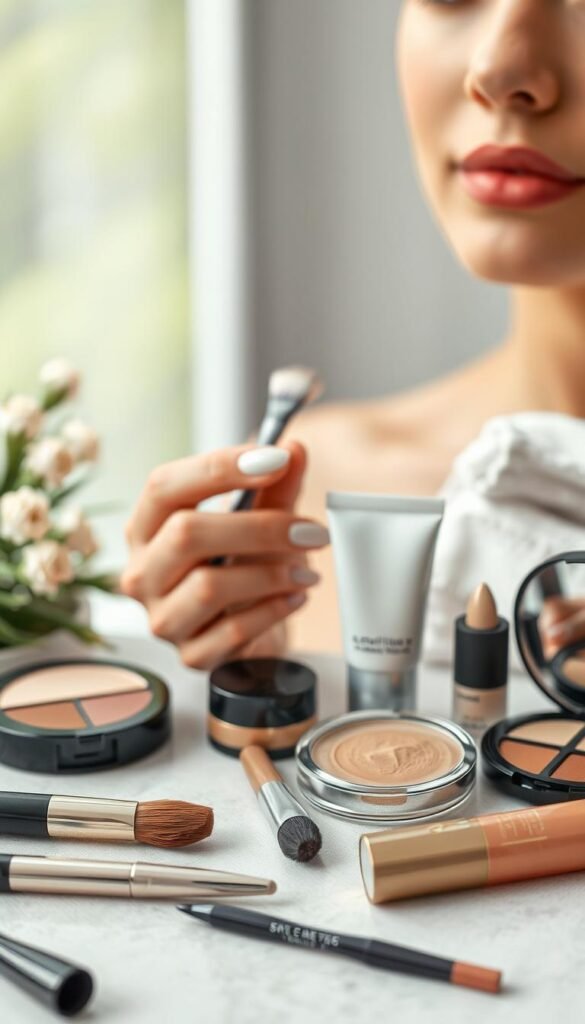
Three heroes dominate my kit: a blurring primer, breathable foundation, and adaptive powder. My go-to foundation combines matte finish with hydration sensors that adjust to my body’s rhythms. It stays put through humidity spikes without cracking.
Powder foundation became my secret weapon for touch-ups. I keep a compact with micro-sponge technology that absorbs excess moisture while maintaining dimension. For days needing lighter coverage, a translucent setting powder with rice starch keeps everything locked without ghostly residue.
Selecting Primer, Foundation, and Powder
I test every product like a scientist. Primers must pass the “silk test”—if my fingers glide without catching texture, it’s a winner. Foundations get evaluated at three-hour intervals for oxidation and migration.
Buildable coverage matters more than full camouflage. I prioritize formulas with silica spheres that diffuse light rather than mask pores. Waterproof eye products prevent raccoon eyes when oils inevitably travel north.
Ingredient literacy changed my approach. I avoid coconut derivatives and mineral oil, opting instead for dimethicone-based primers that smooth without suffocating. Every product must multitask—moisture control plus pollution protection earns permanent shelf space.
My Oily Skin Makeup Tutorial: Step-by-Step Guide
The secret to all-day wear lies in the often-overlooked preparation stages. Through meticulous testing, I’ve developed a six-phase process that adapts to natural oil production while maintaining a natural finish. This method works whether I’m facing summer humidity or winter dryness.
Prepping My Canvas: Cleanse, Tone, Hydrate
I begin with a sulfate-free cleanser that removes impurities without stripping moisture. A cotton pad soaked in witch hazel toner follows—this step visibly minimizes pores within minutes. My lightweight moisturizer contains hyaluronic acid, creating hydration that lasts without greasy residue.
Building the Foundation Layer
Primer application becomes strategic here. I press a pea-sized amount into my T-zone using warm fingertips, creating a velvety base. For foundation, I dot a matte formula onto cheeks and blend outward with a damp sponge. Thin layers prevent cakiness while allowing natural texture to show through.
Sealing the Masterpiece
A fluffy brush deposits translucent powder along my nose and forehead. I wait three minutes before dusting off excess—this “baking” technique locks in coverage. The final touch? Two spritzes of setting spray held at arm’s length, creating an invisible shield against shine.
Expert Tips and Tricks for Long-Lasting, Matte Makeup
Maintaining a fresh appearance requires more than morning preparation—it’s about intelligent maintenance. I’ve adopted strategies from top artists that transform midday touch-ups into strategic enhancements rather than desperate fixes.
How I Control Shine Throughout the Day
Daniel Bauer’s pre-foundation setting spray method became my game-changer. Mist your face before applying base products—this hydrates while creating a grippy surface. For midday oil absorption, I press blotting papers against my forehead and nose using a rolling motion. No rubbing!
The “sandbagging” technique works like magic. I dust translucent powder on my chin and temples, let it sit during coffee breaks, then brush it off. This absorbs excess oil without that dreaded powdery mask effect.
Blotting and Touch-Up Techniques That Truly Work
My compact holds two essentials: a micro-fiber sponge for pressing (not wiping) away shine, and cream blush that melts into my natural oils. I follow pro guidelines for strategic powder placement—only where shadows form, never on raised areas.
Eye maintenance matters too. A dab of primer prevents mascara smudges when oils migrate upward. For touch-ups, I stipple (never swipe) products using a dense brush. This preserves existing layers while adding coverage exactly where needed.
Conclusion
Perfecting my approach to combination complexions transformed frustration into creative empowerment. What began as a battle against midday shine evolved into celebrating my natural canvas through strategic techniques. The journey taught me that lasting results come from harmony—balancing hydration with oil management while respecting my body’s rhythms.
Three principles now guide every application: intelligent preparation, adaptive formulas, and precision setting. Cleansing rituals create the ideal base, while primers act as invisible armor against environmental stressors. Matte foundations with breathable textures prove you don’t need heavy layers to achieve flawless coverage.
The real game-changer? Learning to set products in stages rather than all at once. A light dusting of powder followed by setting spray creates a flexible barrier that moves with my face. For those seeking detailed guidance, this comprehensive guide breaks down each phase effectively.
Through persistent experimentation, I discovered combination complexions aren’t limitations—they’re opportunities for innovation. By focusing on what my canvas truly needs rather than following generic advice, I’ve achieved looks that stay fresh from sunrise to late-night events. The key lies in treating each application as a collaboration with your unique biology.
FAQ
What’s the best primer for minimizing pores?
I rely on oil-free, silicone-based formulas like Fenty Beauty’s Pro Filt’r Mattifying Primer. It blurs texture and creates a smooth canvas without clogging pores. Always apply it after moisturizer but before base products.
How do I keep my foundation from sliding off by midday?
Start with a matte, long-wear formula like Estée Lauder Double Wear. Use a damp beauty sponge to press it into your complexion, then set immediately with a translucent powder. Finish with a setting spray like Urban Decay All Nighter for extra hold.
Can I skip moisturizer if my face feels greasy?
Never! Hydration is key—even for shine-prone complexions. I use lightweight, water-based gels like Neutrogena Hydro Boost. Dehydrated skin often overproduces oil, so balancing moisture helps control excess sebum.
What’s your go-to trick for touch-ups without caking?
Blotting papers (Boscia’s Charcoal ones are my favorite) absorb grease without disturbing your base. If needed, lightly pat on a pressed powder like Laura Mercier’s Translucent Setting Powder—focus only on shiny zones like the T-zone.
Are powder foundations better than liquid for oil control?
It depends! I alternate between buildable powder options (MAC Studio Fix) for quick touch-ups and liquid matte foundations for full coverage. Both work if you prep with primer and set strategically with a mist.
How do I prevent mascara from smudging on oily eyelids?
Waterproof formulas are essential—try Too Faced Better Than Sex Waterproof. I also dust a neutral eyeshadow base (Urban Decay Eyeshadow Primer Potion) to lock down eyelid oils before applying any eye products.