“Beauty begins the moment you decide to be yourself,” Coco Chanel once said. For those of us navigating the challenges of shine-prone complexions, this quote hits differently. I’ve spent years battling midday meltdowns and midday meltdowns and sliding foundation, only to discover that true confidence starts with understanding your skin’s rhythm.
This Website contains affiliate links. That means I may earn a small commission if you purchase through my links, at no extra cost to you.
Let’s be honest: when your face feels like a frying pan by noon, even the most expensive products can feel like a waste. I’ve learned through countless trials that long-lasting results require more than blotting papers and prayers. It’s about building a routine that works with your natural oils, not against them.
This guide isn’t just about product recommendations. We’ll explore how to prep your canvas, choose formulas that stay put, and apply techniques that lock everything in place. Whether you’re dealing with humidity or hectic schedules, these strategies keep your look fresh from sunrise to sunset.
Key Takeaways
- Skincare prep determines makeup longevity more than products alone
- Non-comedogenic foundations prevent pore congestion and shine buildup
- Layering techniques create a flexible barrier against oil breakthrough
- Blotting strategically preserves coverage without cakiness
- Ingredient awareness stops breakouts before they start
Understanding Oily Skin: Challenges and Considerations
Every complexion tells a tale, and mine was written in oil. Through years of trial and error, I discovered that managing sebum isn’t about elimination—it’s about strategic balance. The key lies in decoding your skin’s unique language.
Identifying Your Skin Type
My wake-up call came when I realized my T-zone behaved differently than other areas. Forehead and nose pores appeared larger, while cheeks felt normal. This uneven oil distribution creates a common dilemma: treating oily zones without stripping drier areas.
| Characteristic | Oily Skin | Dehydrated Skin |
|---|---|---|
| Primary Cause | Overactive sebaceous glands | Lack of water retention |
| Pore Appearance | Visible, enlarged | Potentially tight-looking |
| Common Fix | Oil-balancing products | Hydrating serums |
Common Concerns with Excess Oil and Shine
I once believed moisturizer would worsen shine—until my skin rebelled with more oil production. Dehydration tricks pores into overcompensating. Now I hydrate religiously with water-based formulas, keeping sebum levels surprisingly manageable.
Breakouts taught me another lesson: non-comedogenic isn’t just a buzzword. Clogged pores from heavy creams created a cycle of shine and blemishes. Switching to breathable products let my complexion reset naturally.
Prepping Your Skin: Cleanse, Tone, and Moisturize
The secret to lasting beauty lies in what happens before the brush meets the skin. Through years of testing, I’ve discovered morning prep determines whether products cooperate or rebel by midday.
Effective Cleansing Methods for a Fresh Canvas
My routine begins with lukewarm water and a gel-based cleanser. This combo removes overnight buildup without triggering excess oil production. I massage it in circular motions for 30 seconds – enough time to dissolve impurities but gentle on delicate pores.
Twice weekly, I swap my morning wash for a chemical exfoliant. This dissolves dead skin cells that cause uneven texture. The result? A smooth base that grips foundation like Velcro.
Hydration Without the Grease
Here’s where most people slip up: skipping moisturizer. I use a water-based formula with hyaluronic acid immediately after toning. It plumps my face without adding shine, creating the perfect balance between supple and matte.
Patience becomes key here. I wait 7 minutes before moving to makeup application. This lets each layer absorb fully, preventing the dreaded midday separation. Trust me – watching the clock pays off when your blush stays put through three Zoom meetings.
The Importance of a Mattifying Primer
The battle against midday shine starts long before foundation touches your face. I once underestimated this invisible hero until my base began sliding off within hours. Now, my velvet-smooth canvas lasts through summer humidity and winter heating alike.
Why Oil-Free Formulas Win
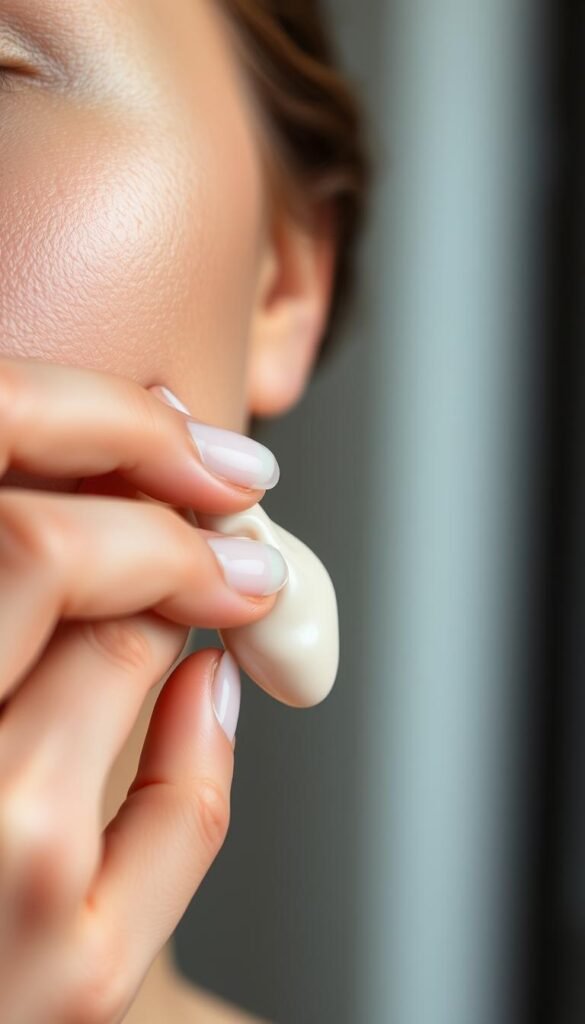
Through testing 23 primers, I discovered water-based options with silica outperform silicone-heavy ones. They create a breathable barrier that absorbs excess oil without suffocating pores. My current favorite grips pigment like a second skin while letting my complexion function naturally.
Application became an art form through trial and error. I dot product on forehead, nose, and chin first—the pores here drink up excess shine. A pea-sized amount covers the entire face when blended outward with warm fingertips. Eyelids get special attention to prevent shadow creasing.
Timing matters as much as technique. Waiting three minutes after application lets the mattifying formula set properly. Rushing this step caused my foundation to pill until I learned patience. Now my finish stays intact from morning coffee to evening events.
“Primer is the unsung architect of lasting beauty,” a makeup artist once told me. They were right—this step determines whether other products work harmoniously or clash with your skin’s rhythm. Choose wisely, apply strategically, and watch your confidence outlast the clock.
How to Choose Makeup for Oily Skin
Cosmetics aisles used to feel like minefields until I cracked the code. Choosing compatible products requires understanding both labels and your skin’s needs. The right formulas become allies in maintaining balance throughout the day.
Decoding the Ingredient List
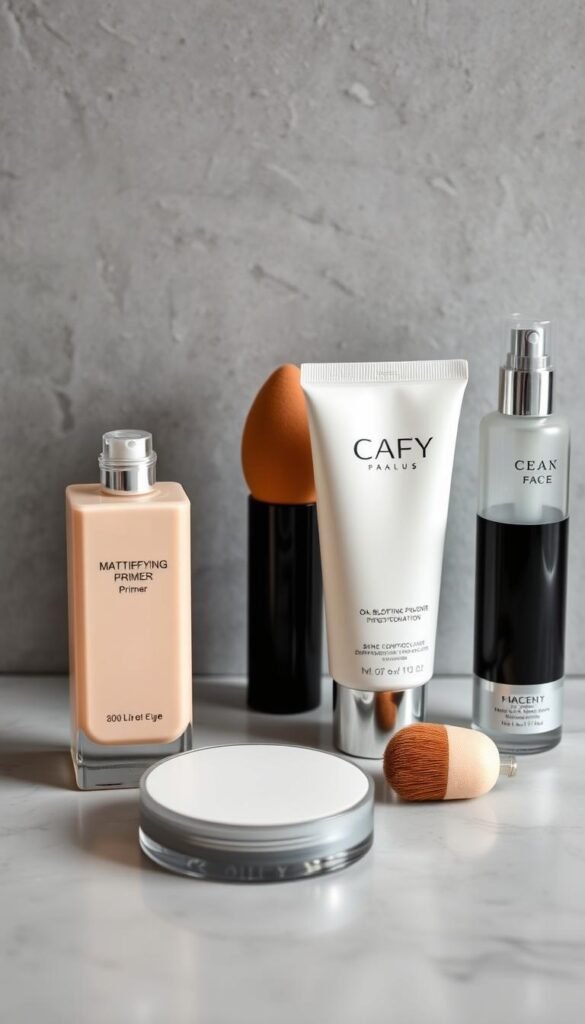
Water-based formulas became my holy grail after realizing their dual benefits. Look for aqua listed first, paired with blurring agents like silica microspheres. These create a breathable veil that absorbs excess sebum naturally.
Salicylic acid surprised me with its multitasking abilities. Beyond controlling shine, it gently exfoliates dead cells that cause uneven texture. Combined with hyaluronic acid, this powerhouse duo maintains hydration without greasiness.
| Ingredient | Primary Benefit | Found In |
|---|---|---|
| Water (Aqua) | Lightweight hydration | Base formula |
| Silica Microspheres | Pore blurring | Mattifying primers |
| Salicylic Acid | Exfoliation + oil control | Acne-friendly formulas |
| Vitamin E | Antioxidant protection | Long-wear foundations |
Tested Favorites That Deliver
Through rigorous testing, three formulas stood out. Tarte’s Face Tape Foundation lasts through 14-hour days without fading. Lancôme’s Teint Idole became my go-to for blemish coverage, while Maybelline’s budget option rivals luxury brands.
Discover more best products that balance coverage and comfort. For application techniques, professional insights helped me refine my approach.
Step-by-Step Guide to Flawless Foundation Application
Perfecting your base requires more than quality products—it demands precision. Through countless experiments, I’ve refined a method that combats shine while maintaining natural texture. Let’s break down the process.
Techniques for a Matte, Even Finish
Start with a damp beauty sponge and water-resistant formula like Lancôme Teint Idôle. Dot product on the center of your face—forehead, nose, and chin. Blend outward using quick dabbing motions. This creates a feathered edge that mimics natural skin.
For problem areas, apply a second layer before the first dries. I focus on the T-zone, pressing pigment into pores with a stippling motion. The key? Let each section set for 15 seconds before moving on.
Blending Tips for Buildable Coverage
Thin layers outperform heavy applications. I build coverage gradually, starting with one pump of Face Atelier Ultra Foundation. Warm the sponge under running water, then squeeze until it’s 90% dry. The slight moisture helps blend seamlessly without diluting pigment.
Check your work in natural light after each step. If edges appear harsh, gently roll the sponge’s rounded side along jawlines. This technique erases lines while maintaining opacity where needed most.
Expert Tips for Controlling Shine and Oil Throughout the Day
Maintaining a fresh look from dawn till dusk demands smart strategies. Through years of testing, I’ve found success lies in combining protective barriers with quick fixes that respect your natural glow.
Using Setting Sprays and Powder for Longevity
Long Time No Shine Mattifying Loose Setting Powder became my game-changer. I press it into the T-zone with a velvety puff, letting the silica-rich formula absorb excess oil instantly. This creates a soft-focus finish that survives lunch meetings and commutes.
Locking everything in place requires teamwork. After powder, I mist ColorStay™ Lock Setting Mist in an X-and-T pattern. The polymer film it creates withstands humidity while keeping pigments vibrant. Reapply lightly post-workout for instant revival.
On-the-Go Touch-Up Hacks
Blotting papers live in every bag I own. The trick? Press—don’t wipe—to lift shine without disturbing coverage. I follow with a translucent powder compact, focusing on areas where oil breaks through fastest.
For emergency situations, a clean eyeshadow brush doubles as a precision tool. Dip it in your setting powder to spot-treat shiny zones. This maintains your base’s integrity while controlling excess throughout the day.