“Beautiful skin requires commitment, not a miracle.” — Erno Laszlo’s words perfectly capture the mindset needed to balance your complexion. If you’ve ever felt frustrated by midday shine or unexpected breakouts, you’re not alone. Overactive sebaceous glands produce excess sebum, a natural oil that protects and hydrates but can overwhelm pores when overproduced.
This Website contains affiliate links. That means I may earn a small commission if you purchase through my links, at no extra cost to you.
Through years of trial, error, and research, I’ve learned that control starts with understanding. Sebum isn’t the enemy—it’s your body’s way of maintaining moisture. The challenge lies in finding harmony between respecting this process and minimizing its downsides. My approach combines science-backed habits with practical adjustments anyone can adopt.
This guide isn’t about eliminating oil entirely (that’s impossible!). Instead, I’ll share strategies to reduce shine, prevent clogged pores, and create lasting balance. You’ll discover how small tweaks in your daily care can lead to big changes. Let’s redefine what it means to work with your body, not against it.
Key Takeaways
Excess sebum production is natural but manageable with the right routine.
Consistency matters more than quick fixes for long-term results.
Gentle cleansing and non-comedogenic products are foundational.
Diet and stress management play subtle but impactful roles.
Overview of Oily Skin and Its Impact
Many clients initially view their oily skin as a problem to eliminate. What they discover through proper care often surprises them. That persistent glow stems from overactive sebaceous glands working harder than necessary to maintain hydration.
What is Oily Skin?
This condition occurs when glands produce much sebum – your body’s natural lubricant. Unlike dry or combination types, consistently active glands leave a visible film, particularly across the forehead, nose, and chin. I’ve observed this pattern in countless clients who initially blamed themselves for their complexion.
Common Concerns and Appearance
The telltale glossy finish emerges within hours of cleansing. Enlarged pores become more apparent as excess oil accumulates, creating a textured surface. Makeup enthusiasts often share frustrations about products “breaking down” or sliding off by noon.
Blockages frequently lead to blackheads, especially where sebum production peaks. What many don’t anticipate is the emotional toll – I’ve worked with clients who avoided social events due to shine concerns. Yet with consistent care, these challenges become manageable milestones rather than permanent setbacks.
Identifying the Causes and Contributing Factors
Unraveling the roots of excess shine requires looking beyond surface-level fixes. Your body’s oil-making process connects to invisible triggers – some woven into your DNA, others shaped by daily choices. Let’s map what’s steering your sebaceous glands into overdrive.
Genetics and Hormonal Influences
Your family tree might hold answers. If relatives battled persistent shine, you likely inherited overactive sebaceous glands. Research shows these genetic blueprints dictate how much oil your pores produce – a reality I’ve seen across client histories.
Hormones act like volume knobs for oil production. During menstrual cycles or pregnancy, progesterone surges can make glands work overtime. “My clients often notice breakouts peaking seven days before their period,” I explain during consultations. Even stress-induced cortisol spikes send glands into high gear.
Environmental and Lifestyle Factors
Humid summers turn faces into mirrors, while winter winds paradoxically trigger more oil. Your skin compensates for moisture loss by pumping out extra sebum. I advise adjusting routines seasonally – lighter products when it’s hot, balanced hydration when it’s cold.
Choices matter too. Skincare products with harsh alcohols strip natural oils, prompting rebound secretion. Diets heavy in processed sugars may also rev up gland activity. But here’s hope: swapping abrasive scrubs for gentle cleansers and choosing water-based moisturizers creates lasting change.
Science Behind Sebum Production
Peeling back the layers of your complexion reveals a precise biological system working beneath the surface. Your body’s natural lubrication process combines chemistry and biology – when balanced, it’s a masterpiece of self-regulation.
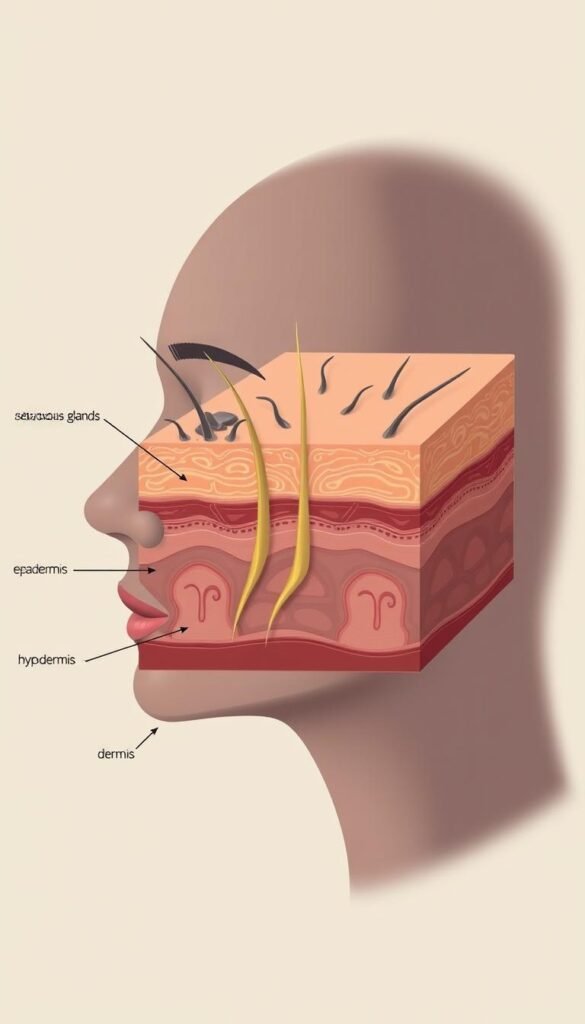
How Sebaceous Glands Work
Tiny factories called sebaceous glands sit attached to hair follicles. These glands create sebum – a blend of fats and wax esters that waterproofs your epidermis. Healthy glands release just enough to maintain flexibility and shield against environmental stressors.
Problems arise when these factories go into overdrive. Excess production floods pores, creating that familiar slick texture. Genetics often determine gland density and activity levels, which explains why some people battle shine more than others.
Correlation With Diet and Stress
What you eat directly influences gland behavior. A 2021 study showed participants consuming sugary snacks or dairy daily had 23% higher sebum levels. High-glycemic foods spike insulin, signaling glands to pump out more oil.
Stress acts like a secret saboteur. Cortisol surges during tense moments stimulate sebaceous activity. “I’ve seen clients break out before major events,” I often note. This creates a loop – stress triggers oil, which fuels more stress about appearances.
Balancing these factors requires awareness. Choosing low-glycemic meals and stress-reduction techniques helps calm overactive glands. Your skin’s needs aren’t random – they’re responses waiting to be understood.
At-Home Treatments for Managing Oily Skin
The journey to balanced complexion care begins at your bathroom sink. Through countless client consultations, I’ve found that strategic daily habits often outperform expensive salon treatments. Let’s explore tools that work with your body’s natural rhythms.
Gentle Cleansing Routines
Washing your face twice daily forms the foundation of effective skin care. Choose a pH-balanced cleanser (4.1-5.8) that removes excess oil without stripping moisture. Harsh formulas trick glands into overdrive – like shouting at a sleeping bear.
My go-to method: lather with lukewarm water using fingertips, never abrasive tools. Rinse thoroughly, then pat dry. Clients who switch to this approach often report fewer midday shine emergencies within three weeks.
Using Blotting Papers and Toners
Blotting papers became my secret weapon during New York summers. Press – don’t rub – these translucent sheets on shiny zones. They absorb excess oil without smudging makeup or irritating pores.
Follow with alcohol-free toners containing witch hazel or niacinamide. These formulas tighten pores while maintaining hydration balance. For stubborn T-zone shine, I recommend proven home remedies that complement your daily routine.
Consistency transforms these simple steps into lasting results. Your face deserves care that respects its natural processes while keeping confidence intact.
Top Natural Remedies for Oily Skin Management
Nature’s pantry holds surprising solutions for maintaining a balanced complexion. These earth-derived ingredients work with your body’s chemistry to reduce shine and improve texture—no harsh chemicals required.
Honey, Aloe Vera, and Natural Clays
Raw honey became my go-to for nighttime treatments. Its sticky texture traps impurities while delivering antibacterial benefits. Apply a thin layer to damp skin, let it sit 12 minutes, then rinse. You’ll notice fewer breakouts without that tight, dry feeling.
French green clay absorbs excess oil like a magnet. Mix 1 tablespoon with apple cider vinegar until creamy. Spread evenly, avoiding sensitive areas. As it dries, you’ll feel gentle tightening—this means it’s pulling out pore-clogging debris.
Ingredient
Key Benefit
Best For
Aloe Vera
Soothes redness
Daily moisturizing
Oatmeal
Gentle exfoliation
Weekly scrubs
Tomato
Unclogs pores
Spot treatments
Homemade Masks and Exfoliation Tips
Mash ripe tomato with egg white for a pore-refining mask. The natural salicylic acid dissolves buildup, while proteins temporarily tighten skin. Always patch-test new mixes on your wrist first—even natural products can irritate sensitive areas.
Ground oatmeal makes an excellent scrub when mixed with yogurt. The lactic acid gently removes dead cells without stripping moisture. Use circular motions for 30 seconds maximum to avoid micro-tears.
For more ideas, explore these proven home remedies. Remember: consistency matters more than complexity. Simple routines often deliver the best results for people seeking natural alternatives.
Building an Effective Skin Care Routine
Creating lasting balance begins with smart daily choices. Through client transformations, I’ve seen how strategic product selection and hydration techniques reshape complexions. The right care routine becomes your ally—not a chore.
Selecting Oil-Free and Noncomedogenic Products
Labels matter more than marketing claims. Look for “noncomedogenic” guarantees to avoid clogged pores. Gel-based formulas with niacinamide work wonders—a 2021 study showed 3% concentrations help regulate sebum. My go-to sunscreen? Featherlight SPF 50 that doubles as primer.
Balancing Moisture Without Excess Oil
Hydration isn’t optional—it’s essential. Water-based moisturizers with hyaluronic acid replenish moisture without greasy residue. Apply to damp skin to lock in hydration. Clients who adopt this step often report fewer midday shine emergencies within weeks.
Consistency beats complexity. Cleanse, treat, protect—morning and night. This simple framework adapts to seasons and stressors while maintaining your skin’s natural equilibrium. Your routine should feel sustainable, not overwhelming.
FAQ
What causes excess oil production?
I’ve learned that genetics and hormones like androgens play a big role. Stress, diet, and humidity can also trigger sebaceous glands to produce more sebum.
How does my environment affect sebum levels?
Hot or humid climates can increase oiliness. Pollution and using harsh products strip natural moisture, which may lead glands to overcompensate by making more oil.
Can certain foods make my face greasier?
Studies suggest high-glycemic foods and dairy might influence sebum activity. I focus on balanced meals with antioxidants and omega-3s to support balanced gland function.
What’s the best way to cleanse without irritation?
I use a sulfate-free gel cleanser twice daily. Overwashing can backfire, so I avoid scrubbing and stick to lukewarm water to prevent triggering extra oil.
Do blotting papers worsen oiliness?
Not if used correctly. I press (don’t rub) them on shiny areas. Look for brands like Clean & Clear that don’t contain irritating powders or alcohols.
Are natural clays effective for shine control?
Yes! Bentonite or kaolin clay draws out impurities. I mix them with apple cider vinegar or water for a weekly mask. Always follow with hydration to avoid dryness.
How do I choose moisturizers that won’t clog pores?
I look for “noncomedogenic” labels and lightweight formulas. Neutrogena’s Hydro Boost Water Gel is my go-to—it uses hyaluronic acid to lock in moisture without heaviness.
Can homemade masks reduce midday shine?
Aloe vera and honey masks soothe and absorb excess oil. I apply them for 10 minutes before rinsing. Avoid lemon or baking soda—they disrupt your pH balance.