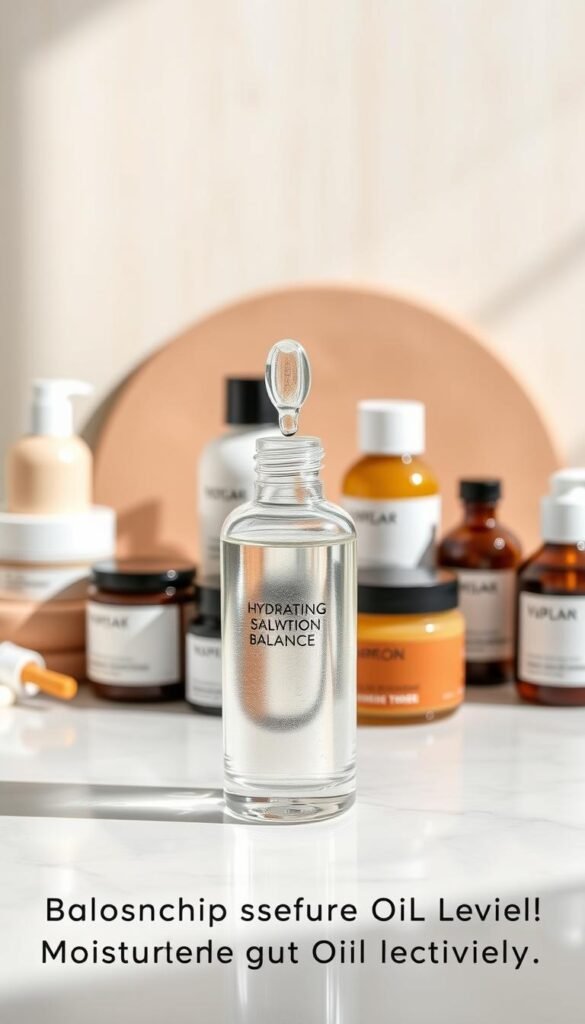
“Beautiful skin requires commitment, not a miracle,” Dr. Howard Murad once remarked. This truth resonates deeply when addressing a common yet misunderstood concern: skin that feels both parched and greasy. If you’ve ever wondered how your face can flake while still looking shiny, you’re not alone.
This Website contains affiliate links. That means I may earn a small commission if you purchase through my links, at no extra cost to you.
What many call “dry oily skin” isn’t a contradiction—it’s often combination or dehydrated skin. Genetics play a major role, but environmental factors and routines can worsen the issue. When your cheeks feel tight yet your T-zone glistens, dehydration—not true dryness—is usually the culprit.
Traditional advice rarely works here. Heavy creams might clog pores, while harsh cleansers strip natural oils. This leaves your moisture barrier compromised, triggering more oil production. The result? A cycle of frustration.
Through this guide, I’ll simplify the science behind this condition. You’ll learn why balancing hydration is key and how to choose products that address both concerns. Let’s move beyond quick fixes and build a routine that works with your body’s natural processes.
Key Takeaways
“Dry oily skin” typically refers to combination or dehydrated skin types
Genetics and dehydration are primary causes, not conflicting skin needs
Combination skin often shows acne and fine lines simultaneously
Traditional skincare methods frequently worsen this condition
Targeted hydration balances oil production and comfort
Introduction to Dry Oily Skin
Many people mistake their complexion’s mixed signals for a unique problem. Let’s decode what’s actually happening beneath the surface. Your face might feel parched in some zones and slick in others—a puzzle that requires precise solutions.
Understanding the Difference Between Dry, Oily, and Combination Skin
True dryness stems from genetics—your body naturally makes less sebum. You’ll notice tiny pores and rough texture. In contrast, oily types have active glands pumping out shine, especially by midday.
Combination skin? That’s when your forehead and nose rebel with excess oil while cheeks beg for moisture. It’s not two opposing conditions—it’s one unbalanced ecosystem. Dehydration adds another layer: even oily areas can feel tight if they’re water-deprived.
The Role of Genetics and Dehydration in Your Skin Type
Your DNA decides whether you’re prone to flakiness or shine. But dehydration? That’s often self-inflicted. Harsh cleansers, weather changes, or skipping moisturizer can drain water from your cells. Your glands then overcompensate by producing more oil.
Think of it like a sponge: squeeze out too much liquid, and the surface gets brittle. Add water back, and balance returns. Smart care focuses on hydrating without clogging—a dance between replenishment and restraint.
Recognizing the Signs and Symptoms
Your complexion tells a story through its textures and reactions. Learning to read these signals helps you address its needs accurately rather than guessing at solutions.
Spotting the Classic T-Zone Pattern
Look closely after waking up or before cleansing. A shiny forehead and nose often appear greasy by midday, while cheekbones might feel rough. These zones develop visible pores that resemble tiny dots under bright light.
Contrast becomes obvious when makeup clings unevenly. Your chin might show breakthrough shine during video calls, while powder settles into fine lines near your eyes. This oil-water imbalance creates distinct maps on your face.
The 20-Minute Reality Check
Start fresh: wash with lukewarm water and a mild gel. Pat dry gently—no rubbing. Set a timer and avoid touching your face during this time.
When the alarm rings, press a tissue against different areas. The T-zone will likely leave translucent marks, while cheeks stay matte but taut. If you feel both sensations simultaneously, your moisturizer strategy needs adjustment.
This test reveals what products can’t hide. Active pores in central regions demand different care than delicate outer zones. Understanding this split helps you choose targeted solutions instead of blanket approaches.
Balancing Moisture and Oil Levels Effectively
The secret to managing combination concerns lies in timing and texture. Most frustration stems from using products that fight nature rather than work with it. “Hydration isn’t a luxury—it’s your first line of defense against imbalance,” explains dermatologist Dr. Lila Emerson. This approach requires precision, not force.
Preventing Dehydration in Problem Zones
Harsh cleansers act like bullies, stripping away protective lipids. Your glands panic and flood pores with emergency oil. Swap foam-based washes for pH-balanced gels that remove dirt without sabotage. Follow this golden rule: never leave your face bare for more than 60 seconds post-cleansing.
Practice
Effect
Result
Alcohol-free toner
Restores pH
Reduces rebound oil
Lightweight serum
Deep hydration
Plumps fine lines
Oil-free moisturizer
Seals moisture
Prevents midday shine
Smart Routine Adjustments
Layer products like a pro: water-based fluids first, occlusives last. I recommend a three-step sequence—toner, serum, moisturizer—all within that critical minute. Gel textures absorb fastest, avoiding the dreaded “product pancake” effect.
Morning routines need SPF, but heavy sunscreens clog pores. Look for zinc oxide formulas with hyaluronic acid. They shield while quenching thirst. At night, a peptide-infused cream repairs barriers without greasiness.
Balance isn’t about elimination. It’s about giving each zone what it craves. When water levels stabilize, oil production self-regulates. Breakouts diminish, and that tight, shiny feeling becomes history.
Effective Treatment Tips for Dry Oily Skin
Navigating mixed needs demands strategy, not guesswork. The right products act like translators—helping different areas communicate instead of compete. Let’s break down what truly works.
Selecting Cleanser and Moisturizer Products That Work
Most foaming cleansers sabotage balance. Sulfates like Sodium Lauryl Sulfate strip protective lipids, triggering rebound oil production. I recommend sulfate-free gels with gluconolactone—they dissolve impurities without harsh friction.
For moisturizers, think location-specific care. Oily zones thrive with water-based serums containing niacinamide. Dry patches need ceramide-rich creams. Some hybrid products combine both approaches in layered textures.
Product Type
Key Features
Best For
Sulfate-free cleanser
Maintains pH balance
Preventing breakouts
Water-based moisturizer
Non-comedogenic
T-zone shine control
Mineral sunscreen
Zinc oxide base
Sensitive areas
Hyaluronic acid serum
Multi-weight molecules
All-day hydration
Choosing Oil-Free Sunscreens and Beneficial Ingredients
Mineral sunscreens with zinc oxide protect without clogging pores. Look for “oil-free” labels and avoid heavy silicones. A pro tip: apply SPF first to dry areas, then blend toward oilier zones.
Ingredients matter more than marketing claims. Gentle acids like mandelic acid exfoliate delicately. Omega-rich supplements (fish oil, flaxseed) strengthen barriers internally. Pair these with topical care for lasting results.
Tailoring Your Skincare Routine and Ingredients
Building an effective regimen starts with understanding product synergy—how each step supports the next. When every element works in harmony, you address multiple concerns without overwhelming your face. Let’s explore the tools and habits that create lasting balance.
The Role of Cleansers, Toners, and Serums in Your Routine
Your cleanser sets the stage. Harsh formulas strip natural lipids, forcing your glands into overdrive. I recommend a pH-balanced gel that removes impurities gently. Apply it with lukewarm water using circular motions—never scrub.
After rinsing, pat your face dry but leave it slightly damp. Spritz an alcohol-free toner immediately. This locks in hydration and preps your face for serums. Think of it as priming a canvas before painting.
Next, layer a water-based serum with hyaluronic acid. These lightweight formulas penetrate deeply without clogging pores. Wait 30 seconds before applying moisturizer to let it absorb fully.
Product Type
Purpose
Application Tip
Gentle Cleanser
Removes debris without stripping
Use AM/PM, avoid hot water
Hydrating Toner
Restores pH balance
Apply to damp skin
Lightweight Serum
Delivers active hydration
Press into skin, don’t rub
Humidifier
Boosts ambient moisture
Run nightly in dry climates
Integrating Lifestyle Adjustments Such as Diet and Humidifiers
Your environment impacts your regimen. During winter, I keep a humidifier running overnight. This prevents moisture loss from indoor heating—a common cause of midday shine.
Adjust your routine based on daily needs. After workouts, rinse with water instead of cleansing twice. When wearing makeup, use micellar water first to dissolve products gently.
Hydration starts internally too. Omega-3 supplements strengthen your barrier, while green tea reduces inflammation. Pair these with topical care for comprehensive results.
Conclusion
Mastering your unique complexion requires understanding its language. What’s often called “dry oily skin” typically reflects combination or dehydrated conditions needing balanced care. Through this guide, I’ve shown how strategic hydration—not oil elimination—creates lasting comfort.
Implement the gentle cleansing methods and product layering strategies we’ve discussed. Consistent use helps regulate sebum production while maintaining essential moisture. Many notice reduced T-zone shine and softer cheeks within weeks.
While these tips form a strong foundation, consulting a dermatologist offers personalized guidance. They can confirm your specific skin type and recommend targeted treatments. True balance comes from working with your body’s natural processes, not against them.
Your journey to a harmonious complexion starts today. With patience and the right routine, you’ll transform frustration into confidence—one nourishing step at a time.
FAQ
How can I tell if I have dry oily skin?
Look for an oily T-zone (forehead, nose, chin) paired with flaky or tight cheeks. If makeup slips off certain areas but clings to others, or if you experience breakouts alongside rough patches, these are common signs.
What ingredients should I prioritize in my routine?
Focus on balancing hydration and oil control. Hyaluronic acid, niacinamide, and glycerin boost moisture without clogging pores. For oily zones, lightweight formulas with salicylic acid or tea tree oil help manage excess sebum.
Can dehydration worsen oily areas?
Yes! When your face lacks hydration, it overcompensates by producing more oil. Use a water-based moisturizer daily and avoid harsh cleansers that strip natural lipids. A humidifier at night can also maintain moisture levels.
Are oil-free sunscreens better for this condition?
Absolutely. Mineral-based options with zinc oxide or titanium dioxide protect without adding shine. Look for non-comedogenic labels to prevent clogged pores, and reapply every two hours if you’re active or outdoors.
How often should I exfoliate?
Gentle exfoliation 1–2 times weekly helps remove dead cells and unclog pores. Avoid physical scrubs on dry patches—opt for chemical exfoliants like lactic acid, which hydrates while smoothing texture.
Can diet impact dry oily skin?
Hydrating foods like cucumbers, watermelon, and omega-3-rich fish support balanced sebum production. Reduce sugary or greasy snacks, which may trigger inflammation and excess oil in prone areas.