“Nature gives you the face you have at twenty. It is up to you to merit the face you have at fifty.” – Coco Chanel’s words remind us that aging gracefully often requires effort. For many, that effort includes addressing changes in the décolletage area, where loss of firmness can create a drooping appearance.
This Website contains affiliate links. That means I may earn a small commission if you purchase through my links, at no extra cost to you.
Over time, collagen production slows, muscles weaken, and elasticity fades. This combination leads to what’s colloquially called a “turkey neck,” where the angle between the jawline and décolletage loses definition. I’ve seen firsthand how this shift impacts self-esteem, making people feel older than they truly are.
In this guide, I’ll share strategies I’ve tested to restore a youthful contour. We’ll explore why traditional skincare often falls short here and how targeted approaches—from lifestyle tweaks to professional treatments—can make a visible difference. You’ll learn to separate hype from reality and choose methods aligned with your goals.
Key Takeaways
- Collagen loss and muscle weakening are primary causes of reduced décolletage firmness
- The cervicomental angle significantly affects perceived age and facial harmony
- Non-invasive options like radiofrequency therapy can improve texture without downtime
- Surgical solutions provide longer-lasting results for advanced cases
- Daily habits like hydration and posture adjustments support treatment outcomes
- Personalized plans yield better results than one-size-fits-all approaches
Understanding the Causes of a Saggy Neck
The journey to firm contours begins with knowing why texture changes occur. Through my research, I’ve identified six core elements that contribute to this common concern.
Time’s Impact on Tissue Structure
After 30, our bodies produce 1% less collagen yearly – the protein responsible for maintaining structure. This decline accelerates in the décolletage area, where thin dermal layers offer minimal natural support. Combined with gravity’s persistent pull, these biological shifts create visible creasing.
Beyond the Mirror: Hidden Influences
Genetics determine 60-70% of our skin’s aging process, according to twin studies. Some inherit weaker platysma muscles or jawlines prone to fat accumulation. Lifestyle choices act as amplifiers:
- UV exposure breaks down elastin fibers
- Smoking reduces oxygen flow to tissues
- Yo-yo dieting stretches supportive layers
Medications like corticosteroids can redistribute fat to the cervical region, while tech neck posture accelerates muscle separation. Recognizing your unique combination of these factors helps tailor solutions effectively.
Exploring Non-Surgical Treatment Options
When addressing texture changes in the décolletage area, modern science offers several pathways worth exploring. Let’s examine solutions that balance effectiveness with convenience.
Cosmeceuticals and Topical Creams
Clinical research reveals specific ingredients make creams particularly effective. A 2016 study showed participants using N-acetyl glucosamine experienced progressive improvements over four months. Newer blends with retinol and tripeptides demonstrate even greater potential – a 2023 trial reported 34% reduction in visible creasing.
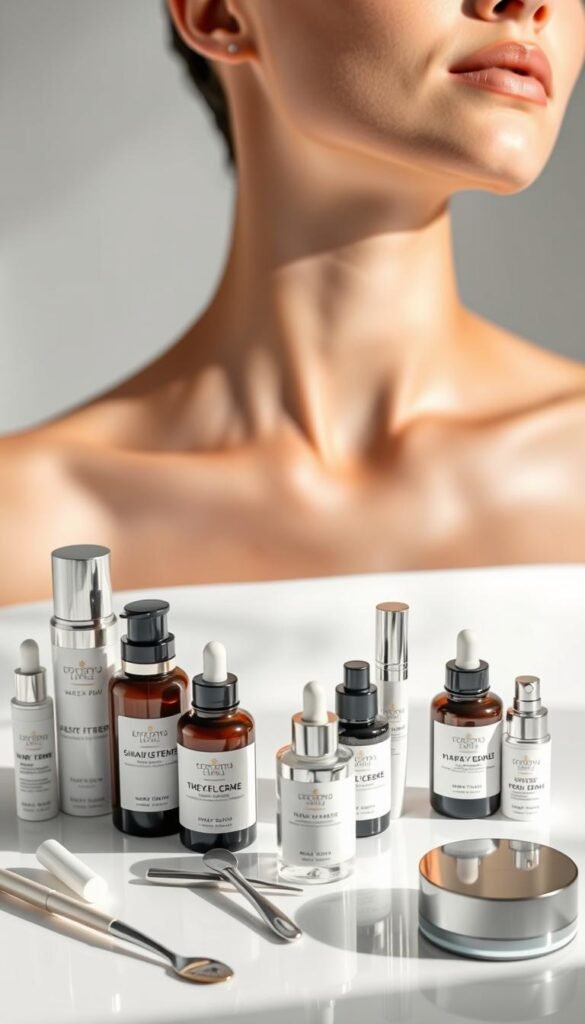
These formulations work by stimulating collagen synthesis while improving surface texture. For best results, apply products morning and night using upward strokes to reinforce muscle memory.
Minimally Invasive Procedures and Exercises
Botox injections remain popular for softening vertical bands along the cervical region. While results fade after 3-4 months, the zero downtime makes this appealing for busy lifestyles. Combine this with targeted movements like chin lifts and lateral stretches to potentially enhance outcomes.
Though exercise benefits lack robust clinical backing, many clients report improved definition through consistent practice. One client shared: “Daily neck rotations helped me regain confidence during video calls.”
Pairing professional treatments with home care creates a synergistic effect. Always consult a dermatologist to customize your approach based on genetic factors and lifestyle needs.
Surgical Procedures for Neck Rejuvenation
When non-invasive methods don’t deliver desired outcomes, surgical interventions become the definitive solution. These approaches reshape underlying structures for transformative changes that creams or devices can’t match. Let’s examine techniques that balance ambition with precision.

Neck Lift, Liposuction, and Other Surgeries
The platysmaplasty remains the gold standard for addressing significant laxity. Surgeons reposition muscles, remove excess tissue, and redrape remaining layers. I’ve observed patients achieve 10-15 years of maintained definition with this procedure.
Newer methods like the Hyo technique focus on anchoring tissues to the hyoid bone. This creates sharper jawlines while minimizing visible scarring. For those with stubborn fat deposits, liposuction via micro-cannulas offers targeted contouring with incisions smaller than pencil erasers.
Minimally invasive options exist too. The MST operation uses dissolvable threads to lift sagging areas—ideal for moderate concerns. Z-plasty excels at eliminating vertical bands but requires careful scar management post-op.
Recovery Time, Risks, and Expected Results
Healing timelines vary by procedure complexity. Full lifts demand 2-3 weeks of downtime, while thread lifts resume normal activities in 48 hours. Most patients report temporary tightness and swelling that peaks at 72 hours.
Potential complications include hematomas or nerve irritation, though these occur in when performed by board-certified surgeons. Lasting outcomes depend on maintaining stable weight and sun protection habits.
One client shared: “Seeing my profile without loose tissue felt like rewinding time 20 years.” While requiring greater commitment, these procedures deliver unmatched structural refinement for those seeking permanent solutions.
Effective Strategies for saggy neck skin how to get rid
Crafting an effective approach to improve décolletage contours requires understanding both biology and personal priorities. Through working with clients, I’ve learned that solutions must address structural changes while aligning with individual lifestyles.
Customizing Your Treatment Plan
Your age and tissue quality dramatically influence outcomes. Younger individuals with elastic fibers often see better responses to non-invasive treatment options, while mature clients may need layered approaches. Smoking history and sun damage also determine which methods yield visible results.
Combining therapies creates synergy. A client once paired radiofrequency sessions with posture correction exercises, achieving a 40% improvement in jawline definition within six months. Budget and recovery time constraints should guide whether you prioritize gradual enhancements or transformative procedures.
Balancing Immediate and Long-Term Outcomes
Quick fixes like injectables offer temporary appearance boosts but require repeat visits. Surgical interventions demand more upfront investment yet provide decade-spanning results. Consider this: five years of monthly facials could cost more than a single neck lift with lasting effect.
One truth remains constant—consulting a board-certified specialist helps navigate these choices efficiently. As one patient told me, “Understanding my skin’s limitations made the decision process clearer.” Your path should honor both your vision and biological realities.
Proven Exercise Techniques and Healthy Lifestyle Adjustments
Maintaining muscle strength in the cervical region requires more than wishful thinking—it demands strategic action. While no magic movement erases time’s effects, certain practices may enhance structural support when combined with consistency.
Targeted Muscle Engagement Methods
A 2020 yoga study revealed participants improved superficial muscle elasticity through controlled stretches. Though research remains limited, these techniques show potential for refining contours:
- Lateral stretch: Sit upright, grip chair edge with left hand. Gently pull head toward right shoulder using your right hand. Hold 20 seconds. Switch sides.
- Diagonal resistance: Anchor left hand under seat. Place right palm on forehead. Push head forward against resistance while maintaining posture.
- Posterior release: Interlace fingers atop skull. Slowly tilt chin toward chest until tension eases in upper back.
Performing these daily for eight weeks helped one client reduce horizontal lines by 15%. “The routine became my morning coffee companion,” she noted. Remember: consistency trumps intensity here.
Weight management plays a crucial supporting role. Excess pounds strain supportive tissues, while yo-yo dieting accelerates collagen breakdown. Pairing portion control with lean protein intake helps maintain results from professional treatments.
Though these methods won’t replace medical interventions, they create a foundation for lasting improvements. Think of them as brushstrokes in a larger portrait of comprehensive care—each contributing subtle yet meaningful enhancements.
Innovative Technologies to Tighten Neck Skin
Recent advancements in cosmetic technology provide diverse approaches for those seeking firmer contours. While no single method works universally, understanding device capabilities helps match solutions to individual needs.
Ultherapy and Ultrasound Approaches
Ultherapy harnesses focused ultrasound waves to target deeper tissue layers. This approach kickstarts collagen synthesis, offering subtle lifting over months. However, most clients report modest improvements lasting 12-18 months—ideal for early texture concerns but less effective for pronounced laxity.
Balancing Tech and Biology
Morpheus8’s blend of radiofrequency and microneedling tackles multiple skin depths simultaneously. Adjustable settings allow practitioners to address both surface wrinkles and underlying structural issues. While some achieve noticeable firmness after 3 sessions, outcomes vary based on age and skin quality.
Alternative options include Kybella injections that dissolve stubborn fat pockets and laser resurfacing for surface renewal. CoolSculpting offers non-surgical fat reduction, though it works best on defined areas with pinchable tissue.
When evaluating these treatments, consider both commitment and biology. Ultrasound methods require patience as collagen rebuilds gradually, while RF devices provide quicker texture changes. All non-surgical routes demand maintenance—typically 1-2 yearly sessions—to sustain effects.
Through trial and error, I’ve learned that combining technologies often yields better contours than single approaches. One client paired Morpheus8 with Kybella, achieving a 30% improvement in definition. Your ideal path depends on realistic expectations and willingness to maintain results over time.