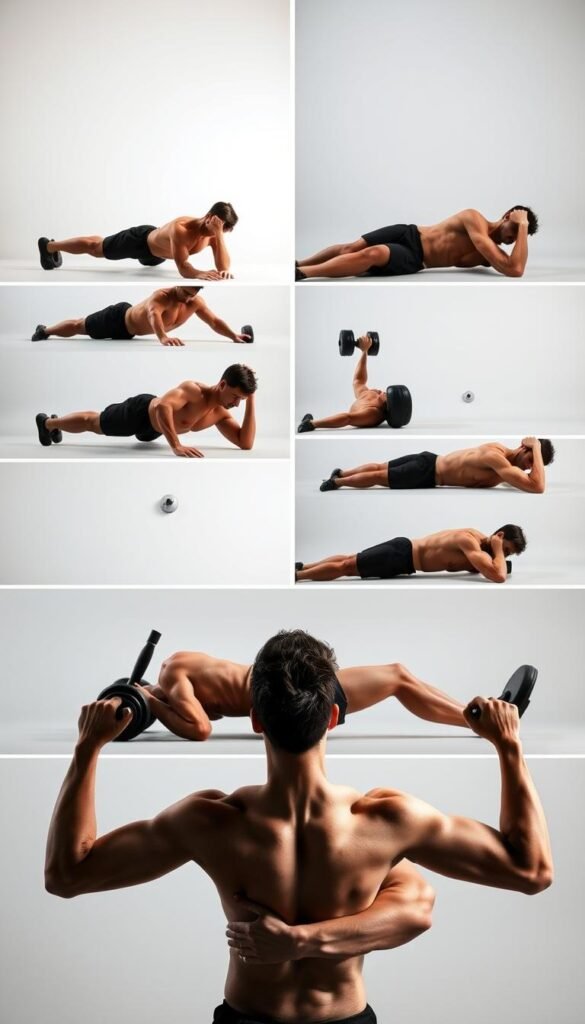
“If you don’t like something, change it. If you can’t change it, change your attitude.” – Maya Angelou’s words became my mantra when I began my journey to address chest concerns naturally. Like many, I felt trapped by the idea that surgical options were the only path to confidence. But through trial, error, and research, I uncovered strategies that strengthen the foundation of your upper body.
This Website contains affiliate links. That means I may earn a small commission if you purchase through my links, at no extra cost to you.
Building pectoral mass isn’t about chasing perfection—it’s about creating subtle, meaningful shifts. I learned that consistency with the right movements can enhance your natural shape. While genetics and age play roles, targeted training offers control over what many assume is unchangeable.
My routine blends science-backed methods with real-world practicality. Whether you own weights or prefer bodyweight workouts, strengthening these muscles impacts how your frame carries itself. This isn’t a quick fix. It’s a commitment to working with your body, not against it.
Key Takeaways
Strategic strength training can enhance chest contour naturally
Muscle development creates a lifted appearance over time
Proper form matters more than workout intensity
Combining equipment-based and bodyweight exercises yields optimal results
Realistic expectations paired with consistency drive progress
Introduction: My Journey to a Firmer Chest
I never imagined that lifting weights could redefine my silhouette until life handed me a mirror I didn’t recognize. While aging naturally alters our chest structure, I refused to believe my only choices were surgery or surrender. That’s when I discovered the power of muscles beneath the surface.
Why I Decided to Change
After researching anatomy, I learned that gravity affects everyone—but we’re not powerless. Certified trainer Jen Comas Keck clarified:
“Developing the muscles underneath enhances appearance and creates a lifted effect.”
This sparked my commitment to targetedmovementsrather than quick fixes.
My turning point? Realizing improved posture from chest work also strengthened my back and arms. Suddenly, this wasn’t just about aesthetics—it became about holistic body health.
Setting My Fitness Goals
I mapped out a 12-week plan focusing on progressive challenges. Here’s how I balanced aspirations with reality:
Focus Area
Initial Goal
6-Week Adjustment
Pectoral Development
3 weekly sessions
Added resistance bands
Posture Tracking
Daily reminders
Incorporated yoga stretches
Strength Metrics
5lb dumbbells
Progressed to 8lbs
By celebrating small wins—like holding a plank longer—I maintained motivation. The key was viewing my body as a partner, not a project needing perfection.
Understanding Saggy Breasts and Chest Muscle Health
What changed my perspective? Learning that the chest muscles act as a natural scaffolding. The pectoralis major spans from breastbone to shoulders, while the deeper pectoralis minor anchors ribs to shoulder blades. This framework determines how your upper body carries weight—and why strengthening it matters.
Causes and Contributing Factors
My research uncovered surprising connections. Collagen loss with age weakens skin’s elasticity, while hormonal shifts during menopause alter tissue density. Genetics set the baseline, but controllable factors accelerate changes:
Poorly fitted bras fail to counteract gravity’s pull
Impact on Confidence and Appearance
I noticed posture slumping as my chest muscles weakened—shoulders rounded forward, clothes fitting awkwardly. A 2021 Journal of Body Image study confirmed this: 68% of participants linked upper body changes to reduced self-assurance in social settings.
Strengthening the pectoral muscles became about more than aesthetics. It restored my ability to stand tall—literally and metaphorically—creating visible lift where I’d felt powerless.
Discovering an exercise for saggy breast That Works
The moment I felt genuine resistance during a chest press, everything clicked. Months of minimal progress vanished when I embraced a simple truth: muscles grow through smart challenges, not endless repetitions. Fitness expert Jen Comas Keck crystallized this:
“Working the chest from multiple angles with enough weight ensures plenty of stimulus to increase strength and develop the muscles. This can add beautiful shape to the chest.”
The Science Behind Targeting Chest Muscles
Hypertrophy principles changed my approach. Instead of light dumbbells, I chose weights letting me complete 8-12 reps with two left in reserve. This created the tension needed for pectoral muscles development. Rotating incline, decline, and flat bench positions engaged different fiber groups.
Workout Phase
Weight Selection
Key Focus
Initial (Weeks 1-4)
70% max capacity
Form mastery
Progression (Weeks 5-8)
85% max capacity
Controlled negatives
Peak (Weeks 9-12)
90% max capacity
Full range activation
My Personal Success Story
Switching from 5lb to 15lb dumbbells shocked my system—in the best way. Within six weeks, my chest muscles showed definition I’d never achieved. The secret? Prioritizing quality over quantity. Each rep became intentional, focusing on mind-muscle connection rather than rushing sets.
Tracking progress revealed patterns. Heavier loads with proper recovery built more shape than years of high-rep routines. My collarbone area tightened, creating a lifted effect that enhanced natural contours. This wasn’t magic—just physiology responding to intelligent stress.
Effective Chest Exercises to Lift and Tone
Mastering foundational movements transformed how my upper body responded to training. Two techniques became non-negotiable in my routine: pushup variations and weighted presses. Both methods work synergistically to challenge chest muscles from different angles.
Pushup Variations and Their Benefits
Pushups taught me how bodyweight training builds functional strength. Keeping hands stacked under shoulders and maintaining a neutral neck position ensures maximum pectoral engagement. Beginners can modify by lowering knees while advanced practitioners add traveling planks for dynamic challenges.
I prioritize controlled lowering phases—this eccentric motion creates microtears that rebuild stronger muscle fibers. Rotating between standard, wide-grip, and staggered stances prevents plateaus and keeps workouts engaging.
Dumbbell Chest Press and Fly Techniques
Lying flat on a bench with feet planted creates stability for weighted presses. My technique focuses on bringing dumbbells close to my chest before extending arms upward. Palms face forward to maintain optimal shoulder alignment throughout the movement.
For flies, I maintain a slight bend in my elbows while lowering weights until they align with my chest. This stretch activates often-neglected muscle fibers. Combining both methods builds density in the upper pectorals, creating visible lift over time.
Using Proper Starting Positions and Posture
Alignment transformed my approach to chest training. I discovered that starting position dictates whether movements build strength or strain joints. Every exercise begins with intentional body placement—a lesson learned through trial and error.
Back Starting Position Explained
For bench workouts, my back starting position requires full contact with the surface. I sit at the bench’s edge, lower myself carefully, and press my shoulder blades down. Feet stay flat with knees bent—this stabilizes my core and prevents lower back arching.
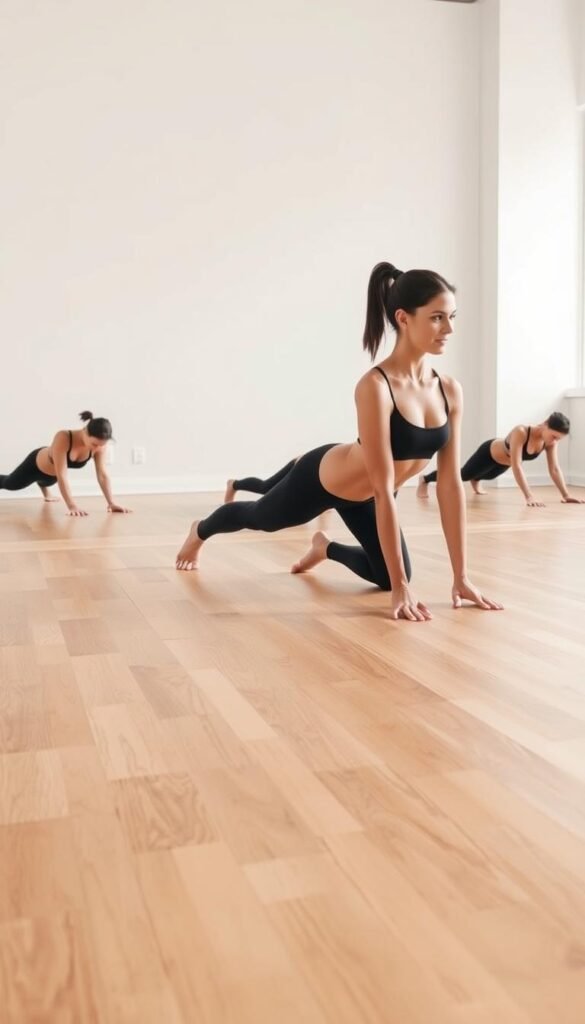
Plank setups demand equal precision. I position hands under shoulders, creating a straight line from heels to crown. Engaging my glutes and abs eliminates sagging, channeling effort into the chest muscles instead.
Maintaining Form for Maximum Results
Neck alignment became my secret weapon. Keeping my gaze slightly forward prevents craning—a habit that once caused shoulder tension. During presses, I lower weights until elbows align with my torso, maintaining 90-degree angles for optimal resistance.
I check three points mid-set: Shoulders away from ears, core engaged, and breath steady. This triad prevents momentum from hijacking muscle activation. Over time, strict form allowed heavier lifts without compromising my back or joints.
Incorporating Core Stability and Resistance Training
Core strength became my secret weapon in transforming chest workouts. While targeting muscles matters, I discovered that stability determines whether efforts translate to visible results. This revelation led me to blend planks with resistance techniques for compound benefits.
Integrating Planks and Stability Ball Exercises
The plank reach-under reshaped my routine. Starting in a plank position with hands under shoulders, I alternate arm movements while maintaining a neutral spine. Fitness coach Barnett emphasizes:
“Planks strengthen your core, improve posture, and create the stability needed for advanced moves.”
Three discoveries elevated my approach:
Stability ball chest flies activate 30% more core fibers than bench versions
Single-arm planks build functional strength by challenging balance
Proper plank position prevents compensation from secondary muscle groups
I alternate between ground-based and equipment-enhanced variations. Using a stability ball for chest presses forces constant muscles engagement—no reps feel “easy.” This method trains my body to work as an integrated system rather than isolated parts.
Through trial, I learned that stability training isn’t about holding positions longer. It’s about controlled movements that reveal weaknesses—then addressing them through strategic resistance progressions.
Combining Chest Workouts with a Healthy Lifestyle
Marrying movement with mindful eating transformed my chest workouts from good to game-changing. I discovered that visible results require more than repetition—they demand harmony between physical effort and body nourishment. This holistic approach turned sporadic progress into consistent gains.
Nutritional Support for Muscle Growth
My kitchen became as vital as my gym bag. Consuming 1g of protein per pound of body weight daily fueled repair after intense sessions. Hydration and complex carbs sustained energy levels, while healthy fats supported hormone balance.
I learned that undereating sabotages muscle development as much as poor form. Maintaining a caloric surplus with whole foods became non-negotiable—not for bulk, but for sustainable strength.
Balancing Exercise Frequency and Recovery
I schedule three targeted chest exercises twice weekly, spacing sessions 72 hours apart. This rhythm allows muscles to rebuild stronger. Rotating between pushups, presses, and flies prevents adaptation while keeping workouts engaging.
Tracking macros and consistency revealed patterns. Within eight weeks, tighter upper body contours emerged. The secret? Treating recovery as actively as lifting. Quality sleep and stress management completed the equation, proving true transformation requires both discipline and rest.
Addressing Common Concerns and Misconceptions
When I began strengthening my chest muscles, doubts crept in. Could lifting weights cause injury? Would effort translate to visible changes? Through experience, I learned separating fact from fear requires both knowledge and patience.
Safety Tips and Injury Prevention
Protecting joints starts with alignment. I keep elbows slightly bent during upper body movements to avoid hyperextension. Starting with lighter weight builds control before progressing.
Warming up became non-negotiable. Five minutes of arm circles and shoulder rolls increase blood flow to muscles. If discomfort persists beyond typical soreness, I adjust form or reduce resistance.
Understanding Realistic Expectations
Transformation unfolds gradually. While my chest gained definition in eight weeks, genetic factors influence everyone’s timeline. Celebrate strength gains alongside aesthetic shifts.
Consistency matters more than perfection. Missing a session doesn’t erase progress—returning to the routine does. Your body responds to sustained effort, not occasional intensity.
FAQ
Can lifting weights make my chest look perkier?
Yes! Strengthening your pectoral muscles through resistance training, like dumbbell chest presses or flys, can create a lifted appearance. I focused on progressive overload and proper form to build lean muscle, which improved my chest’s firmness over time.
How important is the starting position during chest workouts?
Crucial. For example, lying on a bench with shoulders retracted and feet flat ensures proper engagement of your chest muscles. I noticed better activation when I adjusted my back starting position and kept my core tight.
Are pushups effective for targeting sagging areas?
Absolutely. Variations like incline or wide-grip pushups emphasize different parts of the pectorals. I incorporated these into my routine and saw improved upper-body tone. Pairing them with stability exercises, like planks, boosted my results.
Do I need equipment for a firmer chest?
Not necessarily. Bodyweight moves like pushups or floor presses work well. However, I added dumbbells for resistance as my strength increased. Brands like CAP or NordicTrack offer affordable options for home workouts.
How does posture impact chest muscle development?
Slouching weakens engagement. I prioritized keeping my shoulders back and spine neutral during exercises. This small tweak helped me avoid neck strain and maximized tension on my pectorals.
Can diet influence chest firmness?
Definitely. Eating enough protein supports muscle repair, while staying hydrated maintains skin elasticity. I paired my workouts with lean proteins like chicken or tofu and noticed faster recovery and better definition.
How often should I train my chest each week?
I aim for 2-3 sessions weekly, allowing 48 hours of rest between workouts. Overtraining can lead to injury, so balancing intensity with recovery days is key. Listen to your body—it’ll tell you when to push or pause.
Are planks useful for chest stability?
Yes! Holding a plank position engages your core, shoulders, and chest simultaneously. I added side planks and stability ball rollouts to challenge my muscles further, which improved my overall upper-body strength.
What’s the biggest mistake to avoid during chest exercises?
Arching your back excessively on the bench. I learned to keep my hips grounded and maintain a slight natural curve in my lower spine. This protects your joints and ensures the workload stays on your pectorals.