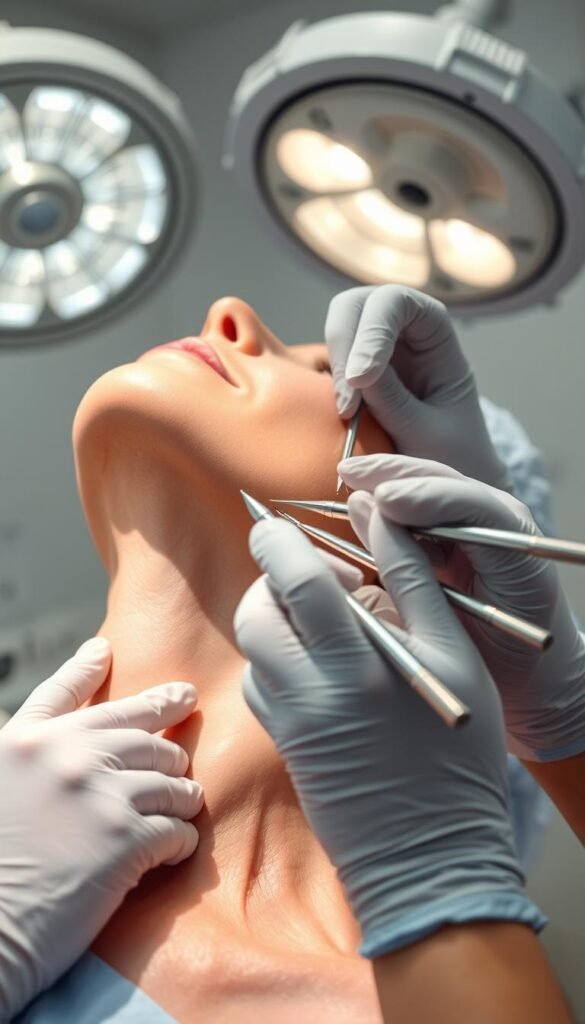
“The beauty of a woman is not in facial mode but the true beauty in a woman is reflected in her soul.” – Audrey Hepburn’s timeless words remind us that confidence starts within, yet caring for our physical appearance remains a valid form of self-respect.
This Website contains affiliate links. That means I may earn a small commission if you purchase through my links, at no extra cost to you.
I know firsthand how frustrating it can feel when loose skin below the chin becomes noticeable. What many call “turkey neck” often stems from multiple factors: thinning skin, stubborn fat deposits, or weakened muscles. These changes can affect people earlier than expected – sometimes in their 30s or 40s.
Through my research, I’ve learned solutions exist for every budget and comfort level. Non-surgical options like targeted exercises and specialized skincare show promise when used consistently. For faster results, medical treatments range from laser therapy to surgical lifts.
Success typically comes from combining approaches. A daily facial yoga routine paired with collagen-boosting creams might enhance results better than either method alone. I’ll explain how different strategies work so you can create a personalized plan.
Key Takeaways
Multiple factors contribute to loose skin under the chin, including aging and genetics
Combining methods often yields better results than single solutions
Options range from affordable home care to clinical procedures
Realistic expectations are crucial for long-term satisfaction
Your choice depends on budget, timeline, and personal preferences
Understanding the Causes of a Saggy Neck
When I began researching why skin loses firmness below the jawline, I uncovered surprising connections between our daily habits and physical changes. Multiple factors work together over time, creating what’s often called turkey neck.
Aging, Genetics, and Environmental Factors
Our skin’s elasticity naturally decreases as collagen production slows. Gravity then pulls facial tissue downward, pooling near the neck. Genetics determine bone structure and fat distribution patterns – some bodies store more fat in this area regardless of weight.
Sun damage accelerates collagen breakdown in exposed neck skin. Smoking and pollution create free radicals that weaken skin cells. Even common medications like steroids can alter fat storage locations, as I learned from plastic surgeon Dr. Martin Newman’s research.
Weight Changes and Lifestyle Impacts
Rapid weight shifts stretch skin beyond its rebound capacity. The neck often shows these changes first since its thin skin lacks strong supportive tissue. Yo-yo dieting creates lasting effects that creams alone can’t fix.
Daily habits matter more than I realized. Poor hydration and nutrient deficiencies slow skin repair. Sleeping positions that crumple neck skin for hours contribute over time. Addressing these lifestyle factors early helps maintain smoother contours.
Non-Surgical Treatments for a Saggy Neck
I discovered that combining daily care with advanced techniques creates visible improvements in jawline contours. Modern solutions target different concerns – from surface texture to deeper tissue support – without scalpels or lengthy downtime.
Topical Skincare and Collagen Boosters
Quality neck creams work best when packed with science-backed ingredients. Retinoids boost collagen production while smoothing wrinkles. Peptides signal skin to repair itself, and vitamin C brightens uneven tones.
Look for formulas containing hyaluronic acid for hydration. Alpha-hydroxy acids gently exfoliate to reveal fresher-looking skin. Consistency matters – I saw better results after 12 weeks of nightly use.
Minimally Invasive Procedures and Energy Devices
Laser treatments heat deeper skin layers to trigger tightening. Some redness occurs, but most resume activities in 3 days. Kybella injections dissolve stubborn fat pockets under the chin through multiple sessions.
CoolSculpting freezes fat cells without incisions. Radiofrequency devices like Thermage stimulate collagen using controlled heat. These options require maintenance but avoid surgical risks.
Innovative Techniques: Microneedling and Ultherapy
Microneedling uses tiny needles to create micro-injuries that stimulate skin repair. When combined with radiofrequency, it enhances collagen growth for firmer texture. Most need 3-6 sessions spaced monthly.
Ultherapy’s ultrasound energy reaches deeper tissues, providing a subtle lift. Results emerge gradually over 2-3 months. Though pricey, its effects last longer than surface-level treatments.
Treatment
Method
Sessions
Recovery
Results Timeline
Retinoid Creams
Topical Application
Daily
None
3-6 Months
Laser Resurfacing
Heat Energy
1-3
3-10 Days
Immediate + Long-Term
Ultherapy
Ultrasound
1
None
2-3 Months
Microneedling
Skin Puncturing
3-6
2 Days
4-8 Weeks
Dr. Newman reminded me that realistic expectations are key. “These treatments refine rather than remake your appearance,” he noted during our consultation. Pairing methods often yields better outcomes than relying on single solutions.
Surgical Options: Facelifts, Neck Lifts, and Liposuction
Drastic improvements in neck contour often require surgical expertise. During my consultations with board-certified plastic surgeons, I learned these procedures address both loose skin and stubborn fat through precise techniques. “Facelifts and neck lifts remain the gold standard for instant, lasting results,” emphasized Dr. Martin Newman. Platysmaplasty (neck lift) specifically tightens neck muscles and removes excess tissue, while facelifts focus on jawline definition.
Comparing Facelifts and Neck Lifts
Facelifts target mid-face sagging and jowls through incisions near the hairline. Neck lifts use smaller cuts under the chin to reposition muscles and trim skin. Both involve 2-3 weeks of recovery with temporary swelling. Surgeons often combine them for seamless results.
Variations like feather lifts or short-scar techniques minimize visible scarring. A J-lift addresses early signs of aging with less downtime. Choose based on your primary concerns – horizontal bands vs. overall laxity.
Liposuction and Other Corrective Surgeries
For isolated fat under the chin, liposuction creates definition in 45 minutes. Cannulas suction out fat cells through tiny openings. Ideal candidates have good skin elasticity to avoid sagging post-procedure.
Bone contouring surgeries can enhance jawline structure for better support. These options work best when combined with skin-tightening methods. Full recovery takes 4-6 weeks, but most resume light activities within 10 days.
Always verify your surgeon’s certifications through the American Board of Plastic Surgery. Realistic expectations and thorough aftercare ensure optimal healing and satisfaction.
Targeted Exercises and Daily Routines to Strengthen Neck Muscles
Strengthening the area below your jawline requires consistency, but I’ve seen firsthand how targeted movements can enhance muscle tone. While exercises won’t eliminate loose skin completely, they create a firmer foundation that complements other treatments. Regular practice improves posture and definition, making the jawline appear more sculpted over time.
Turkey Neck Exercises to Restore Firmness
My go-to routine focuses on four key movements. Resistance training tops the list – pressing my palms against my forehead while keeping my head still activates upper muscles. For the chewing exercise, I tilt my chin upward and mimic chewing gum to engage the jawline.
The kiss exercise tightens the platysma muscle when I purse my lips toward the ceiling. Head lifts done while lying down target front neck muscles. I noticed subtle improvements after six weeks, especially when paired with collagen supplements.
Exercise
How To Do
Frequency
Muscles Targeted
Tips
Resistance Training
Push head against hands on forehead/back
Daily
Upper neck
Hold 10 seconds
Chewing Exercise
Tilt chin up, chew motion
3-5x daily
Jaw and neck
Use wall support
Kiss Exercise
Chin up, purse lips
5 sets twice weekly
Platysma
Hold 5 seconds
Head Lift
Lie on bed, lift head
5 reps twice weekly
Front neck
Control movement
“Form matters more than speed,” advises physiologist Laura Chen. Overdoing exercises can strain muscles, so I stick to recommended repetitions. Always warm up with gentle neck rotations first.
Consult a fitness expert before starting, especially if you have existing pain. Pair these moves with hydration and sun protection for cumulative benefits. While not a standalone fix, they’re a proactive step toward better muscle support.
Lifestyle, Diet, and Skincare for Long-Term Improvement
Creating lasting change in your skin’s appearance requires more than quick fixes—it demands daily commitment. Through trial and error, I’ve developed strategies that protect delicate areas while enhancing natural elasticity. Consistency with these methods helps maintain results from other treatments.
Sun Protection, Retinoids, and Hydration Tips
My morning routine starts with SPF 50 applied to the neck area. UV rays break down collagen faster here than on the face. For evenings, I alternate retinoid creams with bakuchiol-based products like NIVEA’s Anti-Age Night Cream, which visibly reduces wrinkles in days.
Three essentials I never skip:
Hyaluronic acid serums to plump dehydrated skin
Glycolic acid pads twice weekly for cell turnover
Vitamin C oils to neutralize pollution particles
These steps combat the elasticity loss I noticed in my late 30s. Hydration makes the skin around neck appear smoother, even before makeup.
Integrating a Healthy Diet and Consistent Exercise
What I eat directly impacts my skin’s repair process. Meals rich in omega-3s and antioxidants help improve texture. I avoid crash diets—sudden weight shifts stretched my jawline skin years ago.
Key dietary habits:
Wild-caught salmon twice weekly for collagen support
Almonds and spinach for vitamin E
Green tea instead of sugary drinks
Combined with neck-specific exercises, this routine preserves muscle tone. Small changes create cumulative improvement, making professional treatments more effective when needed.
Conclusion
My journey exploring solutions taught me that improving skin elasticity below the jawline is both art and science. While no single method works universally, personalized approaches combining skincare, lifestyle adjustments, and targeted treatments deliver meaningful results.
Consistency matters more than intensity. Gentle daily habits – like SPF application and hydration – create lasting foundations. For those seeking faster changes, modern procedures offer safe options when performed by certified experts.
“True confidence comes from feeling empowered by your choices,” a dermatologist once shared with me. Whether prioritizing home care or clinical solutions, your path should align with personal comfort and realistic timelines.
Remember: visible improvements often emerge gradually. Celebrate small victories like smoother texture or better posture. With patience and informed decisions, you can enhance natural beauty while honoring the skin you’re in.
FAQ
Can genetics influence the appearance of loose skin around my jawline?
Yes, genetics play a role in how quickly collagen breaks down and how your body stores fat. If family members have similar concerns, you might be more prone to changes in this area as you age.
How effective are retinoids for improving texture and elasticity?
Retinoids like tretinoin or retinol boost collagen production and cell turnover, which can help smooth wrinkles and tighten the look of crepey skin. Consistency is key—results take weeks to months.
What’s the difference between a facelift and a neck lift procedure?
A facelift focuses on the mid-to-lower face, while a neck lift targets below the chin. Surgeons often combine both for full rejuvenation, removing excess tissue and tightening muscles for a sharper contour.
Are there exercises that actually work to restore firmness?
Yes! Simple moves like chin lifts or resistance training can strengthen platysma muscles. Pairing these with cardio and weight management offers better long-term improvement than workouts alone.
Does microneedling help with sun damage and texture issues?
Microneedling uses tiny needles to trigger healing, which can improve collagen levels and reduce visible damage. Pairing it with growth serums or radiofrequency (like Morpheus8) enhances results.
How long does recovery take after liposuction in this area?
Swelling and bruising typically fade within 2–3 weeks, but full results emerge over 3–6 months. Compression garments and avoiding strenuous activity speed up healing.
Can sudden weight loss worsen sagging?
Rapid changes stretch the skin, reducing elasticity. Gradual loss paired with strength training and hydration helps maintain tone. If loose tissue remains, treatments like Ultherapy or surgery might be needed.
What SPF level is best for daily protection?
Use a broad-spectrum SPF 30+ sunscreen daily. Reapply every 2 hours if outdoors. Look for formulas with zinc oxide or titanium dioxide to block UVA/UVB rays without clogging pores.