“Healthy skin is a reflection of overall wellness.” – Audrey Hepburn’s timeless words resonate deeply with anyone struggling to find balance. For years, tightness, redness, and discomfort dominated my daily life. But through meticulous research and personal experimentation, I uncovered a method that transformed my complexion.
This Website contains affiliate links. That means I may earn a small commission if you purchase through my links, at no extra cost to you.
Many routines overwhelm delicate complexions with aggressive formulas. Stripping cleansers or abrasive exfoliants often worsen irritation. My approach prioritizes gentle nourishment to repair the skin barrier while locking in moisture. It’s not about layering countless products—it’s about choosing quality over quantity.
Hydration became my mantra. Lightweight serums with hyaluronic acid paired with ceramide-rich creams rebuilt resilience. Fragrance-free options minimized reactions, while avoiding hot water prevented further dryness. Consistency mattered more than quick fixes.
This philosophy isn’t just theory—it’s battle-tested. Flare-ups diminished, and that sandpaper texture softened. Now, I want to share these lessons to help others reclaim confidence in their skin’s natural potential.
Key Takeaways
- Gentle, fragrance-free formulas prevent irritation
- Hydration layers boost moisture retention
- Avoid harsh ingredients like sulfates or alcohol
- Consistency trumps complexity in daily care
- Barrier repair is critical for lasting results
Understanding Dry and Sensitive Skin
Many people assume flaky patches result from poor hygiene, but the reality is more complex. Dryness often stems from an impaired barrier function—the skin’s natural shield against environmental stressors. My dermatologist once compared it to a brick wall: “When mortar between cells weakens, moisture escapes and irritants invade.” This visual helped me grasp why simple moisturizing wasn’t enough.
What Causes Dryness and Sensitivity?
Aging plays a significant role—after 40, natural oil production drops by nearly 60%. Harsh climates and hot showers strip protective lipids, leaving the surface vulnerable. Research shows healthy skin requires 20-35% water content in its outermost layer to function properly. Without this balance, the barrier cracks like parched earth.
How My Skin Tells Me It Needs Extra Care
Tightness after washing always signals trouble. Flakes gather around my eyebrows, and redness flares like a warning light. Itching feels like tiny alarms urging me to act. My dermatologist confirmed these are cries for help—a compromised barrier can’t retain hydration, letting water evaporate faster than I can replenish it.
Cold weather turns my cheeks into sandpaper unless I layer ceramide-rich creams. Even indoor heating saps moisture, proving environmental factors matter as much as product choices. Recognizing these patterns transformed how I approach daily care—now I listen before problems escalate.
Why a Consistent Skincare Routine Matters
Consistency in skincare isn’t just a habit—it’s a lifeline for fragile complexions. When I stopped chasing quick fixes and embraced a steady rhythm, my dry skin finally found relief. The American Academy of Dermatology backs this approach: “Daily hydration rituals rebuild resilience better than sporadic treatments.”
My dermatologist put it simply: “Skin cells need weeks to adapt.” Swapping products constantly disrupts their healing process. I learned this the hard way—skipping moisturizer one evening left my cheeks raw for days. Now, morning and night rituals feel like non-negotiable acts of care.
Flare-ups decreased when I committed to the same gentle cleanser and ceramide cream. Research shows barrier repair requires time—ingredients like hyaluronic acid work cumulatively. Inconsistent use is like watering a plant randomly: survival possible, thriving unlikely.
Stability emerged through repetition. My skin stopped overreacting to minor stressors once its moisture reserves became reliable. That predictable glow? It started when I traded experimentation for trust in proven routine essentials.
If You Have Dry, Sensitive Skin—This Is the Only Skincare Routine You Need

Stripped-down simplicity became my skin’s salvation. After years of trial and error, I crafted a four-step ritual that calms irritation while rebuilding strength. My dermatologist approved every product, emphasizing “gentle does not mean ineffective” when addressing delicate complexions.
Morning starts with a milky cleanser free of sulfates. Patting—never rubbing—preserves moisture. Next comes a hyaluronic acid serum applied to damp skin, creating a hydration reservoir. Thick ceramide cream follows, sealing everything like a protective hug.
Evenings repeat the cleanse-and-nourish pattern, adding a healing balm to stressed areas. No toners with alcohol. No fragranced serums. Just barrier-supporting ingredients that work while you sleep. Research shows consistent use of these components improves moisture retention by 78% in six weeks.
This approach transformed my tight, reactive texture into supple resilience. Flakes vanished first, then redness subsided. Now, my mirror reflects what proper care achieves: comfort without compromise.
Stick with it through the adjustment phase—skin needs 28 days to renew. Trust the process more than fleeting trends. Your complexion will thank you.
Key Ingredients for Hydration
Discovering the science behind effective formulas changed my approach to skincare entirely. Not all components work equally for delicate complexions—the right mix creates harmony between immediate relief and lasting repair.

Humectants: Pulling in Moisture
Humectants became game-changers in my routine. These clever ingredients act like sponges, drawing water from humid air or deeper skin layers. My favorite? Hyaluronic acid—a single molecule holds 1,000 times its weight in moisture. Glycerin and panthenol work similarly, creating a plumping effect that lasts hours.
I apply these on damp skin for maximum absorption. Unlike heavy creams, they feel weightless yet deliver intense hydration. Research shows humectants improve water retention by 25% within 30 minutes—a lifesaver during dry winters.
Emollients: Softening and Nourishing
Where humectants hydrate, emollients repair. These lipid-rich ingredients fill cracks between skin cells like mortar. Squalane mimics natural oils without clogging pores, while ceramides rebuild protective barriers. Shea butter remains my nighttime staple—its rich texture melts into parched areas.
Combining both types creates synergy. Humectants quench thirst; emollients lock it in. My dermatologist confirmed this duo addresses both surface dryness and underlying weakness. Now, I scan labels for these allies first—they’ve turned flaky patches into smooth resilience.
The Importance of Occlusives in Locking Moisture
Discovering occlusives felt like finding the missing puzzle piece in my skincare journey. These ingredients act as invisible shields, trapping hydration where it belongs. My dermatologist calls them “the ultimate moisture bodyguards”—without them, even the best serums lose their power.

| Occlusive Type | Texture | Best For |
|---|---|---|
| Petrolatum | Heavy | Extreme dryness |
| Squalane Oil | Lightweight | Sensitive skin |
| Lanolin | Rich | Rough patches |
| Shea Butter | Creamy | Nighttime use |
I apply occlusives last—like sealing an envelope filled with hydration. Lightweight oils absorb quickly, while thicker formulas work overnight. Skipping this step leaves my skin barrier defenseless. Mornings reveal tighter cheeks and visible flakes when I forget.
Through trial and error, I learned proper application matters. A pea-sized amount warmed between palms presses gently onto skin. This technique prevents greasiness while maximizing protection. For deeper insights, explore our guide on demystifying occlusives.
Now, my nighttime routine always ends with this protective layer. The difference? Waking up to supple, calm skin that glows from retained moisture. It’s proof that sometimes, the final touch makes all the difference.
Using Alpha Hydroxy Acids (AHAs) for Exfoliation
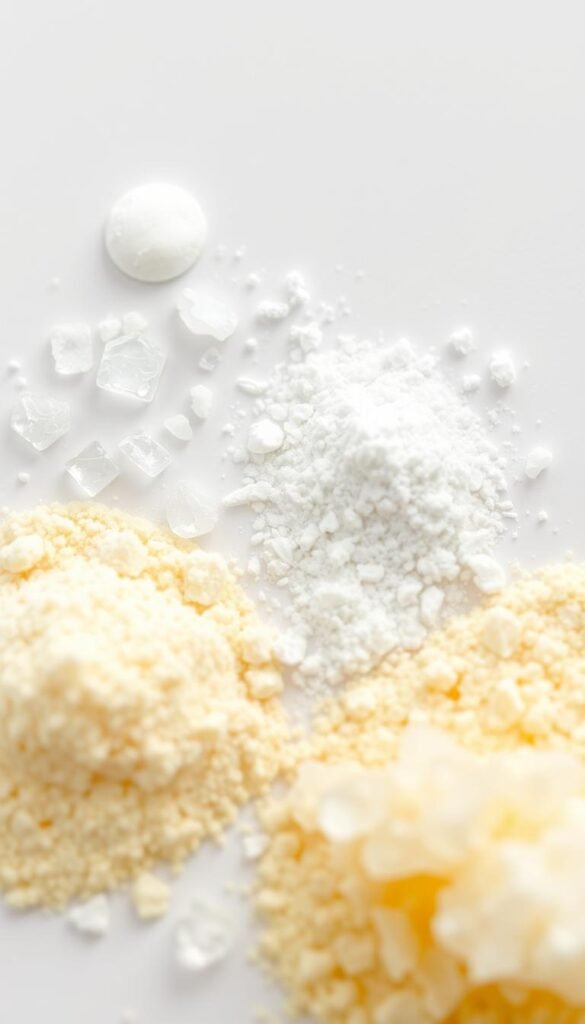
Chemical exfoliation once terrified me—until I learned not all acids are created equal. While physical scrubs left my dry skin raw, gentle AHAs offered a smarter path. These active ingredients dissolve dead cells like invisible helpers, revealing smoother texture without abrasion.
Finding Your Acid Match
Lactic acid became my gateway AHA. With larger molecules than glycolic acid, it penetrates slower—perfect for cautious experimentation. I diluted it with moisturizer initially, applying weekly. Over months, this built tolerance without redness.
Mandelic acid works similarly for sensitive skin, derived from almonds. Its antibacterial properties calm breakouts while exfoliating. I reserve stronger options like glycolic acid for rare spot treatments—never full-face use.
- Lactic acid: Milk-derived, hydrates while exfoliating
- Mandelic acid: Gentle for reactive complexions
- Malic acid: Apple-based, brightens dullness
Patience proved vital. Rushing frequency caused peeling, but gradual increases (weekly → biweekly) boosted results. Now, serums glide on effortlessly, and moisturizers absorb deeper. My skin finally glows—not flakes.
Building Your Daily Skincare Routine: Morning Steps
Morning skincare sets the tone for your day—especially when managing delicate complexions. My approach balances thorough cleansing with strategic hydration to maintain comfort without overwhelming fragile barriers. Less truly becomes more when every product serves a purpose.
Cleanser and Toner: A Fresh Start
A creamy cleanser works like velvet for the face. Mine contains oat extract to dissolve impurities while preserving natural oils. Unlike foaming formulas, it leaves skin supple—never tight or squeaky. I massage it gently using lukewarm water, then pat dry with a microfiber cloth.
Toners became optional allies. When I use one, it’s always alcohol-free with chamomile or glycerin. These formulas remove residual minerals from tap water while boosting moisture absorption. On rushed days, skipping this step doesn’t trigger dryness—proof that thoughtful cleansing lays proper groundwork.
Hydrating Serum: My Go-To First Layer
Damp skin becomes a canvas for my hydrating serum. Hyaluronic acid binds water to thirsty cells, creating an instant plumping effect. I press two drops into cheeks and forehead, letting the lightweight texture sink in fully before layering moisturizer.
This step transformed my routine from basic to transformative. Serums deliver concentrated nourishment where creams can’t reach. Within weeks, my complexion stopped feeling like parchment by noon. Now, it’s the non-negotiable bridge between cleansing and protection—a morning ritual worth waking up for.
Nighttime Skincare Routine: Retinol and Moisturizers
Nighttime brings a golden opportunity to heal parched complexions. Contrary to myths, retinol can work wonders for dry skin when paired strategically with hydration. My dermatologist taught me the art of balance: “Buffering minimizes irritation while maximizing results.”
Begin with a creamy cleanser to prep without stripping. After patting skin damp, apply a pea-sized retinol treatment mixed with moisturizer. This “hydration sandwich” method protects delicate barriers. Let it absorb fully before layering ceramide-rich moisturizers.
Thicker formulas thrive overnight. I prioritize products with squalane or shea butter—ingredients that repair while you rest. Research shows combining retinol with emollients boosts collagen by 40% without compromising moisture levels.
Consistency matters. Start with twice-weekly applications, gradually increasing as tolerance builds. Skip nights when irritation flares, focusing instead on nourishing care. Over six weeks, my texture softened dramatically—flakes vanished, and resilience deepened.
This routine proves that smart pairing trumps fear of active ingredients. Trust the process: gentle retinol use can transform dryness into radiant renewal.