“You may not control all the events that happen to you, but you can decide not to be reduced by them.” Maya Angelou’s words echoed in my mind as I stared at the mirror, frustrated by the stubborn bumps along my jawline. Like many adults, I’d tried countless creams, routines, and “miracle cures” only to face the same inflamed pimples month after month.
This Website contains affiliate links. That means I may earn a small commission if you purchase through my links, at no extra cost to you.
What makes these breakouts so relentless? Board-certified dermatologist Dr. Marisa Garshick explains that hormonal shifts, bacteria, and clogged pores often team up beneath the surface. For years, I treated my skin like a battlefield—attacking symptoms without addressing why the war kept reigniting.
Then I discovered a truth that changed everything: lasting clarity starts beneath what’s visible. My journey taught me that defeating persistent jawline blemishes requires strategy, not just scrubs. It’s about decoding your body’s signals and rebuilding your skin’s defenses from within.
Key Takeaways
- Hormonal fluctuations and bacteria often work together to fuel stubborn jawline breakouts
- Surface-level treatments alone rarely solve recurring inflammation
- Identifying personal triggers is critical for creating lasting results
- Professional insights can reveal overlooked solutions for resistant skin
- Consistency with targeted routines makes healing possible
This isn’t another empty promise. What follows is the exact roadmap that helped me—and countless others—break free from the cycle of frustration. Let’s explore how to transform your approach and finally reclaim your confidence.
Understanding Chin Acne: Causes and Triggers
The mirror became my enemy every month as angry red bumps emerged like clockwork. Through trial and error, I uncovered two key villains: internal imbalances and external assaults. Let’s break down what fuels these stubborn flare-ups.
Hormonal Influences and Sebum Production
My skin’s monthly rebellion wasn’t random. Dermatologist Dr. Heather Rogers confirmed what I suspected: “Even slight testosterone increases before menstruation can awaken oil factories in your jawline.” The chin houses dense clusters of sebaceous glands that pump out oil when hormones surge. This excess sebum mixes with dead skin cells, creating pore blockages that breed bacteria.
Environmental and Lifestyle Factors
Stress became my silent saboteur. During crunch periods at work, cortisol spikes turned my face into an oil slick. I also discovered hidden triggers:
| Trigger | Effect | Solution |
|---|---|---|
| Face masks | Traps moisture & bacteria | Use silk liners |
| Phone screens | Transfers germs | Daily disinfecting |
| Toothpaste | Irritates skin | Switch to SLS-free |
Understanding this dual attack changed my game. Hormonal shifts create the perfect storm beneath the skin, while daily habits either calm or fuel the fire. By addressing both, I finally stopped playing whack-a-mole with breakouts.
The Science Behind Clogged Pores and Inflammation
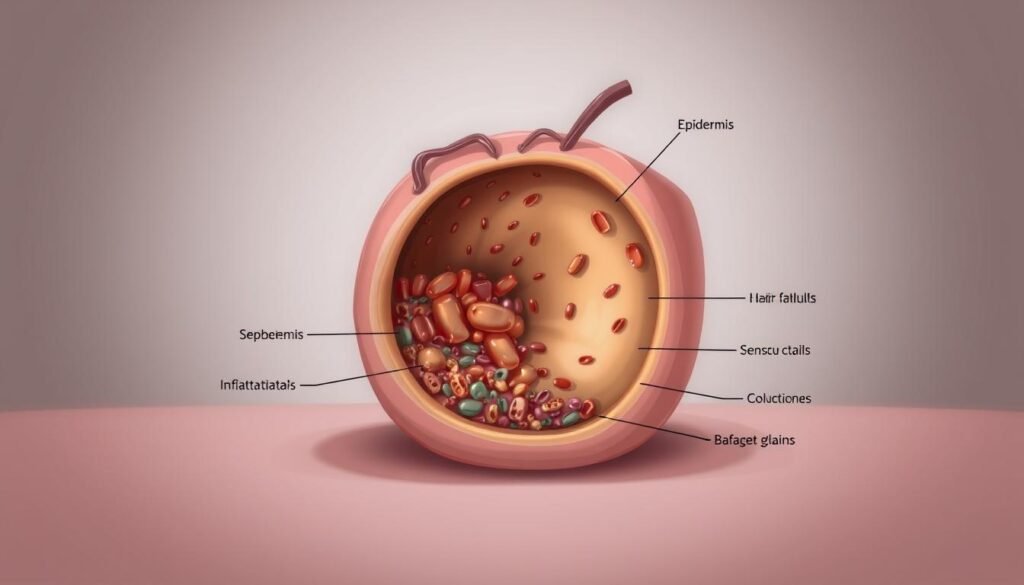
The turning point came when I mapped the hidden battle beneath my skin. Like detectives analyzing crime scene evidence, I needed to understand how clogged pores transform into angry red landmarks.
How Clogged Pores Develop
My skincare journal revealed a pattern: breakouts always started with tiny bumps I couldn’t see. Dermatologist Dr. Whitney Bowe clarified: “Your hair follicles become microscopic traffic jams – oil and dead skin cells pile up until nothing moves.” This stagnant environment becomes prime real estate for bacteria like Cutibacterium acnes.
Three critical stages emerged from my research:
- Stage 1: Overactive oil glands flood pores with sebum
- Stage 2: Dead skin cells create dam-like blockages
- Stage 3: Bacterial colonies trigger immune alarms
I finally understood why spot treatments failed. The real drama unfolds deep within follicles, where most products never reach. When my white blood cells attacked the bacterial invasion, the resulting inflammation made my chin feel like a warzone.
This knowledge became my compass. By targeting each stage of the pore-clogging process – not just surface symptoms – I began disrupting the cycle at its source. The road to clear skin started with respecting my skin’s complex biology.
Chin Acne Won’t Go Away? This Surprising Fix Finally Did the Trick
My skin’s turnaround began when I stopped chasing quick fixes. After years of frustration, I discovered lasting results required balancing multiple solutions simultaneously.
The breakthrough came through three key strategies recommended by my dermatologist:
- Retinol nights: Accelerated cell turnover to prevent clogged pores
- Hydrocolloid armor: Patches that flattened pimples overnight
- Probiotic support: Both topical and dietary to strengthen skin barriers
Dr. Emily Sanders explained: “Stubborn acne often needs simultaneous approaches – one product can’t address oil production, bacteria, and inflammation at once.” This multi-target strategy finally calmed my angry jawline.
When over-the-counter options plateaued, prescription solutions for persistent acne made the difference. My regimen now includes morning azelaic acid and evening adapalene gel. For hormonal flares, supplements helped balance internal triggers.
The real victory came through consistency. Sticking with this routine for 8 weeks transformed my complexion more than years of product-hopping ever did. Clear skin wasn’t about finding magic bullets – it was about strategic warfare.
Quick Fixes and Home Remedies for Chin Acne
When time matters most, strategic interventions become your skin’s first responders. Through trial and error, I uncovered tools that deliver results while maintaining skin harmony.
Effective Spot Treatments and Pimple Patches
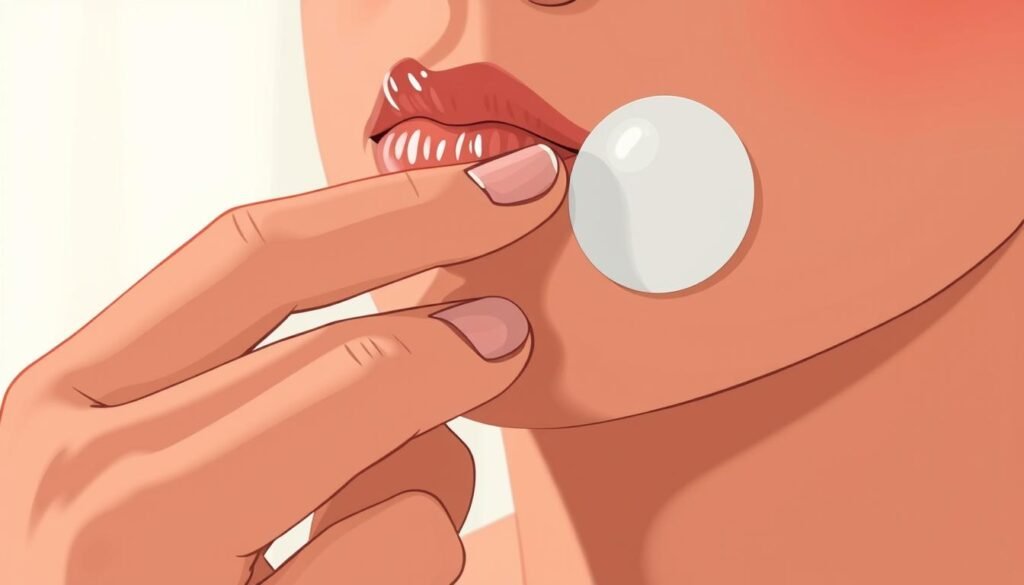
Hydrocolloid patches transformed my emergency skincare kit. After testing 14 brands, Dr. Garshick’s recommendation proved true: “COSRX patches work like microscopic sponges, absorbing impurities while shielding vulnerable areas.” My success came from:
- Applying patches at the first sign of swelling
- Choosing ultra-thin versions for daytime wear
- Removing gently after 6-8 hours
For surface-level eruptions, I alternated between 2% salicylic acid gel and 5% benzoyl peroxide cream. These spot products worked best when dabbed precisely, avoiding surrounding skin.
At-Home Approaches to Reduce Inflammation
Tea tree oil became my natural ally against angry bumps. The St. Ives cleanser’s 1% concentration provided antibacterial action without overdrying. My inflammation-busting routine included:
- Chilled green tea compresses morning and night
- Spot treatments applied before bed
- Strict no-picking rituals using fidget toys
While these methods calmed immediate flare-ups, I learned they’re most powerful when paired with consistent care. Quick fixes shine brightest as part of a larger healing strategy.
Effective Ingredients: Salicylic Acid, Benzoyl Peroxide, and More
My bathroom cabinet looked like a chemistry lab before I cracked the code. Through meticulous experimentation, I learned which ingredients delivered real results versus empty promises. Three warriors emerged as game-changers in my battle against persistent breakouts.
Powerhouse Combinations That Work
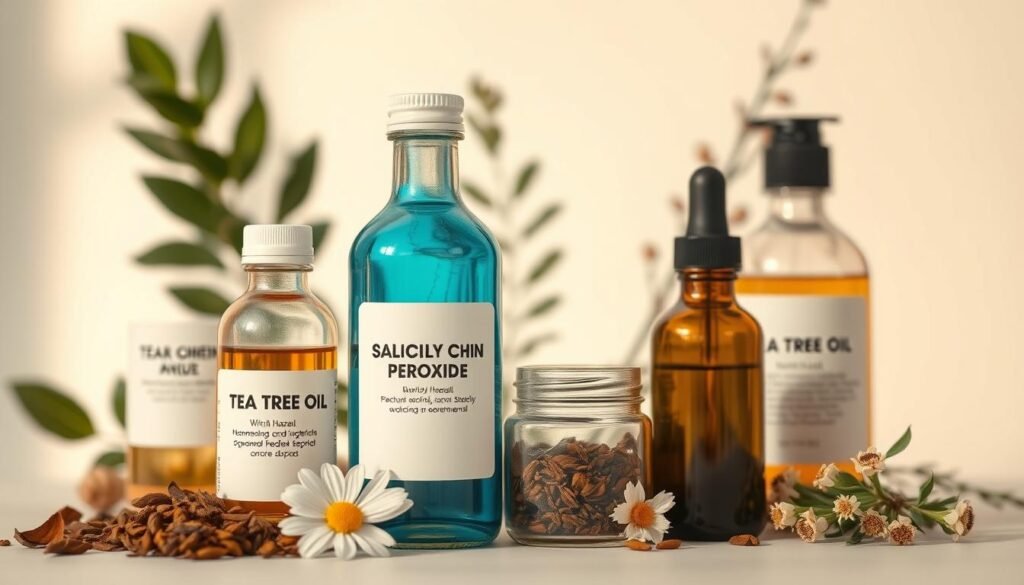
Salicylic acid became my pore-clearing MVP. This beta hydroxy acid dives deep into follicles, dissolving clogs before they erupt. Dermatologist Dr. Heather Rogers confirmed: “It’s like sending a microscopic plumber to unblock drains from within.”
When paired with benzoyl peroxide, these ingredients formed an unstoppable duo. The peroxide eliminated bacteria while regulating oil production. My golden ratio:
| Ingredient | Strength | Frequency |
|---|---|---|
| Salicylic acid | 2% | Morning |
| Benzoyl peroxide | 2.5% | Evening |
| Retinol | 0.25% | 3x weekly |
Gentle Solutions for Reactive Skin
For sensitive skin, formulation matters more than concentration. I swapped harsh gels for creamy benzoyl peroxide washes that cleaned without stripping. Tea tree oil blends provided natural antibacterial action when my barrier felt compromised.
The real breakthrough came through strategic layering. Alternating retinol nights with hydrating recovery days kept my complexion balanced. As Dr. Rogers advised: “Start low, go slow—your skin will thank you.”
Understanding these ingredients‘ roles transformed my routine from guesswork to precision. When used wisely, they become allies rather than adversaries in your skincare journey.
How to Get Rid of Chin Acne Fast: A Step-by-Step Approach
The path to healing began when I shifted from random attempts to a structured routine. Success came through balancing immediate action with long-term care, guided by expert insights and personal discipline.
Practical At-Home Techniques
My mornings started with lukewarm water and fragrance-free cleansers. Dr. Garshick’s warning about picking stuck with me—I kept stress balls nearby to avoid touching my face. Evening care included applying treatment serums first, then moisturizer to lock in hydration without clogging pores.
In-Office Treatments and Professional Advice
When stubborn bumps resisted home care, my dermatologist recommended chemical peels. These quick sessions removed dead skin layers better than any scrub. For deep cysts, steroid injections reduced swelling faster than I imagined possible.
The real victory came from combining methods. Prescription retinoids at night paired with daytime SPF protection created lasting change. Clear skin wasn’t about shortcuts—it required respecting the process and trusting professionals who understood my unique needs.