“You may not control all the events that happen to you, but you can decide not to be reduced by them.” Maya Angelou’s words echoed in my mind as I faced the mirror, tracing the stubborn marks across my shoulders. What began as occasional pimples soon became a relentless battle—one that reshaped how I viewed my skin and myself.
This Website contains affiliate links. That means I may earn a small commission if you purchase through my links, at no extra cost to you.
I learned the hard way that bacne isn’t just a teenage problem. Sweat, friction from workout gear, and even stress conspired to trap oil and bacteria beneath my skin. Each breakout felt like a betrayal, especially when simple cleansers and routines failed to help. The more I researched, the clearer it became: over half of acne sufferers deal with this issue, yet few talk openly about it.
My turning point came when I stopped blaming myself. This wasn’t about laziness or poor habits—it was a skin condition demanding patience and strategy. I spent months testing products, adjusting my diet, and consulting experts. Slowly, the angry bumps faded, replaced by smoother texture and renewed confidence.
Key Takeaways
- Bacne affects over 50% of acne sufferers, often worsened by sweat and tight clothing.
- Clogged pores from oil, dead skin, and bacteria drive persistent breakouts.
- Effective treatment requires more than basic hygiene—targeted routines matter.
- Lifestyle factors like stress management play a critical role in skin health.
- Clear skin is achievable through tailored solutions and consistent care.
Understanding Back Acne: My Personal Discovery
It took years of frustration before I realized my back acne wasn’t random—it followed patterns tied to specific triggers. What looked like a chaotic mix of bumps actually had distinct identities, each demanding unique care.
Recognizing the Different Types of Back Acne
At first, I assumed every red spot was the same. Then I noticed variations: tiny white-centered dots, shadowy clusters resembling dirt, and angry lumps that throbbed. A dermatologist later explained these were whiteheads, blackheads, and cysts—three faces of the same struggle.
The cysts scared me most. Unlike surface-level breakouts, these deep, boil-like invaders resisted every quick fix. Learning they required specialized treatment changed my approach entirely.
What I Learned About Sebum, Dead Skin, and Bacteria
My skin wasn’t betraying me—it was overcompensating. Those sebaceous glands on my back worked overtime, pumping out protective oils. But when sebum mixed with dead cells, it created sticky plugs in my pores. Trapped bacteria then turned minor clogs into inflamed battlegrounds.
Generic body washes did nothing. I needed ingredients like salicylic acid to dissolve blockages and niacinamide to calm irritation. Knowledge became my shield—and my path forward.
Identifying the Causes: More Than Just Dead Skin and Oil
My journey took an unexpected turn when I discovered my back acne had invisible collaborators. Beyond clogged pores and excess oil, everyday choices and biological factors conspired against my skin’s balance.
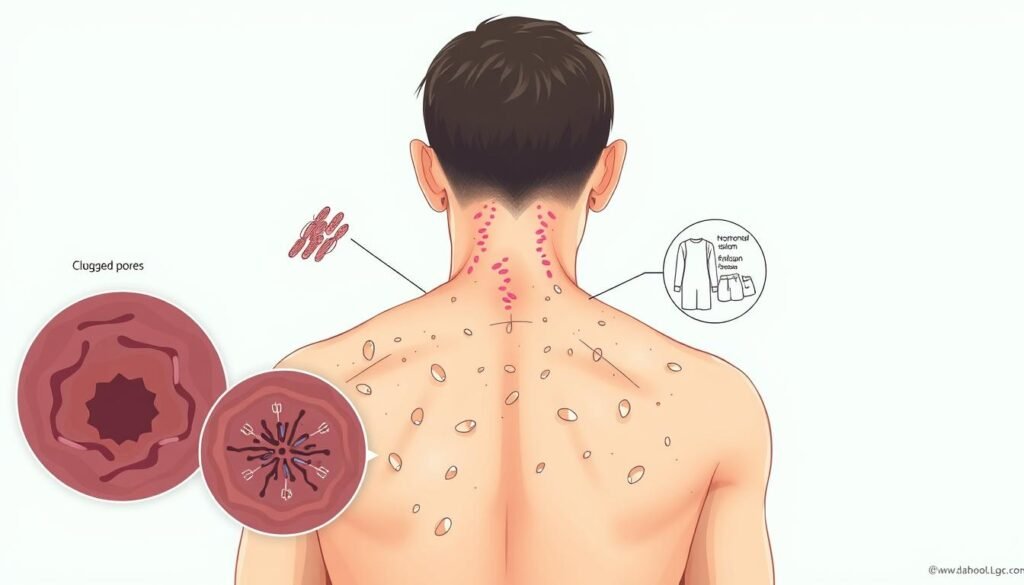
During workouts, my breathable athletic shirts became silent enemies. The combination of sweat and constant fabric friction created micro-tears in my skin, allowing bacteria to thrive. Days I carried a heavy backpack? Breakouts flared like warning lights along my shoulders.
How Friction and Sweat Exacerbate the Problem
I tracked patterns like a scientist. Post-gym sessions without immediate showers led to angry clusters. Tight straps from bags left ghostly trails of whiteheads. Each discovery revealed how trapped moisture and physical irritation transformed minor clogs into battlefield landscapes.
Genetic testing later confirmed what family photos hinted at—my predisposition for overactive oil glands. Hormonal shifts during stressful weeks became predictable triggers, cortisol surges fueling sebum production. What once felt random now had clear patterns: environment, biology, and habit dancing in destructive harmony.
Breaking this cycle meant rethinking simplicity. Loose cotton replaced synthetic workout gear. Backpack-free days became sacred. Small changes didn’t erase my acne, but they stripped away its power—one conscious choice at a time.
How to Get Rid of Back Acne for Good—No More Painful Bumps: My Step-by-Step Guide
Transforming my skin required more than wishful thinking—it demanded a system. I mapped out a battle plan that balanced science with self-compassion, focusing on sustainable habits rather than overnight miracles.
Crafting a Daily Skincare Routine That Works
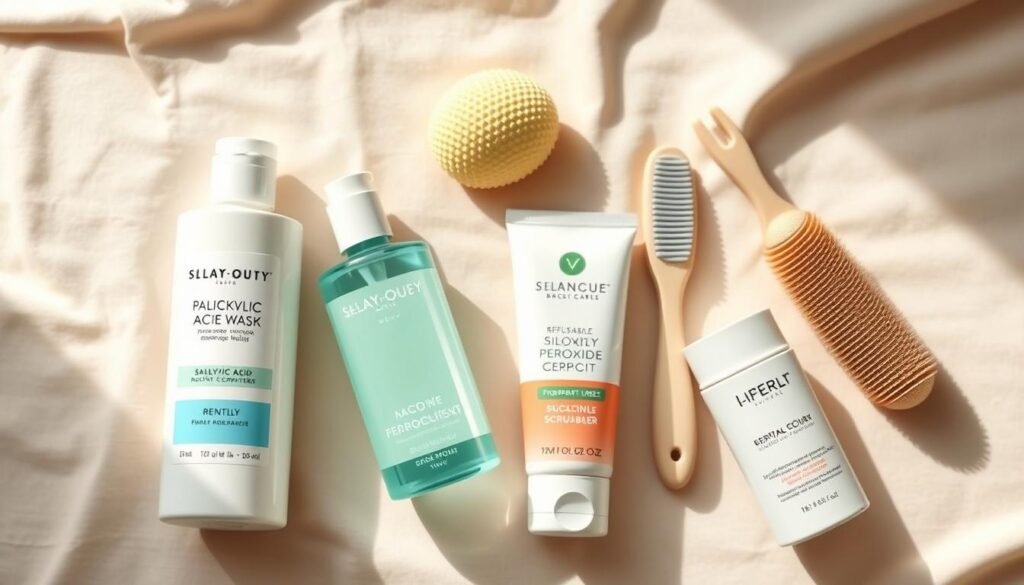
Mornings began with lukewarm water and a fragrance-free cleanser. I finally understood why dermatologists emphasize gentle formulas—harsh scrubs had been stripping my skin’s natural defenses. Post-workout showers became non-negotiable, sweat washed away before it could settle into pores.
The real game-changer? Applying treatments to completely dry skin. Dampness dilutes active ingredients, I learned. Using a spray applicator helped reach between my shoulder blades without awkward contortions.
Selecting the Right Products for My Skin
Salicylic acid became my ally against clogged pores, while tea tree oil offered natural antibacterial support. I avoided anything labeled “maximum strength”—my compromised skin needed nurturers, not punishers.
Weekly exfoliation shifted from abrasive scrubs to chemical solutions. A lactic acid lotion dissolved dead cells without physical abrasion. For the first time, my skin care regimen felt like teamwork rather than combat.
Key tools emerged: silicone body brushes for even application, microfiber towels that dried without residue. Each product earned its place through visible results, not marketing promises. What began as a chore became my daily declaration of self-worth.
Effective Home Treatments and Over-the-Counter Remedies
Discovering affordable solutions transformed my approach to managing breakouts. While prescription options exist, I found powerful allies in everyday products designed for persistent skin concerns.
Using Cleansers and Benzoyl Peroxide-Based Washes
My breakthrough came with a 5.3% benzoyl peroxide wash. Unlike quick rinses, I applied it to dry skin and let it sit for three minutes—allowing deeper penetration into thicker back tissue. This simple adjustment reduced inflammation within weeks.
| Feature | Benzoyl Peroxide | Retinoid |
|---|---|---|
| Purpose | Kills bacteria | Unclogs pores |
| Application Time | 3-5 minutes pre-rinse | Nightly use |
| Key Benefit | Reduces active lesions | Prevents new breakouts |
| Ideal For | Immediate flare-ups | Long-term maintenance |
The Role of Retinoids and Moisturizers in My Routine
Adapalene gel became my nighttime hero. This 0.1% retinoid accelerated cell turnover without the peeling I’d experienced with stronger formulas. Paired with a non-comedogenic moisturizer, it created a balanced defense against clogged pores.
Consistency proved crucial. Morning treatments targeted existing acne, while evening care focused on prevention. Over-the-counter options worked when I respected their science—and my skin’s limits.
Lifestyle Adjustments: Clothing, Hygiene, and Environment
I never imagined my wardrobe could become a weapon against breakouts. Yet as I studied the relationship between fabric and skin health, my closet transformed into a tactical arsenal. Every zipper, seam, and textile choice now served a purpose beyond aesthetics.

Synthetic gym shirts were first to go. Their moisture-trapping fibers turned post-workout sweat into bacterial breeding grounds. I replaced them with breathable bamboo blends—natural fabrics that wicked moisture without suffocating my back.
Strategic Fabric Choices Changed Everything
Tight straps from backpacks left angry trails across my shoulders. I started using crossbody bags for lighter loads and padded lumbar supports during hikes. When carrying weight became unavoidable, I layered soft cotton between my skin and abrasive surfaces.
| Fabric Type | Breathability | Moisture Control | Friction Level |
|---|---|---|---|
| Bamboo | High | Excellent | Low |
| Cotton | Moderate | Good | Medium |
| Polyester | Low | Poor | High |
My nighttime routine expanded beyond skincare. Weekly sheet changes became sacred rituals—a fresh canvas for healing skin. I pinned my hair high during workouts, preventing oil transfer to my back.
These adjustments didn’t erase my acne overnight. But like steady rainfall eroding stone, they created pathways for lasting change. My clothes became allies rather than adversaries in this silent war beneath my shoulder blades.
Exploring Professional and Prescription Treatments
Sometimes, self-care reaches its limits. When my back acne resisted every over-the-counter solution, I realized professional guidance wasn’t optional—it was essential. Modern treatments blend science with personalized care, offering paths I couldn’t navigate alone.
My Experience with Dermatologist-Recommended Options
During my first virtual dermatology visit, I learned how prescription medications target deeper triggers. My specialist prescribed spironolactone, a hormone regulator that reduced oil production within weeks. For stubborn cysts, cortisone injections became emergency fire extinguishers—swift and precise.
Telehealth platforms surprised me. Remote consultations made accessing specialized care easier, especially during flare-ups. My dermatologist emphasized consistency, explaining that prescription-strength retinoids and antibiotics require patience. Results built gradually, unlike the quick fixes I’d chased before.
What changed everything? Understanding that professional treatments aren’t admissions of defeat. They’re partnerships. Today, my clearer skin stands as proof—some battles demand both courage and expert allies.