“The best foundation you can wear is glowing, healthy skin.” – Audrey Hepburn’s timeless wisdom reminds us our skin tells a story worth nurturing. For 50 million Americans facing breakouts yearly, that story often includes chapters about frustration and self-doubt. But here’s what I’ve learned: acne isn’t a monolith – it’s a language of six distinct forms, each whispering clues about your unique skin condition.
This Website contains affiliate links. That means I may earn a small commission if you purchase through my links, at no extra cost to you.
Through countless conversations and clinical research, I’ve witnessed how confusing it feels to navigate persistent bumps and blemishes. Blackheads linger like uninvited guests, while cystic nodules carve painful reminders of imbalance. What excites me most? Every type acne responds differently to care – meaning your breakthrough starts with recognizing which form you’re facing.
Let me share a truth that changed my approach: 85% of teens and adults experience these challenges. Whether you’re battling stubborn whiteheads or deep-rooted inflammation, you’re part of a community learning to rewrite their skin’s narrative. Together, we’ll explore how identifying your specific types transforms guesswork into targeted solutions.
Key Takeaways
Acne affects 50 million Americans annually across all age groups
Six distinct forms require customized treatment approaches
Proper identification reduces trial-and-error in skincare
Inflammatory and non-inflammatory types behave differently
Consistent care yields better long-term results
Understanding Acne and Its Impact
My bathroom mirror used to feel like an enemy until I learned acne isn’t random – it’s biology talking. Those frustrating breakouts begin when three factors collide: dead skin cells, oil, and bacteria. Our skin naturally sheds 30,000 cells every minute, but sometimes they stick together instead of falling away.
What Causes Acne and Buildup of Dead Skin Cells
Tiny hair follicles become clogged when excess sebum (our skin’s natural oil) traps dead cells. This creates a playground for Cutibacterium acnes bacteria. I used to scrub my face raw, not realizing harsh scrubs actually worsen the cycle by irritating pores.
Myth
Fact
Solution
Acne = Dirty Skin
Overwashing strips protective oils
Gentle cleansing twice daily
Only Teens Get Acne
Hormones affect all ages
Balance stress & sleep
Popping Helps
Spreads bacteria deeper
Spot treatments with salicylic acid
What changed my perspective? Learning that dead skin cell buildup isn’t my fault – it’s how my sebaceous glands respond to hormones, stress, even weather changes. Now I focus on exfoliating gently instead of punishing my skin.
How Acne Affects My Self-Esteem
Breakouts don’t just mark the skin – they etch self-doubt. I’ve canceled dates, avoided photos, and layered makeup thick enough to plaster walls. But here’s the truth I hold onto: Clear skin begins with clear understanding. When I stopped blaming myself and started respecting my skin’s biology, healing followed.
My dermatologist once told me, “You wouldn’t shame a sunflower for needing sun – don’t shame your skin for needing care.” That mindset shift turned acne from a personal failure to a puzzle I’m equipped to solve.
Did You Know There Are 6 Different Types of Acne? Find Out Which You Have
Early in my skincare journey, I stared at my reflection wondering why some bumps faded quickly while others left lasting marks. The answer arrived like sunlight through clouds: acne speaks in dialects. Learning to interpret its language became my superpower.
Distinguishing Between Noninflammatory and Inflammatory Acne
Noninflammatory acne blemishes behave like quiet neighbors. Blackheads and whiteheads form when pores clog without swelling. I once mistook these for dirt particles, scrubbing aggressively. Now I know gentle exfoliation works better than force.
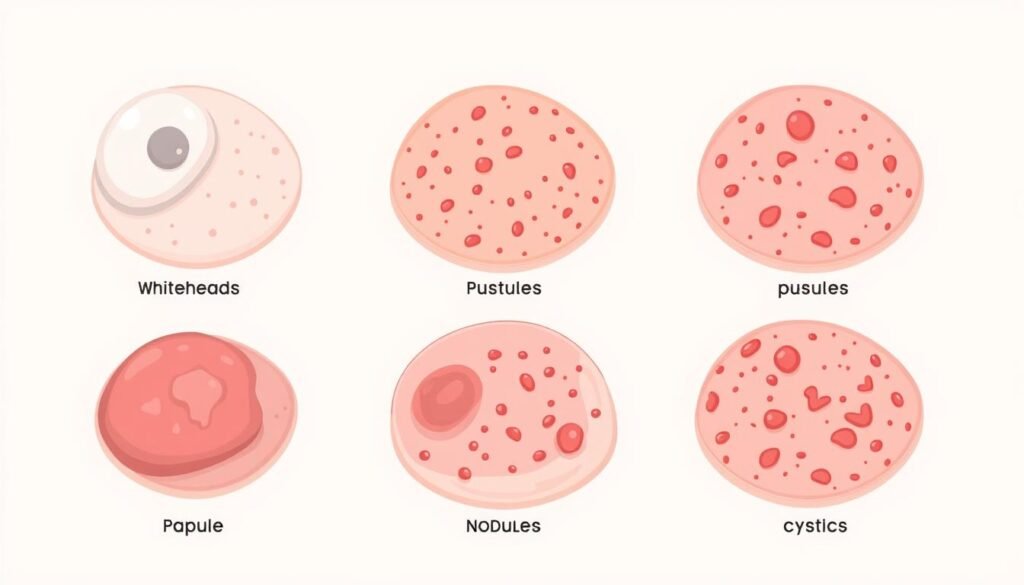
Inflammatory types shout for attention. Papules resemble pink speed bumps, while pustules wear white caps. Nodules and cysts dig deeper – I remember one cyst that throbbed for weeks. “Inflammation is your skin crying for help,” my esthetician explained during a breakthrough session.
Severity matters as much as type. Mild cases might show 20 tiny whiteheads. Moderate acne could mix 50 blackheads and papules. My cousin’s severe case involved over 150 lesions – but even then, understanding her skin type led to effective treatment.
What excites me? Each type acne has solutions. Salicylic acid tames blackheads. Benzoyl peroxide calms pustules. Cysts might need professional care. By matching treatments to our specific different types acne, we turn frustration into progress.
Noninflammatory Acne: Whiteheads and Blackheads
My morning skincare routine used to feel like a guessing game until I discovered how noninflammatory acne works. These quiet skin rebels form when pores get clogged with oil and dead skin cells, creating bumps that don’t trigger redness or pain. Understanding their nature transformed my approach from frustration to focused care.
Whiteheads: Characteristics and Why They Form
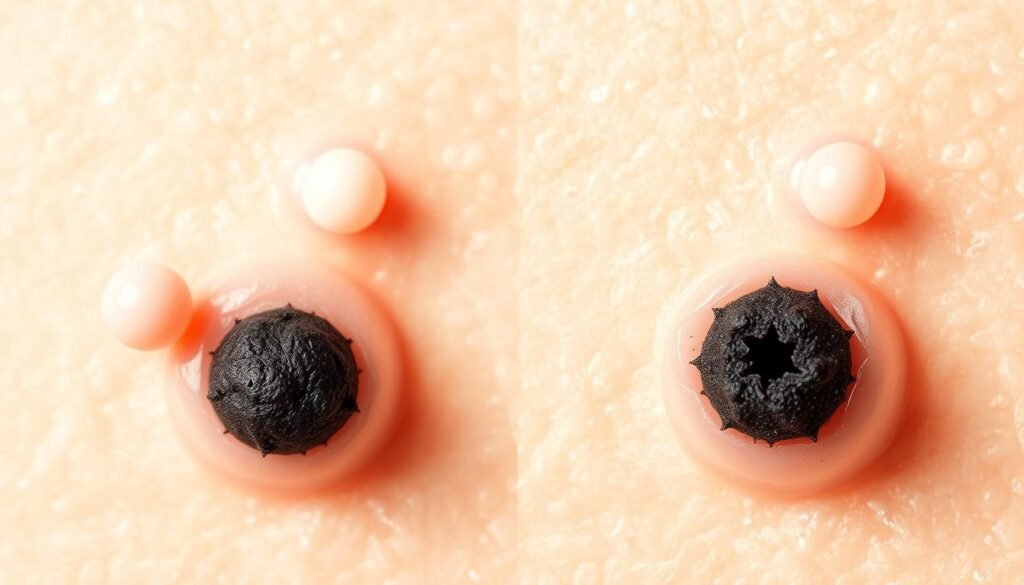
Whiteheads appear as tiny pearls under the skin’s surface. Medically called closed comedones, these flesh-colored bumps form when trapped sebum and cells create a sealed environment. I once mistook their white center for infection, but learned it’s simply oxidized oil – not pus or dirt.
Blackheads: How Exposure to Air Changes Their Look
When whiteheads break through the skin’s surface, oxygen works its magic. “The dark color isn’t a hygiene report card,” my dermatologist explained during an eye-opening consultation. Blackheads get their hue from melanin oxidation, making them look like tiny charcoal dots in pores.
Feature
Whiteheads
Blackheads
Medical Term
Closed comedones
Open comedones
Appearance
Flesh-colored bumps
Dark surface spots
Cause
Trapped sebum/cells
Oxidized debris
Treatment Approach
Chemical exfoliants
Manual extraction tools
“Blackheads are nature’s reminder that what’s exposed transforms – treat them with curiosity, not criticism.”
What gives me hope? Both whiteheads blackheads respond well to consistent care. Gentle salicylic acid washes clear debris without stripping moisture. Clay masks draw out impurities, while retinoids prevent new clogs. By respecting my skin’s needs, I’ve turned these common acne types into manageable visitors rather than permanent residents.
Inflammatory Acne: Papules, Pustules, Nodules, and Cysts
I used to press a warm washcloth against my face, hoping stubborn red bumps would vanish overnight. What I didn’t realize? Each inflamed spot had its own story. Inflammatory acne demands attention through distinct forms – some surface-level battles, others deep-rooted wars.
Understanding Papules and Pustules
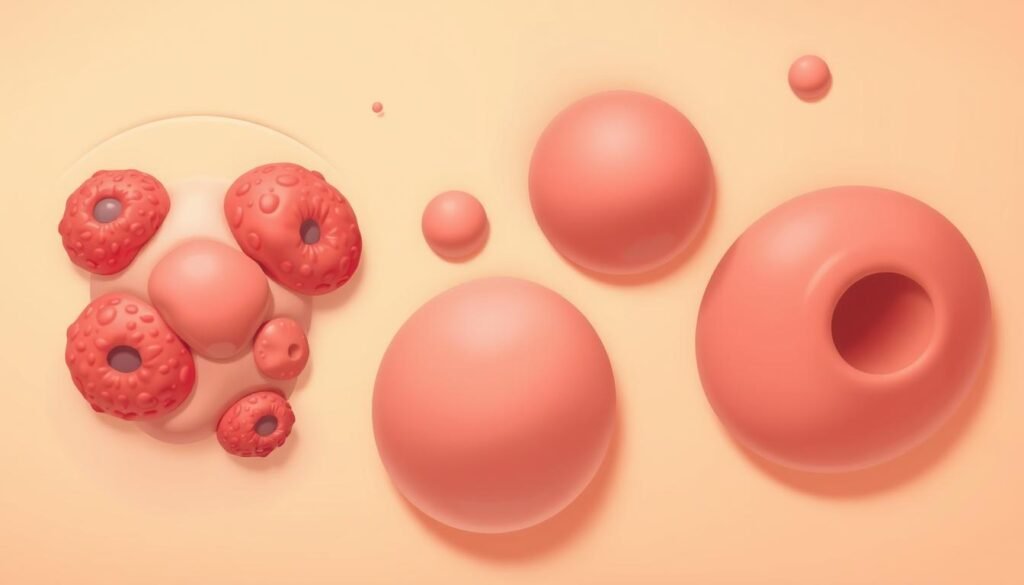
Papules first appeared on my jawline as angry pinpricks. These solid bumps form when clogged pores trigger inflammation without pus. I learned the hard way: picking spreads bacteria to neighboring pores.
When my papules developed yellow centers, they transformed into pustules. “This white cap is your immune system’s victory flag,” my dermatologist explained. The visible pus means white blood cells are fighting infection – a sign to use targeted treatments, not fingers.
Dealing with Nodules and Cysts for Better Skin Health
My toughest battle began with a marble-sized lump under my cheekbone. Nodules develop deep within skin layers, resisting typical creams. These hard masses taught me patience – they require prescription retinoids or cortisone shots.
Cysts arrived like uninvited guests during finals week. These fluid-filled sacs caused throbbing pain and threatened scarring. My turning point? Accepting that cystic acne needs professional care. Oral medications and proper extraction prevented permanent damage.
Type
Depth
Treatment
Papules
Surface
Salicylic acid spot treatment
Pustules
Surface
Benzoyl peroxide gel
Nodules
Dermal
Prescription retinoids
Cysts
Subcutaneous
Dermatologist procedures
“Inflammatory acne isn’t a life sentence – it’s a conversation starter with your skin.”
What changed my journey? Recognizing that nodules cysts require different tactics than surface breakouts. Early intervention prevents mild acne from becoming severe. Now I greet new bumps with knowledge instead of panic, armed with solutions matching each skin challenge.
Over-the-Counter and Prescription Treatments for Acne
Finding the right acne treatment felt like solving a puzzle until I discovered how targeted solutions work. Through trial and error, I learned that effective care balances science with patience – especially when matching products to specific breakouts.
How Benzoyl Peroxide and Salicylic Acid Work
Benzoyl peroxide became my frontline warrior against inflamed bumps. This OTC hero kills bacteria while drying excess oil. I started with 2.5% gel to avoid irritation – higher concentrations aren’t always better. For closed comedones, salicylic acid worked magic by dissolving dead skin cells trapped in pores.
Morning routines shifted when I paired a benzoyl wash with evening salicylic treatments. Pro tip: Layer these acid products over moisturizer to prevent dryness. Results appeared in weeks as my skin cleared without the tightness I’d feared.
When I Know It’s Time to Visit a Dermatologist
Persistent cysts under my chin taught me when to seek help. If OTC treatments fail after 12 weeks or deep nodules emerge, a dermatologist becomes essential. My game-changer? Prescription retinoids that prevent clogged pores while fading old marks.
For severe cases like those detailed in this acne types guide, professionals offer cortisone shots or oral medications. Remember: Seeking expert care isn’t defeat – it’s giving your skin the specialized attention it deserves.
FAQ
What causes acne and dead skin cell buildup?
I’ve learned that acne forms when oil, bacteria, and dead skin cells clog pores. Hormones, stress, or genetics can trigger excess oil production, creating a breeding ground for breakouts. Keeping my skin clean and exfoliated helps prevent this cycle.
How does acne impact self-esteem?
Acne made me feel self-conscious, but I realized my worth isn’t tied to my skin. Embracing a consistent skincare routine and seeking support boosted my confidence. Remember—you’re more than your bumps!
What’s the difference between noninflammatory and inflammatory acne?
Noninflammatory types like whiteheads and blackheads sit on the skin’s surface. Inflammatory acne—papules, pustules, nodules, and cysts—runs deeper, causing redness and pain. Identifying which I had guided my treatment choices.
Why do blackheads look different from whiteheads?
Blackheads form when clogged pores open, exposing sebum to air. This oxidation turns them dark. Whiteheads stay closed, trapping debris under a thin layer of skin. Both remind me to prioritize gentle cleansing!
How do I handle painful nodules or cysts?
I avoid picking—it worsens scarring. Instead, I use warm compresses and spot treatments with benzoyl peroxide. For stubborn cysts, my dermatologist offers cortisone shots. Healing takes patience, but progress is possible.
When should I see a dermatologist for acne?
If over-the-counter products like salicylic acid fail after 6–8 weeks, I consult a pro. Persistent nodules, cysts, or emotional distress are signs to seek help. Customized prescriptions transformed my skin journey!