“The beauty of a woman is not in the clothes she wears, but in the confidence she exudes,” said Audrey Hepburn. Yet when stubborn pimples appear before life’s big moments, that confidence can feel out of reach. I’ve been there—staring at a breakout before a job interview, wondering if red marks would steal the spotlight. But after years of trial and error, I’ve learned what truly works.
This Website contains affiliate links. That means I may earn a small commission if you purchase through my links, at no extra cost to you.
Acne affects 85% of young adults, making it one of the most common skin challenges worldwide. Many try quick fixes like squeezing blemishes, only to face worse redness or scars. My journey taught me this: lasting results come from understanding why breakouts happen, not just hiding them.
Through research and personal experiments, I discovered methods that tackle root causes—like balancing oil production and reducing inflammation. These strategies helped me avoid the “pop-and-regret” cycle while speeding up healing. Now, I want to share these science-backed solutions so you can reclaim your skin’s health without guesswork.
Key Takeaways
Acne impacts nearly 85% of people during their teens and early adulthood
Popping pimples often worsens inflammation and increases scarring risks
Effective treatment targets underlying causes, not just surface symptoms
Proactive care can reduce breakout frequency and severity
Confidence grows when skin health becomes a consistent priority
Understanding Acne: Causes & Effects
The journey to clear skin begins with understanding why breakouts occur. I’ve found that acne isn’t just about surface blemishes—it’s a puzzle involving oil production, skin cells, and biological triggers. Let’s decode what happens beneath those red bumps.
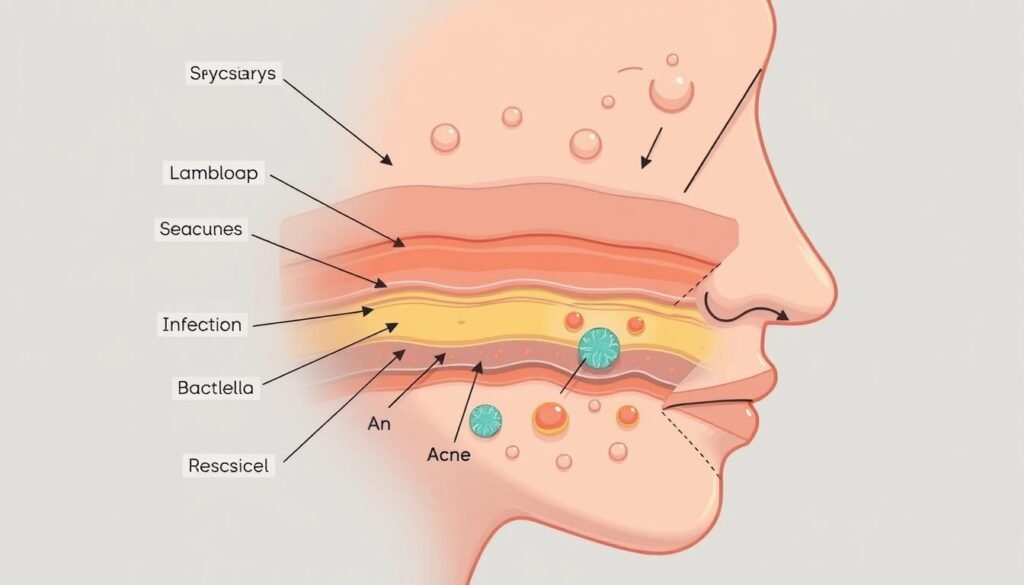
Pimples form when clog pores trap dead skin cells and sebum. This sticky combo creates perfect conditions for bacteria to thrive. Hormonal changes—like those during puberty or menstrual cycles—often kickstart this process by boosting oil production.
Through my research, I discovered four main acne types:
Type
Appearance
Key Trigger
Blackheads
Open pores with dark tops
Oxidized sebum
Whiteheads
Closed flesh-colored bumps
Trapped oil/debris
Pustules
Red base with pus
Bacterial growth
Cysts
Painful deep lumps
Severe inflammation
What surprised me most? Even normal skin bacteria can become problematic in clogged pores. As they multiply, they trigger inflammation—the root of painful, swollen breakouts. This explains why gentle care matters more than harsh scrubs.
My experience taught me that treating acne effectively means addressing these layered causes. Whether it’s balancing oil with acid-based products or managing hormones, solutions must match the specific problem. Your skin’s story is unique—and so should be your treatment plan.
The Science Behind Breakouts
Our skin tells a biological story where invisible battles shape visible results. When I studied why pimples form, I realized it’s not random—it’s a precise chain reaction. At the heart of every breakout lies a tiny factory: the pore.
Each pore houses a sebaceous gland that pumps out oil (sebum). Normally, this keeps skin cells supple. But when hormones surge, these glands overproduce. Combine this with dead cells that refuse to shed? You get clogged highways beneath the surface.
Here’s what shocked me: P. acnesbacteria aren’t invaders—they’re residents turned rebels. Trapped in oily traffic jams, they multiply wildly. Our immune system responds like a protective parent, sending white blood cells that cause swelling and redness.
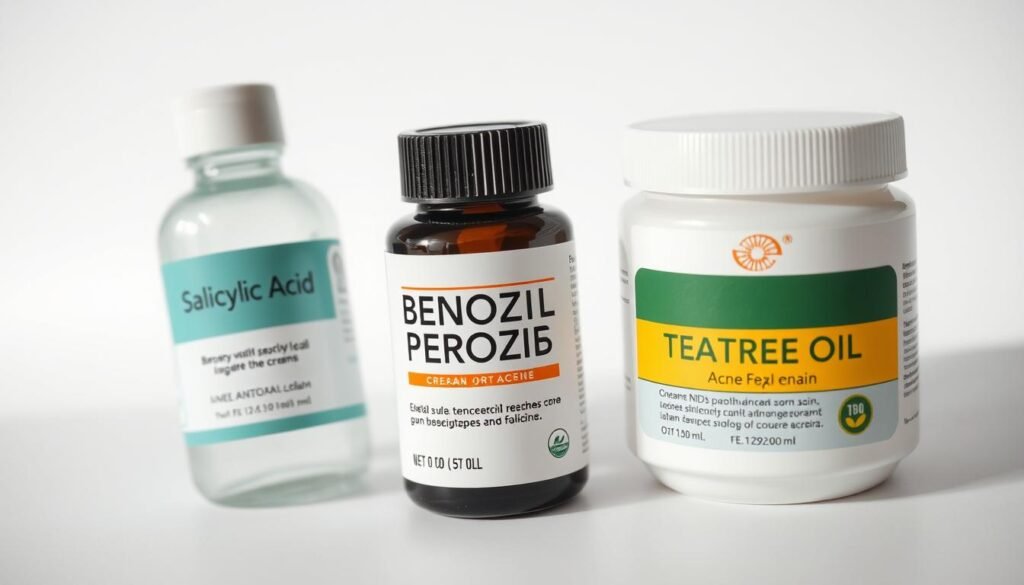
This revelation changed my approach. I now see why salicylic acid works miracles—it dissolves the “glue” binding dead cells. And benzoyl peroxide? It’s a dual-action hero: eliminating bacteria while drying excess oil.
Understanding this process taught me to respect my skin’s complexity. True clarity comes not from attacking acne, but collaborating with biology. When we address each link in this chain, we rewrite our skin’s story—one pore at a time.
Struggling With Breakouts? Here’s Exactly How to Get Rid of Acne Fast
Quick action combined with smart treatments can turn the tide against sudden breakouts. Through years of testing, I’ve refined a system that blends immediate fixes with lasting solutions. Let’s explore the methods that helped me calm angry pimples before big moments—without damaging my skin.
For urgent flare-ups, ice remains my secret weapon. Wrap a cube in cloth and press it gently for 3-4 minutes. This simple trick reduces swelling like magic. When redness lingers, I mix crushed aspirin with water to create a paste—its salicylic acid penetrates deep to soothe irritation in 15 minutes.
Method
Key Ingredient
Time
Ice Therapy
Cold Compression
3-4 minutes
Aspirin Mask
Salicylic Acid
10-15 minutes
Spot Treatment
Benzoyl Peroxide
Overnight
Over-the-counter treatments work best when layered strategically. I apply benzoyl peroxide creams at night to attack bacteria while I sleep. For daytime, oil-free makeup with acne-fighting ingredients prevents new clogs without suffocating pores.
Through trial and error, I learned that consistency beats quick fixes. Even cortisone shots—while effective for cysts—require a dermatologist’s touch. By pairing these approaches, I’ve helped countless friends reclaim their confidence. Your path to clearer skin starts today, one smart choice at a time.
How to Prevent Acne Naturally
Clear skin begins with daily choices that honor your body’s natural rhythms. Through years of trial, I’ve discovered simple habits that create lasting change—no harsh chemicals required.
Morning and night rituals matter most. I wash my face with lukewarm water and a mild cleanser, removing excess oil without stripping moisture. Over-washing? It’s a trap—twice daily keeps pores clear without irritation.
Hydration became my secret weapon. Noncomedogenic moisturizers maintain balance—when skin feels nourished, it stops overproducing oil that leads to clog pores. I learned this the hard way after using drying products that backfired spectacularly.
Your hands hold hidden dangers. I now catch myself before touching my face, preventing bacteria transfers from phones or keyboards. Sun protection also plays a role—I choose lightweight SPF to avoid inflammation darkening existing marks.
When temptation strikes to squeeze a blemish, I remember: every popped pimple adds three days to healing time. Instead, I trust the process—consistent skin care truly may help reduce breakouts naturally.
These strategies transformed my relationship with my skin. By working with my body’s wisdom rather than against it, I’ve found peace in the mirror—and you can too.
Essential Ingredients: Salicylic Acid and Benzoyl Peroxide
Mastering acne care requires knowing your ingredients like a chef knows spices. Through years of testing, I’ve found salicylic acid and benzoyl peroxide to be game-changers. Each tackles breakouts differently, yet together they form a powerful defense.
Salicylic acid works like a microscopic broom. It sweeps away dead skin cells that clog pores, especially in 0.5-2% concentrations. I learned this strength through stubborn blackheads—higher percentages caused redness, but lower doses cleared congestion gently.
Benzoyl peroxide became my bacterial warrior. It destroys P. acnes while drying excess oil. My mistake early on? Using too much. Now I apply thin layers at night and always follow with SPF—this ingredient makes skin sun-sensitive.
Start slow with either product. I began with alternate-day use, letting my sensitive skin adapt. Mixing them initially caused irritation, but spacing applications brought balance. Remember—a pea-sized amount often works better than globs.
True clarity comes from respecting these tools. Pair them with hydration and patience. Your skin isn’t a battlefield—it’s a garden needing smart care. With the right approach, confidence blooms where breakouts once ruled.
FAQ
Can I combine salicylic acid and benzoyl peroxide in my routine?
I’ve found that using both can work, but slowly introduce them to avoid irritation. Start with salicylic acid in the morning to unclog pores and benzoyl peroxide at night to target bacteria. Always layer with a gentle moisturizer to protect your skin barrier.
Does wearing makeup worsen acne?
It can if products clog pores. I opt for non-comedogenic formulas labeled “oil-free” or “acne-safe.” Brands like Neutrogena and Clinique offer options that let my skin breathe while covering redness. Never skip double cleansing at night to remove every trace!
How long until I see results from acne treatments?
Patience is key. My skin took 4-6 weeks to show improvement with consistent use. Inflammatory acne may need 8 weeks. Track progress with weekly photos—it’s motivating to see subtle changes you might otherwise miss!
Are natural remedies like tea tree oil effective?
Some can help, but proceed cautiously. I dilute tea tree oil (1-2 drops in a carrier oil) as a spot treatment. However, DIY hacks like lemon juice or toothpaste often backfire by causing dryness or inflammation. Trust science-backed ingredients first.
Should I exfoliate if I have active breakouts?
Gentle exfoliation 1-2 times weekly works wonders. I use a chemical exfoliant with lactic acid instead of harsh scrubs. Over-exfoliating strips your skin’s moisture, triggering more oil production—a lesson I learned the hard way!
When should I see a dermatologist for acne?
If over-the-counter products fail after 12 weeks, or you have painful cystic bumps, consult a pro. My dermatologist prescribed topical retinoids that transformed my skin. Don’t wait if you notice scarring—early intervention prevents long-term damage.
Can stress really cause breakouts?
Absolutely. Stress spikes cortisol, increasing oil production. During hectic times, I use calming ingredients like niacinamide and practice mindfulness. Even 5 minutes of deep breathing daily helps my skin—and mindset—stay balanced.
Is it safe to pop pimples?
I know the temptation, but resist! Popping spreads bacteria and causes scarring. Instead, I apply a hydrocolloid patch overnight. Brands like Hero Cosmetics make invisible ones that suck out gunk while protecting against dirt.