“Happy girls are the prettiest… but healthy skin makes that glow effortless.” Audrey Hepburn’s timeless wisdom reminds us that true beauty begins with skin health. Like many, I once believed more products meant better results – until redness and tightness revealed my protective skin barrier was crumbling.
This Website contains affiliate links. That means I may earn a small commission if you purchase through my links, at no extra cost to you.
Dermatologist Dr. Mary Sommerlad confirms what I learned painfully: overusing acids and layering serums creates a perfect storm for barrier damage. My breaking point came when windburn-like sensitivity made sunscreen feel like fire. That’s when I discovered skin repair isn’t about adding steps – it’s about strategic simplicity.
Through nights of research and mornings of gentle care, I cracked the code. Our bodies want to heal. By removing irritants and embracing science-backed ingredients, I transformed my raw, reactive complexion in seven days. This journey taught me that compromised skin isn’t a life sentence – it’s a wake-up call to work smarter, not harder.
Key Takeaways
Overusing active ingredients is the top cause of barrier damage
Environmental factors and stress both impact skin resilience
Barrier repair requires moisture retention and protection
Visible improvements can occur within one week
Gentle formulas outperform aggressive treatments
Introduction: Why a Healthy Skin Barrier Matters
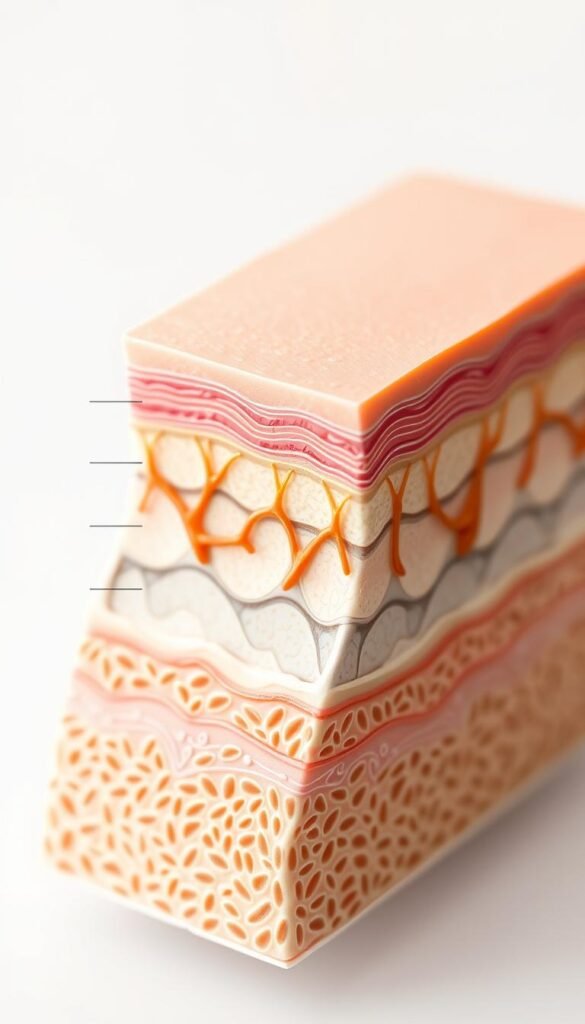
Think of your skin barrier as nature’s perfect security system. This invisible shield works day and night to protect skin from pollution, UV rays, and harsh weather. Without it, moisture escapes like water through a sieve, leaving skin parched and vulnerable.
I learned this truth the hard way. For years, I attacked my acne with harsh scrubs and strong acids. My skin became a battlefield – flaky yet oily, red but dull. A dermatologist finally explained: I’d been weakening my barrier while chasing quick fixes.
When functioning well, this protective layer:
Healthy Barrier
Compromised Barrier
Locks in hydration
Leads to moisture loss
Blocks pollutants
Allows irritants in
Maintains even texture
Causes roughness
The change came when I focused on skin health instead of cover-ups. Within days, my complexion transformed. Irritation faded. That tight, uncomfortable feeling vanished. My skin finally breathed again.
Your barrier determines how your skin interacts with the world. Strengthen it, and you create lasting radiance. Neglect it, and no serum can compensate. This isn’t just skincare – it’s health care for your body’s largest organ.
What is the Skin Barrier?
My skincare journey changed when I realized my complexion wasn’t just surface-level – it’s a living, breathing ecosystem. The skin barrier works like an intelligent security system, balancing protection with permeability. Imagine wrapping yourself in a custom-made shield that knows when to lock in hydration and when to block environmental threats.
Definition and Function of the Epidermis
The magic happens in your epidermis’ outermost layer – the stratum corneum. Under magnification, it resembles a brick wall. The “bricks” are flat corneocyte cells, while the “mortar” consists of ceramides, cholesterol, and fatty acids. This architecture:
Seals in moisture
Filters out pollutants
Maintains microbial balance
Key Components: Ceramides, Lipids, and Natural Moisturizers
Here’s what transformed my approach: Ceramides make up nearly half of your barrier’s composition. They partner with lipids to create flexible seals between skin cells. My dermatologist explained it like caulking windows – without these fatty compounds, hydration escapes and irritants invade.
Your body’s genius doesn’t stop there. Filaggrin proteins break down into amino acids that become natural moisturizing factors (NMFs). Combined with your skin’s slightly acidic pH (4.1-5.8), this creates an environment where healthy microbes thrive while pathogens struggle.
Recognizing Signs of a Damaged Skin Barrier
My bathroom mirror became a source of dread during my barrier crisis. What began as occasional dryness spiraled into a constellation of warning signs I couldn’t ignore. Learning to read these signals changed everything – your skin speaks volumes when its defenses falter.
Visible Symptoms: Dryness, Redness, and Flakiness
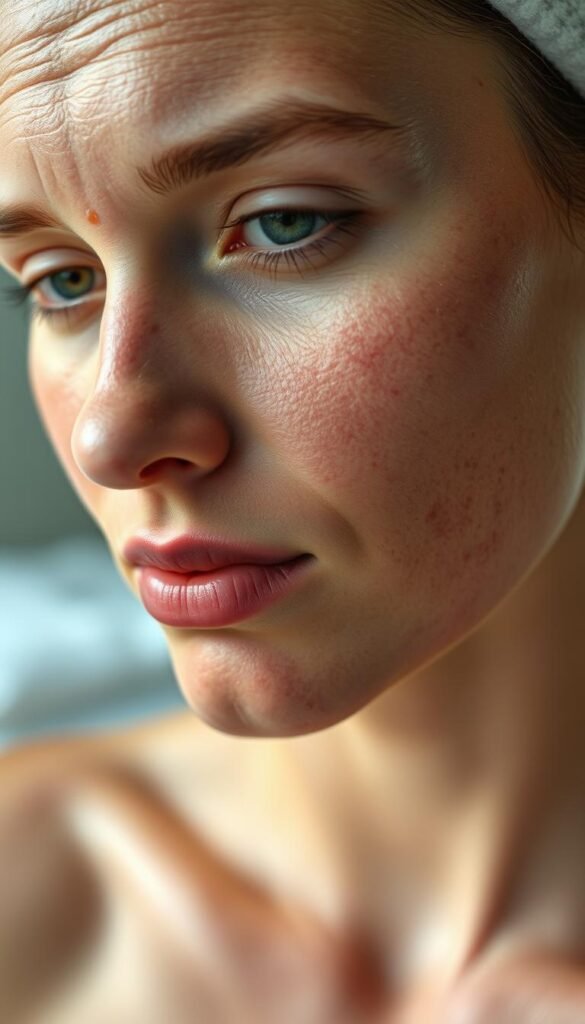
The first red flag? My face felt like parchment paper. No cream could quench its thirst. Then came the crimson patches – angry maps tracing where my barrier had cracked. Flakes appeared like snowdrifts, clinging to my cheeks despite gentle washing.
Texture told its own story. Running my fingers across my jawline revealed sandpaper roughness where silk once lived. My dermatologist nodded knowingly: “When skin loses its smoothness, it’s waving a white flag.”
Determining When Your Skin is Compromised
True reckoning came when my trusted serum burned like acid. That’s the cruel irony of skin barrier damage – products meant to help become tormentors. Breakouts erupted in bizarre places: temples, neck, even eyelids. My sensitive skin developed a hair-trigger reactivity, mistaking hydration for hostility.
Three clues revealed the depth of my damage:
Itchiness persisting through the night
Foundation clinging to flaky patches
Wind causing stinging tears
For those with eczema or acne-prone skin, these symptoms often escalate faster. My lesson? Listen before your skin screams. Every tingle and tightness whispers secrets about your body’s frontline defense.
My Personal Journey to Skin Barrier Repair
The mirror reflected back a stranger – raw cheeks, angry patches, and a texture resembling cracked desert earth. My skin barrier wasn’t just damaged; it had declared mutiny. Like 62% of Americans who over-treat their skin, I’d become my own worst enemy through endless product cycling.
Initial Challenges and Breakthroughs
Week one felt like betrayal. Despite using gentle cleansers and ceramide creams, my skin erupted in tiny whiteheads. “This is the rebound effect,” warned Dr. Emma Craythorne’s voice in my head.
“When the barrier starts healing, trapped impurities surface.”
Three gut-wrenching realities emerged:
Morning tightness lasted longer than my first coffee
Favorite moisturizer burned like alcohol on paper cuts
Windy walks left me blotchy for hours
The turning point came during week three. One Tuesday morning, I realized my pillowcase wasn’t dotted with flakes. My routine hadn’t changed – but my skin finally responded. Products stopped stinging, revealing what experts mean by “repair skin barrier” miracles.
Tracking progress became my lifeline. Weekly photos showed gradual fading of redness, while my journal exposed emotional patterns – stress flare-ups mirrored work deadlines. This data proved what dermatologists preach: damage reversal requires time and ruthless consistency.
Now I understand true barrier healing isn’t linear. It’s daily whispers of progress drowned out by life’s noise, until suddenly – your reflection smiles back.
Adjusting My Skincare Routine for Repair
Staring at my bathroom shelf cluttered with half-empty bottles, I realized less might truly be more. My skin’s rebellion demanded radical simplicity – a concept foreign to my former 10-step philosophy. Facialist Katharine Mackenzie Paterson’s advice became my mantra: “Three steps can do what thirty cannot when your barrier’s broken.”
Simplifying My Product Line
I boxed up serums like a breakup – each vial whispering promises it couldn’t keep. My new routine became military-precise: cleanse, moisturize, protect. Dr. Anjali Mahto’s warning about manual exfoliation echoed as I swapped gritty scrubs for lukewarm water rinses.
Choosing Gentle, Hydrating Formulas
The iS Clinical Cream Cleanser became my liquid gold. Unlike foaming washes that left my skin squeaky-dry, this milky formula dissolved impurities without stripping. Paired with La Roche-Posay’s Toleriane moisturizer, my barrier began rebuilding its armor.
Avoiding the Overuse of Actives
Quitting actives felt like abandoning gym routines – would I lose progress? Yet within 72 hours, my complexion stopped burning. Without retinoids and acids disrupting its rhythm, my skin focused energy on repair rather than defense.
This minimalist approach taught me that healing thrives in empty spaces. By removing rather than adding, I created room for my body’s wisdom to shine. Now, ingredient lists get scanned like nutrition labels – every component must earn its place in my routine.
7 Ways to Heal a Damaged Skin Barrier in One Week
Rebuilding my complexion’s defenses felt like solving a puzzle where every piece mattered equally. Through trial and error, I discovered seven interconnected tactics that work like architectural supports for your skin barrier. These methods form a daily blueprint – not just quick fixes, but lasting solutions.
An Overview of My 7 Key Strategies
My approach starts with ruthless simplification. I cleared my vanity of every non-essential product, following expert tips about letting skin reset. Hydration became strategic – layering thin-to-thick textures created moisture traps my parched complexion desperately needed.
Strategy
Focus
Key Benefit
Routine Simplification
Reduce product overload
Minimizes irritation
Hydration Layering
Moisture retention
Prevents water loss
Ingredient Targeting
Ceramides & fatty acids
Rebuilds structure
Environmental Armor
Pollution protection
Shields from damage
Nighttime became my secret weapon. Applying reparative creams during skin’s natural renewal cycle accelerated healing. Gentle cleansing techniques – think lukewarm water and pat-dry motions – prevented further stress.
Consistency turned the tide. By day five, my mirror showed fewer flakes. By week’s end, that raw tightness faded into memory. This journey taught me that barrier repair isn’t about complexity – it’s about creating conditions where your skin’s brilliance can resurface.
Key Ingredients That Restore Your Skin Barrier
My breakthrough came when I decoded my skin’s nutritional needs. Like plants craving sunlight, compromised complexions hunger for specific building blocks. I learned to treat my skin barrier like a garden – nourish the soil, and flowers bloom naturally.
Ceramides and Fatty Acids: The Foundation
Ceramides became my brick-layers. These waxy lipids filled cracks in my barrier like mortar between stones. When paired with fatty acids from squalane and jojoba oil, they created flexible seals against moisture loss. My dermatologist compared them to grout – invisible but essential for structural integrity.
Hyaluronic Acid: The Hydration Hero
I mistook this humectant for simple hydration. Then I discovered its dual action. Hyaluronic acid doesn’t just attract water – it forms a protective veil over healing skin. Layered under ceramide creams, it became my morning dew – replenishing parched cells without overwhelming them.
Discovering the right mix of science-backed ingredients transformed my approach. Niacinamide calmed redness while reinforcing lipid production. Oat beta-glucan soothed like aloe on sunburn. Each component played a distinct role in my skin’s recovery symphony.
Healing isn’t about magic bullets. It’s choosing allies that speak your skin’s native language. When you fuel repair with precision, results follow – not in weeks, but sunrises.
FAQ
Why should I prioritize my skin barrier’s health?
I realized my skin barrier is like a shield—when it’s strong, my face stays hydrated, calm, and resilient. Without it, everything from pollution to harsh weather can trigger irritation, breakouts, or even eczema. Protecting it became non-negotiable for my glow.
How do I know if my skin barrier is damaged?
My skin screamed for help through redness, tightness, and flaky patches. If your moisturizer suddenly stings or makeup won’t sit right, listen closely—those are cries for a gentler routine and barrier-loving ingredients like ceramides.
Can I repair my skin barrier without overhauling my routine?
Absolutely! I started by cutting out harsh acids and swapping my foaming cleanser for a creamy one. Sometimes less truly is more. Focus on hydration, gentle layers, and products with fatty acids to rebuild lipids without chaos.
What ingredients should I hunt for in barrier-repair products?
Ceramides became my holy grail—they’re the glue holding my skin together. Hyaluronic acid locks in moisture, while squalane and niacinamide soothe irritation. Avoid alcohol-heavy formulas; they’ll undo your progress fast.
Will repairing my barrier make my acne worse?
I worried about this too! But stripping my routine actually calmed my breakouts. A damaged barrier can *cause* acne by letting bacteria in. Healing it with non-comedogenic oils like jojoba balanced my skin naturally.
How long until I see results?
Patience is key. My flakiness faded in 3 days, but full repair took a week. Consistency with lukewarm water rinses, fragrance-free serums, and SPF 30+ every morning sped things up. Trust the process—your skin knows what to do.
Can I still exfoliate while healing my barrier?
I paused all physical scrubs and chemical exfoliants for 7 days. Let your skin reset first! Once healed, reintroduce actives slowly—maybe once a week. Your future self will thank you for the breather.