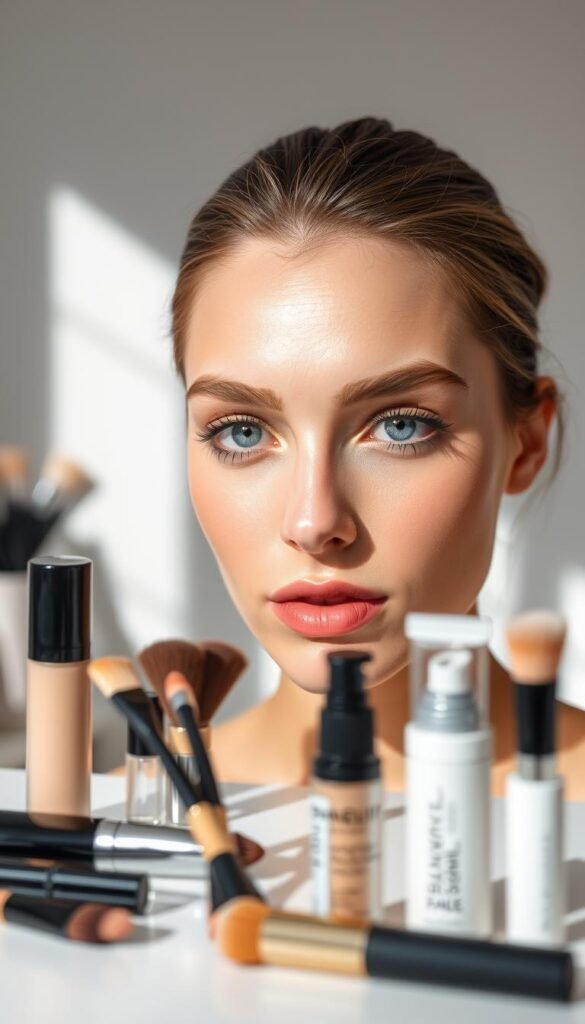
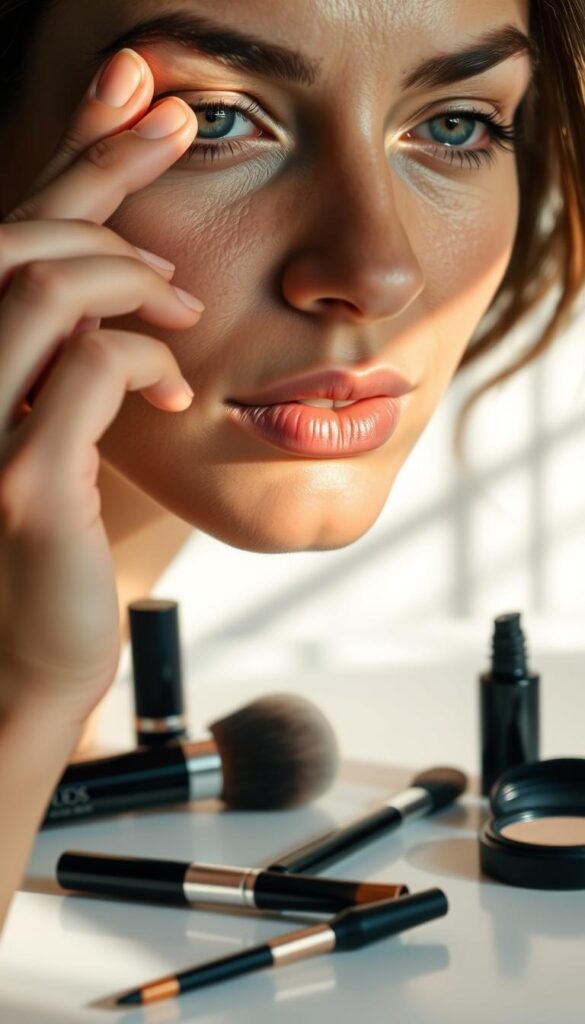
“Makeup should enhance your beauty, not mask it,” says legendary makeup artist Bobbi Brown. This philosophy perfectly captures the heart of mastering under-eye coverage. Those stubborn shadows beneath your eyes don’t have to define your look—or your confidence.
This Website contains affiliate links. That means I may earn a small commission if you purchase through my links, at no extra cost to you.
Dark circles are a universal struggle, whether they’re genetic souvenirs or signs of late nights. The delicate skin under your eyes demands more than just piling on concealer. Professional artists agree: strategic application beats heavy layers every time.
This guide reveals methods used backstage at fashion shows and on red carpets. You’ll learn how to brighten tired eyes while keeping your makeup looking fresh. The secret lies in understanding skin texture, light reflection, and color correction.
Key Takeaways
Technique matters more than product quantity for natural-looking results
Color correction neutralizes shadows before concealer application
Hydration prevents makeup from settling into fine lines
Lightweight formulas maintain the under-eye area’s delicate appearance
Proper blending creates seamless transitions between products
Professional methods adapt to different skin types and tones
Forget the cakey mess you might associate with heavy coverage. These approaches work with your skin rather than against it. Whether you’re battling blue-toned shadows or deep hollows, the right strategy can make you look refreshed in minutes.
Prepping the Eye Area: Cleansing, Hydrating, and Priming
Treating the delicate skin beneath your eyes requires the same care you’d give to fine silk. This fragile eye area demands hydration that absorbs completely, not just sits on the surface. “Think of skincare as laying railroad tracks for your makeup train,” advises celebrity artist Sarah Egan.
Effective Eye Cream Application for Under-Eye Hydration
Start with a chilled eye cream containing hyaluronic acid. The cooling effect reduces puffiness while plumping thirsty skin. Press – don’t rub – the product using your ring finger. Wait 5-7 minutes before applying makeup to prevent product pilling.
Facial oils work wonders for mature skin or dry climates. A single drop blended with your regular cream creates lasting moisture without greasiness. This step smooths fine lines, transforming the area into a receptive canvas.
The Role of Primer in Creating a Smooth Canvas
Primer acts like double-sided tape for your makeup. It fills microscopic grooves underneath eyes while giving concealer something to grip. Choose silicone-free formulas to avoid emphasizing texture.
Apply sparingly with a damp sponge for even distribution. Let it set for 60 seconds – perfect time to brew coffee! This barrier prevents makeup from sinking into creases, keeping your brightened look fresh through afternoon meetings or evening events.
7 Ways to Cover Dark Circles Without Looking Cakey
Bid farewell to panda eyes with techniques that prioritize subtlety over heavy layers. The secret lies in sequenced application – think of it as building a skin-friendly shield against shadows. “Every stroke should serve a purpose,” notes New York-based makeup artist Lina Lee.
Start with color correction tailored to your under-eye circles. Peach tones neutralize blue hues, while yellow combats purple undertones. Apply sparingly using a fingertip – the warmth helps blend pigments seamlessly into skin.
Next, choose a concealer slightly lighter than your foundation. Dab small dots along the orbital bone, then blend outward. This creates natural brightness without ghostly contrast. Let it set for 30 seconds before layering foundation over edges for unified makeup.
Step
Technique
Benefit
1
Prep with hydrating eye cream
Prevents product settling
2
Color correct with warm tones
Neutralizes shadows
3
Apply lightweight concealer
Brightens naturally
4
Set with translucent powder
Locks in coverage
The step-by-step approach lets you control coverage intensity. For deeper dark circles, build thin layers instead of one thick coat. Finish with a velvety powder applied using a tapered brush – this sets without dullness.
Remember: success comes from respecting the skin‘s delicate nature. Each makeup product should enhance, not overwhelm. With these methods, you’ll transform under-eye circles into proof of skill rather than fatigue.
Expert Makeup Techniques for a Natural Finish
The key to flawless under-eye coverage lies in mastering color theory and precise application. Like mixing paints on an artist’s palette, neutralizing shadows requires understanding complementary hues. Professional makeup artists approach this area with surgical precision – every dab serves a purpose.
Color Correcting Strategies: Peach, Orange, and Yellow Tones
Blue-gray shadows disappear under warm peach or orange color correctors. Deeper skin tones benefit from rich apricot shades, while fair complexions glow with soft salmon. Purple undertones? A swipe of buttercup yellow makes them vanish.
Undertone
Corrector Shade
Skin Tone Match
Application Tip
Blue/Gray
Peach/Orange
Light to Deep
Pat gently with ring finger
Purple
Yellow
All Complexions
Blend outward toward temples
“Using white-based correctors on deep circles is like frosting mud,” warns celebrity artist Mario Dedivanovic. Always match intensity – pale yellows for fair skin, golden variants for olive or ebony tones.
Concealer Application Tips: Using a Minimal Amount for Maximum Effect
Cream concealers outperform liquids for dark under-eye areas. Scoop a grain-sized small amount onto your hand. Warm it between fingers before tapping – never dragging – across shadows.
Set with translucent powder using a fluffy brush. Press – don’t sweep – to lock in coverage without disturbing layers beneath. This preserves that “I woke up like this” freshness while banishing fatigue.
Conclusion
Mastering under-eye coverage transforms makeup from a mask to a confidence enhancer. While translucent powder and color correction prevent creasing, true success lies in embracing your skin’s natural texture. “Beauty thrives where perfection ends,” says celebrity artist Pat McGrath.
Use the baking method sparingly – a light dusting sets makeup without dryness. Lock it in with setting spray drawn in X shapes across your face. This pro step ensures all-day wear while maintaining your skin’s glow.
Remember: visible pores or faint lines under eyes don’t mean failure. They’re proof of authentic skin that moves and breathes. Focus on enhancing what you love rather than erasing perceived flaws.
With these proven techniques, you’ll spend less time perfecting and more time living. Keep practicing – radiant results grow from patience, not pricey products. Your brightest beauty asset? The self-assurance that comes from skillfully working with your unique features.
FAQ
How does hydration help reduce the appearance of dark circles?
Hydrated skin plumps up, minimizing shadows caused by thin under-eye areas. Using a lightweight eye cream with ingredients like hyaluronic acid or caffeine boosts moisture and improves texture, creating a smoother base for makeup.
What color corrector works best for covering dark under-eye circles?
Peach or orange tones neutralize blue/purple hues in deeper skin tones, while salmon or pink shades suit lighter complexions. Yellow correctors brighten sallow undertones. Always blend gently with a small brush for seamless coverage.
How can I avoid creasing when applying concealer?
Start with a tiny amount of product and build gradually. Use a damp beauty sponge to press it into the skin, then set lightly with translucent powder. Avoid heavy layers, which settle into fine lines.
Why is primer important for under-eye makeup?
Primer smooths texture, blurs imperfections, and helps makeup adhere better. It prevents concealer from slipping or fading, ensuring your look stays fresh and natural all day.
Can I use the same concealer shade for my under-eyes and face?
Opt for a concealer one shade lighter than your foundation to brighten the eye area. However, avoid going too light—this can create a stark contrast and draw attention to darkness.
What’s the best way to set makeup under the eyes without dryness?
Use a finely milled translucent powder and a small fluffy brush. Press—don’t swipe—to lock in coverage. For dry skin, try a hydrating setting spray instead to avoid emphasizing texture.
Are there long-term solutions to reduce dark circles while using makeup?
Pair your routine with skincare like vitamin C serums or retinol eye creams to boost collagen and fade pigmentation. Always apply SPF daily to prevent sun-related discoloration.