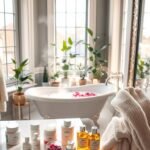
Did you know store-bought bath salts often cost $50+ despite containing less than $3 worth of ingredients? Luxury skincare doesn’t require celebrity-level budgets—just a few pantry staples and 15 minutes of prep time. Imagine transforming your bathroom into a zen retreat where every product smells like fresh eucalyptus or calming lavender.
This Website contains affiliate links. That means I may earn a small commission if you purchase through my links, at no extra cost to you.
Customizing your beauty routine lets you skip questionable additives while embracing exactly what your skin loves. Oatmeal becomes a soothing scrub. Coconut oil morphs into a rich body butter. You’ll craft products that rival high-end brands without the markup.
Better yet, DIY skincare turns daily routines into mindful rituals. Light a candle, play ambient music, and let your homemade creations transport you to that tranquil spa headspace. The secret? It’s not just about the ingredients—it’s about designing moments that nourish both your complexion and mental well-being.
Key Takeaways
Commercial spa products often have 10x markups compared to DIY versions
Natural ingredients like honey and oats deliver professional-grade results
Custom blends let you avoid skin-irritating chemicals
Self-care rituals boost skincare effectiveness through relaxation
Most recipes require fewer than 5 affordable ingredients
Unlock the Secrets of DIY Spa Skincare
Ever wondered why spa visits feel so rejuvenating? It’s all about the environment. Transforming ordinary spaces into relaxation zones turns daily care into something extraordinary. Your bathroom or bedroom corner can become a sanctuary with just a few intentional tweaks.
Setting Up Your At-Home Spa Environment
Start by claiming a quiet area free from distractions. A cleared bathroom counter or cozy nook works perfectly. Soften harsh lighting with candles or dimmers—these small changes signal your brain to slow down. Add calming playlists featuring piano melodies or ocean waves to deepen the mood.
Scents shape experiences more than you might realize. Diffuse lavender for evening wind-downs or citrus blends for morning refreshment. Keep plush towels and tools like facial rollers nearby to avoid breaking your zen moment. These elements work together to create a professional-grade retreat without leaving home.
The Role of Ambience and Self-Care
Ambience isn’t just decoration—it’s emotional architecture. Wearing a special robe or placing fresh eucalyptus in your space makes routines feel sacred. Studies show rituals with sensory cues (like specific smells or sounds) boost relaxation by 40% compared to rushed routines.
Prioritize what makes you feel nurtured. Maybe it’s warm Himalayan salt stones during foot soaks or crystals arranged beside your bath. These personal touches turn basic skincare into soul-care moments that recharge both body and mind.
Understanding the Spa Experience and the Benefits of DIY Skincare
Ancient Romans knew the secret: bathing wasn’t just about cleanliness. Their elaborate thermal baths blended physical rejuvenation with social connection and mental clarity. Today’s spa culture carries this legacy forward, merging healing traditions with modern self-care science.
The Importance of Relaxation and Mindfulness
Soaking in warm water does more than soften skin. Studies show it triggers a 40% increase in relaxation hormones while slowing heart rates to meditative levels. This biological shift lets your body focus on repair rather than stress responses.
Mindful rituals amplify these benefits. Lighting a candle before applying a face mask signals your nervous system to unwind. Deep breathing during exfoliation oxygenates cells for brighter complexions. It’s care that works from the inside out.
Why Natural Ingredients Matter
Your skin absorbs 60% of what you put on it. Commercial products often contain pore-clogging petroleum derivatives or synthetic fragrances. DIY alternatives use food-grade components like shea butter and jojoba oil that nourish without hidden toxins.
Nature’s pharmacy offers gentle solutions. Oatmeal calms inflammation. Honey fights bacteria. You control every element, creating personalized treatments that respect both your skin and values. No compromises, just radiant results.
6 How to Make Skincare at Home That Smells Like a Spa
Crafting professional-grade treatments begins with smart ingredient pairings. Certain combinations unlock enhanced benefits – think honey’s antibacterial power boosted by lemon’s brightening acids. Our six signature recipes blend science and sensory pleasure for head-to-toe care.
This comparison chart shows how each formula addresses specific needs while delivering aromatic luxury:
Product
Key Ingredients
Skin Benefit
Signature Scent
Cleansing Balm
Jojoba oil, beeswax
Dissolves impurities
Vanilla & bergamot
Face Polish
Oat flour, almond oil
Gentle exfoliation
Lemon & ginger
Body Butter
Shea, coconut oil
24-hour moisture
Lavender & chamomile
Detox Mask
Bentonite clay, ACV
Purifies pores
Peppermint & eucalyptus
Foot Soak
Sea salt, baking soda
Softens calluses
Rosemary & lime
Texture matters as much as components. Whipped body butter needs precise oil ratios to stay fluffy. Facial scrubs require ultra-fine particles to prevent microtears. We’ve tested each method for safety and effectiveness.
Customization turns basic DIY projects into personal favorites. Swap almond oil for grapeseed if you’re acne-prone. Add rose petals to bath salts for visual flair. Your creations should reflect both your skin’s needs and your idea of relaxation.
When you understand how ingredients interact, every scoop of sugar or drop of essential oil becomes intentional. That knowledge transforms simple mixtures into spa-worthy solutions that pamper your body and senses equally.
DIY Spa Ingredients and Essential Oils for a Relaxing Ritual
Your nose knows when relaxation begins – certain scents can instantly transport you to spa mode. Essential oils act as both aromatic enhancers and skin-nourishing agents, making them the ultimate multitaskers in homemade care. Let’s explore how to harness their power safely and effectively.
Choosing Your Essential Oils
Match oils to your desired vibe. Lavender and chamomile create bedtime calmness, while citrus blends like bergamot spark morning energy. For breakout-prone skin, tea tree oil’s antibacterial properties help control excess sebum without harsh chemicals.
Consider this quick-reference guide for popular options:
Oil Type
Best For
Key Benefits
Blending Tips
Lavender
Stress relief
Calms nerves, clears pores
Mix with coconut oil
Tea Tree
Oily skin
Fights bacteria
Dilute with jojoba
Eucalyptus
Congestion
Opens airways
Pair with peppermint
Bergamot
Mood boost
Uplifting scent
Combine with shea
Chamomile
Sensitive skin
Reduces redness
Use in facial mists
Exploring Natural Ingredient Benefits
Carrier oils like almond or grapeseed help dilute potent essential oils while adding moisture. Oatmeal soothes irritation – perfect for sensitive types. Always patch-test new blends on your inner arm before full application.
Pro tip: Store oils in dark glass bottles away from heat. This preserves their therapeutic properties longer. With smart pairings, you’ll create spa magic that pampers skin and senses equally.
Easy At-Home Spa Recipes: Bath Bombs, Body Scrubs, and Face Masks
Your bathroom cabinet holds endless possibilities for crafting personalized spa experiences. With three versatile formulas, you’ll turn basic ingredients into sensory escapes that rival boutique purchases. Let’s explore how to blend practicality with indulgence.
Customizing Your Bath Bomb for Every Mood
Transform ordinary baths into mood-boosting rituals. Combine baking soda, citric acid, and coconut oil as your base. Then add personality:
Mood
Add-Ins
Scent Profile
Skin Benefit
Stress Relief
Lavender buds + chamomile oil
Floral & calming
Reduces tension
Morning Energy
Lemon zest + peppermint oil
Citrus & fresh
Stimulates circulation
Romantic Evening
Rose petals + sandalwood oil
Warm & spicy
Softens skin
Creating an Exfoliating Sugar Scrub
Mix 1 cup white sugar with ½ cup almond oil for a basic body polish. Add 10 drops essential oil for fragrance. “Sugar’s natural humectant properties lock in moisture better than synthetic exfoliants,” notes dermatologist Dr. Emily Torres.
For emulsified versions, blend in 1 tbsp beeswax. This creates a lotion-like texture that melts on contact with water. Bonus: These scrubs biodegrade completely, unlike plastic microbead products.
Formulating Nourishing Face Masks
Target specific concerns with kitchen staples:
Hydration Boost: Honey + avocado + oatmeal
Pore Purifier: Bentonite clay + apple cider vinegar
Sensitive Skin Soother: Greek yogurt + cucumber juice
Always avoid granular scrubs on facial skin. Instead, use gentle clays or lactic acid from dairy to exfoliate without irritation.
Honey-Based Skincare Recipes: Sugar Scrubs and Moisturizing Treatments
Nature’s golden elixir does triple duty in homemade skincare recipes. Raw honey delivers hydration, fights bacteria, and brightens dull complexions through its unique blend of enzymes and antioxidants. These formulas let you harness its sticky-sweet magic in practical yet luxurious ways.
Classic Honey Sugar Scrub Techniques
Combine ½ cup granulated sugar with ¼ cup raw honey for a gentle exfoliator. The sugar sloughs off dead cells while honey traps moisture against your skin. Add lemon juice for extra brightness – its vitamin C boosts collagen production.
Upgrade this base with ¼ cup melted coconut oil and 5 drops lavender essential oil. The oil adds deep nourishment, creating a healing treatment for dry elbows or knees. Store in airtight jars to maintain freshness.
Honey & Turmeric Anti-Inflammatory Mask Insights
Mix 1 tablespoon honey with 1 teaspoon turmeric powder for a vibrant mask. Turmeric’s curcumin reduces redness, while honey’s antibacterial properties prevent breakouts. Leave on for 20 minutes before rinsing with cool water.
Pro tip: Apply over a sink to avoid turmeric stains. This powerhouse duo works wonders after sun exposure or during seasonal skin sensitivity. Your complexion glows without costly serums.
FAQ
Can I create a spa-like atmosphere at home without expensive tools?
Absolutely! Start with soft lighting, calming music, and natural scents like lavender essential oil. Use plush towels, warm water, and simple ingredients like coconut oil or green tea to enhance relaxation. The key is focusing on mindfulness and sensory details.
What essential oils work best for sensitive skin in DIY skincare?
Lavender essential oil is gentle and soothing, making it ideal for sensitive skin. Chamomile and rosehip oil also reduce redness and irritation. Always dilute oils with a carrier oil like jojoba or sweet almond oil to avoid reactions.
How can I customize a sugar scrub for dry skin?
Mix brown sugar with coconut oil or honey for intense moisture. Add a few drops of vanilla or orange essential oil for a refreshing scent. For extra healing properties, stir in a teaspoon of aloe vera gel or vitamin E oil.
Are honey-based masks suitable for acne-prone skin?
Yes! Raw honey has antibacterial properties that fight breakouts. Pair it with turmeric or tea tree oil for an anti-inflammatory boost. Avoid scrubs with large granules if you have active irritation—opt for gentle, non-comedogenic ingredients.
Can I reuse household items for DIY spa treatments?
Definitely. Green tea bags can reduce puffiness around the eyes, while oatmeal makes a calming face mask. Coffee grounds are great for exfoliating body scrubs, and yogurt adds probiotics to moisturizing routines.
How do I preserve homemade skincare products?
Store recipes without preservatives in airtight containers in the fridge. Use within 1-2 weeks. For longer shelf life, add vitamin E oil or opt for anhydrous mixes like body butter or lip balm with beeswax.