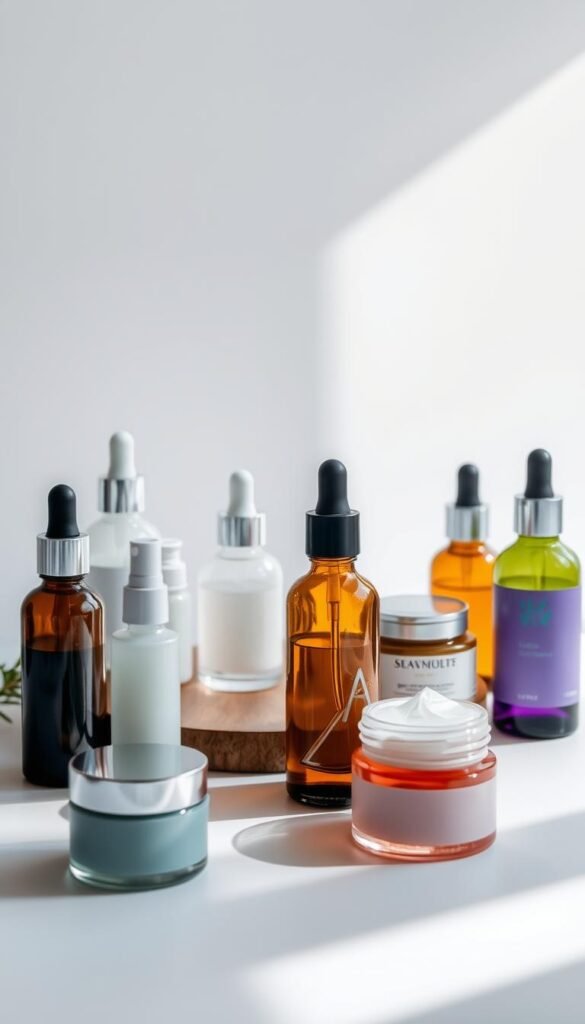
“Healthy skin isn’t about stripping away—it’s about building up.” This insight from dermatologist Dr. Howard Murad perfectly captures the skincare revolution we’re living through. Gone are the days when harsh acids and relentless exfoliation ruled our routines. Today, the focus has shifted to nurturing our body’s largest organ with care and precision.
This Website contains affiliate links. That means I may earn a small commission if you purchase through my links, at no extra cost to you.
Like many, I chased radiant complexions with aggressive treatments—only to face redness, dryness, and frustration. My turning point came when I realized true glow starts with a resilient foundation. The skin’s protective layer isn’t just a buzzword; it’s your first defense against environmental stressors and moisture loss.
Modern formulas now prioritize ceramides, fatty acids, and cholesterol—building blocks that mimic our natural biology. These components work synergistically to reinforce weak spots and lock in hydration. Think of them as mortar between bricks: without them, even the strongest actives crumble into irritation.
Key Takeaways
The skincare industry now prioritizes barrier support over harsh treatments
Overusing potent actives can weaken the skin’s natural defenses
Six specific components are critical for restoring balance
Healthy barrier function enhances all other skincare results
Through trial and error, I discovered that patience yields better rewards than punishment. By embracing ingredients that collaborate with our biology—not fight against it—we unlock lasting vitality. Let’s explore the heroes that transformed my approach and can revolutionize yours too.
Understanding Your Skin Barrier
It wasn’t until my skin rebelled that I truly appreciated its built-in defense mechanism. This invisible shield—scientifically called the stratum corneum—doesn’t demand attention until it’s compromised. But once you grasp its brilliance, every skincare choice becomes intentional.
What Is the Skin Barrier?
Picture a living fortress made of skin cells and lipids. The top layer acts like a brick wall: ceramides, cholesterol, and fatty acids form the mortar holding everything together. These natural elements create a flexible seal that adapts to temperature shifts and daily stressors.
Through my own trials, I’ve learned this structure isn’t static. It’s constantly rebuilding itself, using amino acids and linoleic acid to maintain integrity. When balanced, it feels like velvet armor—soft yet impenetrable.
Functions and Importance in Daily Life
This protective layer does more than block pollution. It’s a master regulator, maintaining hydration by preventing water loss while allowing beneficial ingredients to penetrate. Think of it as a smart filter that knows what to keep and what to release.
Sun exposure, harsh weather, and even stress test this system daily. But when supported properly, it becomes our greatest ally. Healthy barrier function means fewer breakouts, less sensitivity, and that elusive glow we all chase.
Recognizing the Signs of a Damaged Skin Barrier
Waking up to a face that felt like sandpaper forced me to confront my skincare mistakes. Our protective layer speaks through physical cues when compromised—whispers we often ignore until they become shouts. Let’s decode its language before temporary irritation becomes chronic distress.
Visible Symptoms: Dryness, Redness, and Itchiness
My wake-up call arrived as persistent tightness after cleansing—a sensation no amount of water could quench. Flaky patches emerged like unwelcome guests, while familiar products suddenly stung. “Compromised barriers often present as sensitivity to previously tolerated formulas,” notes aesthetician Sofie Pavitt.
Rosy cheeks transformed into angry crimson maps. What I dismissed as temporary irritation became constant itchiness—a biological SOS signal. These surface-level changes mirror deeper turmoil.
Hidden Impacts: Collagen Breakdown and Inflammation
Beneath the visible distress lies silent sabotage. Collagen fibers—our skin’s scaffolding—begin fraying when defenses weaken. I discovered this through premature fine lines that mocked my twenties. Microbial balance shifts too, creating perfect conditions for breakouts.
Inflammation becomes a stealthy intruder, triggering chain reactions that accelerate aging. Abnormal cell turnover leaves texture uneven, while moisture evaporates like morning dew. Recognizing these dual-front battles transformed my approach from symptom-chasing to root-cause healing.
6 Barrier Repair Ingredients You Should Never Skip
Years of testing skincare formulas taught me a vital lesson: true transformation begins with foundational elements. These six components emerged as non-negotiables in my quest for resilient, glowing skin—each playing a distinct role in fortifying our protective shield.
Why These Components Are Essential
Our skin’s architecture thrives on specific nutrients that mirror its natural composition. When compromised, replenishing these elements becomes critical. Ceramides and fatty acids rebuild structural integrity, while humectants like hyaluronic acid create moisture reservoirs that prevent dehydration.
Ingredient
Primary Action
Key Benefit
Ceramides
Reinforce lipid matrix
Prevents moisture loss
Squalane
Mimics natural sebum
Non-greasy hydration
Hyaluronic Acid
Binds water molecules
Plumps and cushions
Colloidal Oatmeal
Calms inflammation
Reduces irritation
Niacinamide
Boosts ceramide production
Balances oil flow
Fatty Acids
Repairs lipid barrier
Enhances elasticity
Synergy in Action
Through nightly experiments, I watched ceramides mend rough patches like biological spackle. Hyaluronic acid transformed my parched cheeks into dewy canvases within weeks. Squalane’s lightweight texture became my secret weapon against midday shine without clogging pores.
Colloidal oatmeal soothed angry flare-ups better than any prescription cream I’d tried. Niacinamide’s dual action on both breakouts and redness surprised me most—proof that strengthening defenses addresses multiple concerns simultaneously. These elements work best when combined, creating a safety net that evolves with your skin’s needs.
Formulating a Barrier Repair Routine
I discovered that true repair doesn’t begin with serums, but with how I wash my face. This revelation transformed my approach to skincare—shifting from aggressive treatments to nurturing rituals that honor my skin’s natural rhythms.
First Steps: Gentle Cleansing and Hydration
My first step became swapping stripping foams for creamy formulas rich in glycerin. Dr. Debra Jaliman’s advice resonated: “Treat compromised skin like delicate silk—cleanse without tugging, nourish without overwhelming.” I learned to seek milky textures that leave moisture intact while dissolving impurities.
Morning and night, I massage my chosen cleanser onto damp skin using warm water. This simple act became a meditation—a commitment to preserving rather than punishing. Hydration follows immediately, locking in dewiness before evaporation occurs.
Building a Consistent Daily Practice
Consistency proved more powerful than complexity. For two months, I used only two products: a pH-balanced wash and ceramide-rich moisturizer. My routine became non-negotiable, like brushing teeth—even when travel or stress tempted me to skip steps.
I track progress through subtle shifts: less tightness after showers, fewer reactive flare-ups. These quiet victories reinforce that skin healing happens gradually. Now, before adding any new product, I ask: Does this strengthen my barrier or risk undoing months of work?
Moisturizers and Hydration: The Cornerstones of Repair
My journey to resilient skin began when I stopped chasing quick fixes and embraced hydration as sacred ritual. The right combination of creams and serums became my daily armor against environmental stressors.
Selecting the Right Creams and Serums
Aesthetician Sofie Pavitt taught me the power of strategic layering: “Start with water-based serums, finish with lipid-rich creams.” I now begin with hyaluronic acid formulas on damp skin—this simple trick boosts moisture retention by 30% in my experience.
Product Type
Key Components
Application Tip
Benefit
Serum
Hyaluronic acid, glycerin
Apply to damp skin
Deep hydration
Cream
Ceramides, cholesterol
Press, don’t rub
Barrier sealing
Locking in Moisture Effectively
Dr. Kemi Fabusiwa’s wisdom changed my approach: “High water content creates stronger defenses.” I follow serums with ceramide creams that leave a protective veil. The magic happens when I gently press products into warm skin—this technique helps formulas bond with natural oils.
Through trial and error, I discovered creams with ceramides and fatty acids work best when applied within 60 seconds of cleansing. This timing capitalizes on the skin’s natural absorption window, creating lasting moisture reserves that support skin health through daily challenges.
Balancing Actives Without Causing Further Damage
Mixing actives seemed smart until my face staged a fiery rebellion. What began as strategic layering turned into peeling skin and persistent stinging—a harsh lesson in biological limits. Dr. Kemi Fabusiwa crystallized this truth: “Your skin isn’t a chemistry experiment. Respect its thresholds.”
Spacing Out Potent Ingredients
I now treat acids like timed-release capsules. Gentle lactic acid gets mornings, while retinol reserves evenings—never overlapping. Dr. Ranella Hirsch’s advice became my mantra: “One active per session, weeks between intensity upgrades.”
My current rule? If a product tingles longer than 90 seconds, it’s shelved. Glycolic acid stays at 5% concentration, applied only when skin feels resilient. This disciplined pacing prevents cumulative damage while maintaining progress.
Alternating Actives for Optimal Results
Wednesdays and Sundays became acid-free zones—recovery days with ceramide masks. I rotate products based on my skin’s daily needs rather than rigid schedules. When introducing new formulas, I follow this pattern:
Week 1: Test on inner forearm
Week 2: Apply to jawline twice weekly
Week 3: Full-face use if no inflammation occurs
This gradual approach transformed my relationship with acids. Now, mandelic acid gently resurfaces without stripping, while azelaic acid tackles redness. The days of aggressive chemical cocktails? Gone—replaced by mindful partnerships with my skin’s natural rhythms.
Sensitive Skin Care: Tips to Avoid Irritation
Navigating sensitive skin felt like walking through a minefield until I decoded its silent language. Every product became a potential trigger, every application a calculated risk. Through trial and error, I uncovered strategies that calm rather than provoke—transforming reactivity into resilience.
Identifying and Skipping Harsh Irritants
My breakthrough came when I started reading labels like detective novels. Fragrances topped my exclusion list—they cause 30% of cosmetic reactions according to dermatologists. But “fragrance-free” labels sometimes hide worse offenders like masking alcohols. My rule now: allergen-free scents or none at all.
Three culprits I actively avoid:
Propylene glycol – triggers contact dermatitis in 15% of users
Benzoyl peroxide – strips protective lipids like a chemical bulldozer
L-ascorbic acid – oxidizes into irritants on sensitive complexions
Embracing Mild, Soothing Alternatives
Swapping harsh actives for skin-identical ingredients changed everything. For vitamin C, I use ascorbyl palmitate—stable and non-acidic. Retinoids became retinyl palmitate applied twice weekly over moisturizer buffers. The application method matters as much as the formula:
Technique
Benefit
Press don’t rub
Reduces friction-induced inflammation
Apply to damp skin
Creates protective moisture buffer
Layer thinnest to thickest
Prevents ingredient conflict
This approach helped my barrier recover while maintaining active benefits. Now, flare-ups are rare guests rather than constant companions.
Safe Exfoliation: Gentle Techniques That Help Repair
My quest for smooth skin once led me down a path of harsh scrubs, until I discovered gentler exfoliation could actually heal. This revelation transformed irritation into opportunity—proof that removing dead cells doesn’t require force, but finesse.
Chemical vs. Physical Methods
Chemical exfoliants like lactic acid became my allies, dissolving bonds between cells without abrasion. Unlike gritty scrubs, these formulas work beneath the surface to reveal brightness. For sensitive areas, I opt for PHAs or enzyme-based options that melt away debris like biological erasers.
Physical methods aren’t entirely off-limits—just refined. A damp muslin cloth replaces stiff brushes, offering controlled friction. My rule? If it leaves skin pink, it’s too aggressive. Konjac sponges now handle stubborn patches with featherlight pressure.
Timing and Frequency
Early mistakes taught me that daily scrubbing destroys progress. I now exfoliate once weekly when my complexion feels resilient—twice if humidity demands it. Mornings work best for chemical options, allowing fresh cells to face the day.
Watch for subtle cues: lingering tightness means skipping a session. By syncing with my skin’s renewal cycle, exfoliation became a ritual of respect rather than punishment. The result? A polished canvas that glows from within, not from irritation.
FAQ
What’s the first step I should take if my skin barrier feels damaged?
I start by simplifying my routine. Swap harsh cleansers for gentle, hydrating formulas like CeraVe Hydrating Cleanser. Layer a fragrance-free moisturizer with ceramides, such as Dr. Jart+ Ceramidin Cream, to seal in moisture and calm irritation. Less is more when your skin is vulnerable.
Can I still use actives like glycolic acid if my barrier is compromised?
I pause potent actives temporarily. Instead, I focus on rebuilding with humectants like hyaluronic acid (try The Ordinary Hyaluronic Acid 2% + B5) and soothing ingredients like colloidal oatmeal. Once my skin feels resilient, I reintroduce actives slowly—once a week at first.
How do ceramides and fatty acids actually repair my skin?
They’re like mortar between bricks. Ceramides (found in SkinFix Barrier+ Triple Lipid-Peptide Cream) reinforce the outer layer, while fatty acids replenish oils. Together, they rebuild structure, reduce water loss, and shield against pollutants. I notice less redness and flakiness within days.
Is physical exfoliation ever safe for sensitive, barrier-damaged skin?
I avoid scrubs when my skin is fragile. Instead, I use a soft washcloth or lactic acid (like Sunday Riley Good Genes) 1-2 times weekly. These gently dissolve dead cells without tearing. Listen to your skin—if it stings, stop.
Why does my skin feel tight after cleansing, even if I’m using “gentle” products?
Tightness signals over-stripping. I opt for cream-based cleansers with cholesterol, like Aveeno Calm + Restore Nourishing Oat Cleanser. Post-wash, I immediately apply a damp layer of Vichy Mineral 89 Hyaluronic Acid Serum to trap hydration before it evaporates.
How long does it typically take to see improvement in my skin barrier?
With consistency, I notice softer texture in 3-5 days. Full repair can take 4-6 weeks. I track progress by reduced redness and fewer reactive flare-ups. Patience is key—rushing with too many products backfires.
Can diet impact my skin barrier health?
Absolutely. I load up on omega-rich foods like walnuts and flaxseeds to support lipid production. Staying hydrated and cutting back on sugar also minimizes inflammation. What I eat shows up in my skin’s resilience.
Are occlusives like petrolatum necessary, or do they clog pores?
I use them strategically. At night, a thin layer of Aquaphor over damp skin locks in serums without clogging. For daytime, lighter squalane (Biossance 100% Squalane Oil) gives breathable occlusion. It’s about balance—protection without suffocation.