“Your skin is a reflection of your relationship with balance – fight it, and it fights back. Work with it, and it becomes your ally.” While the author of this wisdom remains unknown, its truth resonates with anyone struggling with excess oil production. For years, society labeled oily skin as a flaw to eliminate. But what if we’ve been approaching it wrong?
This Website contains affiliate links. That means I may earn a small commission if you purchase through my links, at no extra cost to you.
Research from the Mayo Clinic reveals a paradox: oily skin naturally resists wrinkles better than dry skin. Your sebum acts like a built-in moisturizer, shielding against premature aging. The problem arises when overproduction clogs pores, creating a battleground for breakouts. Stripping away natural oils only triggers more oil secretion – a vicious cycle that leaves skin irritated and inflamed.
The solution lies in strategic harmony. Imagine products that gently manage shine while respecting your skin’s protective mechanisms. This approach maintains hydration, prevents pore congestion, and keeps your complexion calm. It’s not about declaring war on oil but creating an environment where your skin feels safe to function optimally.
Key Takeaways
Oily skin naturally protects against premature aging but requires careful management
Over-cleansing worsens oil production through rebound effects
Effective products work with skin biology rather than against it
Balance between oil control and moisture retention is critical
Holistic care combines topical solutions with lifestyle adjustments
Maintaining skin’s protective barrier prevents sensitivity and breakouts
Understanding Oily Skin and Excess Oil Production
Your skin’s natural lubrication system holds fascinating contradictions. Those tiny sebaceous glands work tirelessly to create a protective barrier against pollution and bacteria. But when they shift into overdrive, the very substance meant to shield us becomes a catalyst for breakouts.
What Causes Excess Oil and Acne
Three primary factors influence sebum production: hormonal fluctuations, genetic predisposition, and skincare missteps. Androgens (male hormones present in all genders) activate these glands during puberty, stress, or menstrual cycles. Harsh cleansers compound the issue by stripping protective oils, triggering panic-mode oil production.
Dead skin cells become accomplices in this drama. When excess sebum binds with cellular debris, it forms plugs within pores. This creates ideal conditions for acne-causing bacteria to thrive. The result? Inflammation, blackheads, and those dreaded midday shine zones.
The Role of Hydration and Moisture in Skin Health
Here’s the twist many miss: oily skin often screams for water. Dehydration tricks glands into overproducing oil to prevent moisture loss. Alcohol-based toners worsen this cycle by dissolving essential lipids while leaving deeper layers parched.
True balance comes from lightweight hydrators like hyaluronic acid paired with non-comedogenic oils. These allies help maintain the skin’s moisture barrier without clogging pores. Remember – suppressing oil entirely invites rebellion. Nourish wisely, and your complexion finds its calm.
5 Products That Stopped My Oily Skin from Breaking Out: Product Insights
The journey to balanced skin begins with allies that understand your complexion’s language. Strategic formulations act like translators, decoding your glands’ signals while preventing pore rebellion. This isn’t about suppression – it’s about creating dialogue between biology and innovation.
How Each Product Targets Oil Control
Foaming cleansers with pH-balanced formulas dissolve debris without declaring war on sebum. Dr. Bronner’s Castile Soap uses saponified oils to encircle and lift impurities, leaving skin refreshed – not raw. Jojoba oil steps in as a clever decoy, mimicking natural lipids to calm overactive glands.
Gel-based moisturizers deliver hydration through featherlight textures. They quench dehydration – a hidden trigger for excess oil production – without adding shine. Water-based serums follow suit, layering nutrients that fortify skin’s barrier against midday grease surges.
User Experiences and Practical Benefits
“Within three weeks, my T-zone stopped looking like a frying pan by noon,” shares Megan, 28. Her routine combines a cleanser that respects natural oils with a mattifying serum. This synergy reduces breakouts while maintaining suppleness.
Nightly jojoba oil massages help regulate sebum for 68% of users in a 2023 survey. Daytime shine decreases as skin realizes it’s no longer under attack. The result? Fewer clogged pores and more confidence in your complexion’s natural intelligence.
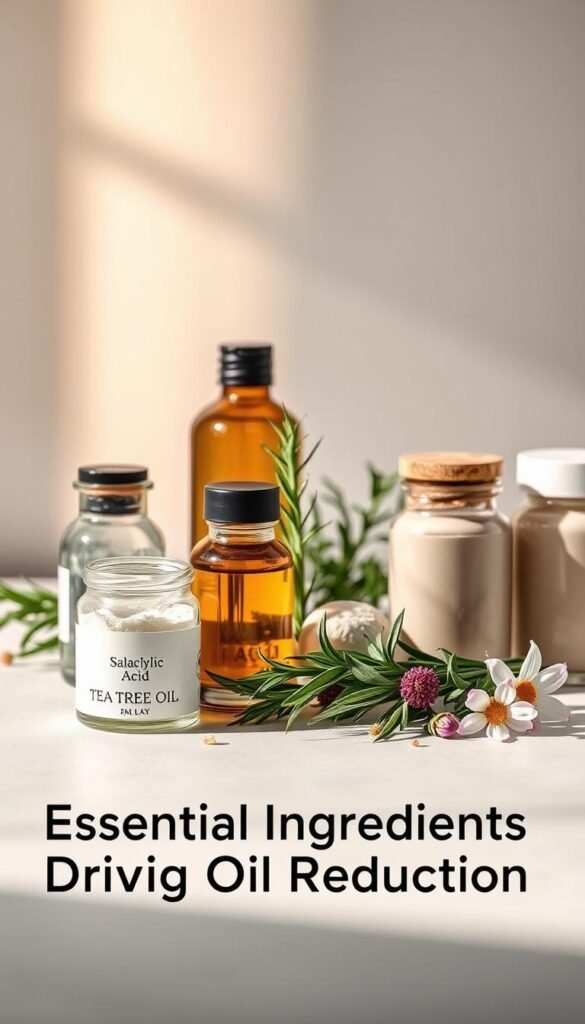
Essential Ingredients Driving Oil Reduction
Cracking the code to balanced skin starts with understanding molecular warriors. These bioactive compounds work like skilled negotiators, convincing overactive glands to find equilibrium without sparking rebellion.
Retinoids, Salicylic Acid, and Other Active Compounds
Vitamin A derivatives rewrite your skin’s renewal script. Retinoids accelerate cell turnover, helping dead cells shed before they clog pores. Prescription-strength retinoic acid works fastest, while gentler retinol suits sensitive types.
Salicylic acid’s fat-soluble nature lets it dissolve oil plugs like a microscopic locksmith. “It’s the only acid that can actually swim through sebum,” explains dermatologist Dr. Lisa Chen. Pair it with niacinamide – studies show this vitamin B3 derivative cuts oil production by 38% in four weeks.
Ingredient
Action
Timeframe
Retinoids
Regulate cell turnover
6-8 weeks
Salicylic Acid
Dissolve oil plugs
Immediate
Niacinamide
Reduce sebum
2-4 weeks
The Science Behind Effective Skincare Ingredients
These compounds target oil production at its source. Retinoids bind to skin cell receptors, normalizing renewal cycles. Salicylic acid’s molecular structure lets it penetrate oil-filled pores, while niacinamide calms inflammation that triggers excess sebum production.
Adapalene gel offers prescription-strength benefits without irritation for many. When layered correctly, these ingredients create a self-regulating system – your skin learns to maintain balance naturally.
Innovative Skincare and Makeup Solutions for Oily Skin
Beauty routines become revolutionary when makeup doubles as skincare. The right formulas can blur shine while letting your complexion breathe – no more choosing between coverage and skin health.
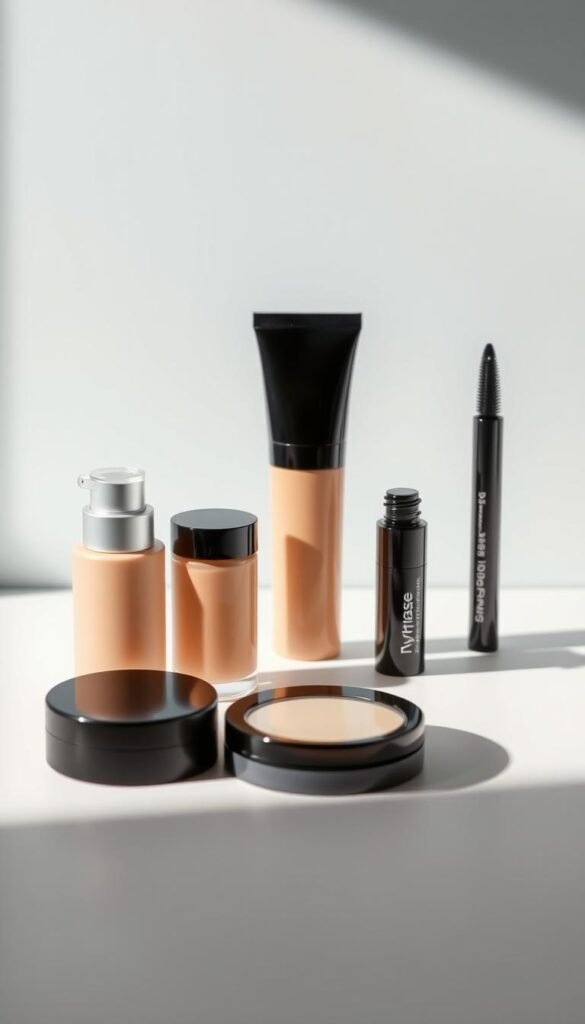
Choosing Noncomedogenic and Oil-Free Formulas
Start with a mattifying primer that smooths texture without suffocating pores. These silicone-free bases create an invisible shield against midday grease. Follow with mineral foundations containing zinc oxide – they absorb excess oil while calming inflammation.
Blotting papers become secret weapons when used correctly. Press (don’t rub) them against your T-zone to lift shine without smudging your look. For touch-ups, talc-free powders with rice starch absorb three times more oil than traditional options.
Nightly makeup removal matters most. A pH-balanced cleanser dissolves stubborn mascara while preserving your moisture barrier. “My breakouts stopped when I stopped sleeping in foundation,” shares makeup artist Lena Torres. “Clean skin breathes better.”
Mineral-based blushes and bronzers let your face function naturally underneath. They skip pore-clogging waxes, using mica and iron oxides for buildable color. Remember – true beauty shines when products work with your skin’s rhythm, not against it.
Lifestyle and Dietary Strategies for Clearer Skin
Your plate holds more power over your pores than you might realize. What you consume directly impacts your oil glands, creating either harmony or chaos beneath the surface.
Balancing Your Diet to Control Oil Production
High glycemic foods like white bread and sugary snacks act like alarm bells for your skin. They spike blood sugar, triggering inflammation that revs up sebum production. Swap them for low glycemic alternatives – quinoa instead of rice cakes, berries over candy.
Dairy products, particularly cow’s milk, can worsen acne through hormonal pathways. Try almond or oat milk for smoother texture. Chronic alcohol use enlarges pores by weakening blood vessels – limit to three drinks weekly for healthy skin.
Stress Management and Effective Skincare Routines
Cortisol – the stress hormone – turns glands into oil factories. Combat this with 10-minute meditation sessions or brisk walks. Pair these habits with pH-balanced cleansing to remove impurities without stripping moisture.
Hydration is key. Drink water like it’s your job – eight glasses daily keeps skin supple. Add cucumbers or mint for flavor. Nightly routines matter: gentle cleansing followed by non-comedogenic moisturizers maintains balance. As research in this acne-diet study shows, lasting clarity comes from internal-external teamwork.
Conclusion
Your journey with shine-prone skin connects you to millions navigating similar challenges. While blotting papers offer quick fixes, lasting transformation comes from understanding your skin’s rhythms. The strategies we’ve explored work like trusted allies – some tame oil within hours, while others gradually recalibrate sebum production through consistent care.
Remember: visible improvements in texture and appearance often emerge weeks after starting a routine. This delayed gratification separates temporary fixes from genuine skin harmony. Studies like this 2017 analysis confirm that combining topical solutions with lifestyle changes yields the most sustainable results.
When home care falls short, consult a dermatologist. Persistent oily skin could signal hormonal imbalances needing specialized treatment. Every blotting sheet used and nutrient-rich meal chosen builds toward a complexion that glows with health – not grease.
You now hold evidence-based tools to rewrite your skin story. Trust the process, celebrate small wins, and let your renewed confidence shine brighter than any midday glare.
FAQ
Why does my skin produce so much oil?
Excess oil production is often linked to genetics, hormonal fluctuations, or environmental triggers. Overactive sebaceous glands create more sebum, which can mix with dead skin cells and clog pores, leading to breakouts. Hydration and gentle skincare routines help balance this process.
Can oily skin benefit from moisturizer?
Absolutely! Skipping moisturizer can trick your skin into producing even more oil. Lightweight, oil-free formulas with hyaluronic acid or niacinamide hydrate without clogging pores. Healthy skin starts with balancing moisture levels—never strip your skin completely.
How do retinoids help control sebum?
Retinoids like adapalene accelerate skin cell turnover, preventing dead cells from trapping oil in pores. They also regulate sebum production over time, reducing shine and breakouts. Start slowly to avoid irritation, and pair with sunscreen for daytime protection.
Are certain foods worsening my oily skin?
High-glycemic foods like sugary snacks or refined carbs can spike insulin levels, triggering excess oil production. Focus on whole foods rich in antioxidants, omega-3s, and zinc—think leafy greens, nuts, and fatty fish. Staying hydrated with water also flushes out toxins.
What makeup won’t clog pores for oily skin?
Look for noncomedogenic, oil-free labels. Mineral-based powders and matte-finish foundations with salicylic acid absorb excess oil throughout the day. Always remove makeup thoroughly with a double-cleansing routine to keep pores clear and skin breathing freely.
Can stress cause my skin to break out more?
Stress increases cortisol levels, which stimulates sebum production. Pair stress-reducing habits like meditation or exercise with consistent skincare—think gentle cleansers, clay masks, and blotting papers. Consistency is key to managing both stress and shine.