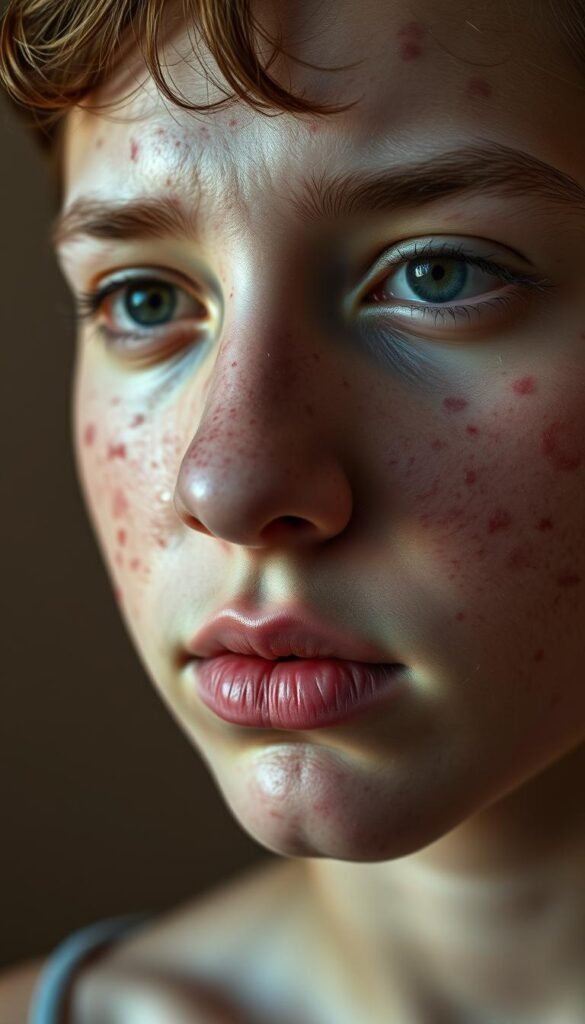
“The beauty of a woman is not in the clothes she wears, but in the confidence she exudes.” – Audrey Hepburn’s words ring true for anyone who’s struggled with skin concerns. Like many, I’ve faced stubborn breakouts since childhood, but finding clarity didn’t come from complex regimens—it came from simplicity.
This Website contains affiliate links. That means I may earn a small commission if you purchase through my links, at no extra cost to you.
After years of trial and error, I learned a harsh truth: more products don’t mean better results. Dermatologist Margarita Lolis, MD, agrees: “A gentle cleanser, targeted treatment, and non-pore-clogging moisturizer form the foundation of effective care.” This philosophy became my compass.
My journey taught me that balancing skin health requires respecting its natural rhythms. Instead of overwhelming my face, I focused on three core steps: cleansing without stripping, treating with precision, and protecting with hydration. The result? Fewer flare-ups. Lasting calm. Real progress.
Key Takeaways
Simpler routines often deliver better results for persistent breakouts
Dermatologists recommend focusing on cleanse-treat-moisturize basics
Prevention starts with understanding your skin’s unique needs
This isn’t about quick fixes—it’s about building habits that let your skin thrive. Ready to rewrite your story? Let’s begin.
Understanding Hormonal Acne
My bathroom cabinet used to overflow with products promising miracles. But when I finally paused to listen to my skin, patterns emerged like constellations in the night sky. Breakouts weren’t random—they whispered clues about internal shifts.
What Sparks the Fire
Hormones act like conductors, directing oil production in your skin. When androgens surge—during cycles, pregnancy, or stress—they rev up sebum creation. This excess oil mixes with dead cells, creating a playground for bacteria. “It’s not about dirt,” my dermatologist reminded me. “It’s about biological domino effects.”
Reading Your Skin’s Calendar
My chin became a hormonal weathervane. Deep, tender bumps would arrive like clockwork—seven days before my period. Tracking these cycles revealed connections to birth control changes and even stressful deadlines. The table below shows how hormonal flare-ups differ from other acne types:
Feature
Hormonal
Other Acne
Location
Jawline, chin
Forehead, nose
Type
Cystic, under skin
Blackheads, pustules
Triggers
Cycle changes
Diet, products
Timing
Monthly patterns
Random occurrences
Recognizing these signs helped me shift from frustration to strategy. Now when a cyst surfaces, I understand it’s my skin saying “Hey, something’s shifting”—not that I’ve failed.
The Connection Between Hormones and Breakouts
I once blamed myself for every breakout, not realizing my hormones held the real answers. Dermatologist Mona Gohara, MD, clarifies: “Fundamentally, everyone’s skin is the same—we all have hormonal shifts and acne bacteria.” But genetics determine if your oil glands overreact to these changes.
My aha moment came when I noticed breakouts spiked during tax season. Stress hormones like cortisol were turbocharging my oil production. This created a vicious cycle: anxiety ➔ excess oil ➔ clogged pores ➔ more anxiety.
Feature
Hormonal Influence
Genetic Factors
Oil Response
Spikes with cortisol
Gland sensitivity
Breakout Type
Deep cysts
Persistent inflammation
Solution Focus
Balance triggers
Gentle maintenance
What changed everything? Understanding that oil isn’t the enemy—it’s our body’s natural protector. Stripping it away with harsh products only worsens breakouts. Now I work with my skin’s rhythm, not against it.
Last spring, I tried something radical. Instead of attacking each pimple, I tracked my cycle and stress levels. Patterns emerged like roadmap clues. When I eased up on my skin, it eased up on me.
My Personal Journey with Acne
At 11 years old, I faced my first breakout – a small red bump that felt like a mountain. What followed was a rollercoaster of emotions and experiments. My bathroom became a lab, shelves crowded with products promising miracles that never came.
Those early years taught me harsh lessons. Harsh scrubs left my skin raw. Drying toners triggered more oil. I’d find temporary fixes, only to face worse flare-ups weeks later. “Why can’t I just be normal?” I’d whisper to the mirror, not realizing my skin was begging for balance, not punishment.
Everything shifted when I discovered targeted skincare designed for persistent breakouts. Gentle cleansers preserved my moisture barrier. Non-comedogenic moisturizers calmed inflammation. For the first time, my routine worked with my biology rather than against it.
Now, after 15 years of trial and error, I see acne differently. It’s not a personal failure – it’s a conversation. When cysts appear along my jawline, I don’t panic. I adjust. Hydrate more. Stress less. Trust the process. My skin isn’t perfect, but it’s finally heard.
The Importance of a Healthy Skin Barrier
I used to treat my face like a battlefield until I discovered moisturizer’s secret superpower. One sweltering summer, my skin barrier became so compromised that even water stung. That’s when dermatologist Dr. Joshua Zeichner’s words clicked: “Treating breakouts after 25 isn’t about stripping oil – it’s about respecting your shield.”
Why Moisturizing Matters
Dr. Lolis transformed my perspective: “Moisturizer balances oil production – it’s non-negotiable.” I tested her theory during a stressful work project. Instead of reaching for harsh treatments, I used a gentle acne routine with hydrating formulas. Within weeks, my complexion stabilized.
Here’s what changed:
My barrier stopped overproducing oil when properly hydrated
Redness decreased as inflammation subsided
Active ingredients worked better without irritation
I finally understood – our skin barrier is like smartphone screen protector. Damage it, and everything beneath becomes vulnerable. Now I choose products that reinforce this protective layer rather than breach it. The result? Fewer emergencies. Lasting protection.
This approach isn’t just about managing breakouts. It’s about creating an environment where skin can heal itself. When your barrier’s intact, every treatment becomes more effective – like preparing soil before planting seeds.
3-Step Hormonal Acne Routine That Works: My Proven Method
Years of frustration taught me that real change begins with restraint. My bathroom shelf now holds three trusted allies: a pH-balanced cleanser, a targeted serum, and a protective moisturizer. As Dr. Lolis emphasizes, “Simplicity lets active ingredients shine without triggering rebellion.”
This skincare routine thrives on harmony. Gentle cleansing preserves my barrier while removing impurities. The treatment step uses bakuchiol—nature’s retinol alternative—to balance oil without irritation. Finally, a ceramide-rich cream locks in moisture, proving hydration fights breakouts better than harsh drying.
I learned the hard way that stacking multiple actives backfires. Through trial and error, I discovered fewer products with smarter formulations deliver lasting results. My current approach mirrors clinically tested systems that prioritize skin health over quick fixes.
Consistency transformed my complexion more than any miracle product. By honoring my skin’s need for both treatment and nourishment, I’ve created a sustainable practice. Your journey might look different—but starting with these principles builds resilience from the first cleanse.
FAQ
How do I know if my acne is hormonal?
I look for breakouts along my jawline, chin, or cheeks that flare around my cycle. If traditional acne treatments like salicylic acid don’t fully help, it’s often hormone-related. Tracking patterns in a skincare journal clarified it for me.
Can birth control pills really improve hormonal acne?
Yes! My dermatologist explained that pills with estrogen, like Yaz or Ortho Tri-Cyclen, balance androgens that trigger excess oil. It took three months, but my skin became calmer. Always consult your doctor first—it’s not a one-size-fits-all fix.
What products should I avoid with hormonal acne?
I steer clear of heavy oils (coconut oil clogs my pores) and alcohol-based toners that wreck my skin barrier. Fragrance-free, non-comedogenic formulas from CeraVe and La Roche-Posay saved my routine. Trust me—gentle is better.
Does diet affect hormonal breakouts?
Cutting back on sugar and dairy made a noticeable difference for me. I add omega-3s (hello, salmon!) and zinc-rich foods like pumpkin seeds to fight inflammation. Hydration is key—my glow starts from within.
How long until I see results from a new routine?
Patience is tough, but my skin needed 6-8 weeks to adjust. Using benzoyl peroxide (2.5% from Paula’s Choice) nightly reduced redness gradually. Consistency with moisturizer and sunscreen kept my barrier strong while waiting.
Can I wear makeup without clogging pores?
Absolutely! I use Neutrogena’s SkinClearing foundation and Clinique’s cleansing balm. Double cleansing at night ensures no residue. Mineral-based powders from Bare Minerals let my skin breathe during the day.